
Plants
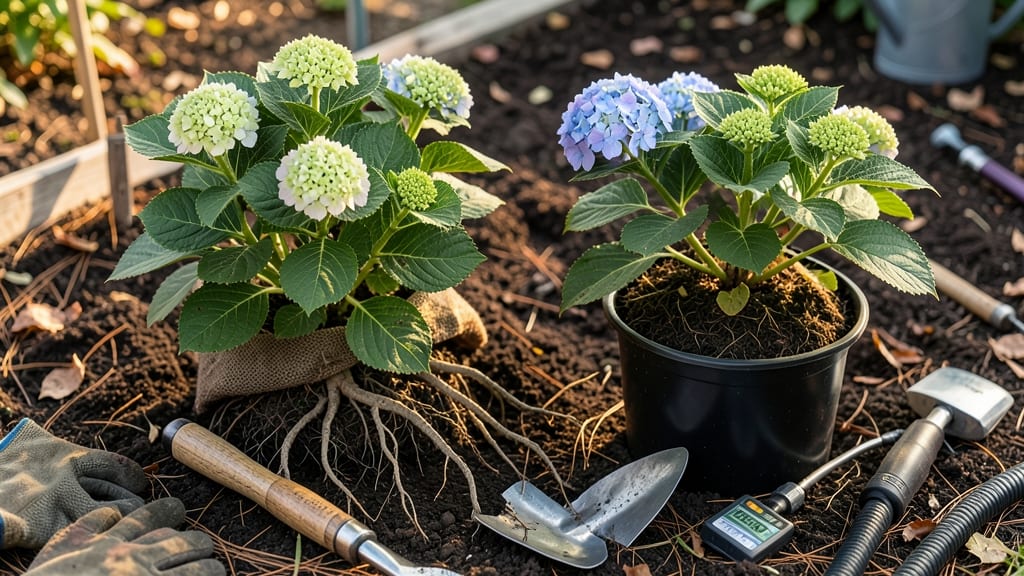
Planting your 🌸 hydrangeas at the wrong time in Michigan could mean the difference between stunning blooms and a sad, frost-nipped shrub. The key to success? Timing that avoids late spring frosts or early fall chills—something I’ve learned the hard way after watching too many gardeners miss the window.
Michigan’s 5b-6b zones give you two prime chances: early spring (April–May) or fall (September–October), but getting it wrong can leave your hydrangeas struggling.
Whether you’re a first-time gardener or a seasoned pro, knowing the exact deadlines—like avoiding the last frost after April 15—is non-negotiable for those show-stopping 🌸 flowers you’re dreaming of.
Here’s what I’ll show you: how to read Michigan’s unpredictable climate, prep your soil for maximum root growth, and choose between spring or fall planting based on your microclimate. No more guesswork—just lush, thriving hydrangeas that bloom like clockwork.
Ready to plant with confidence? Let’s break down the zone-specific deadlines and pro tips that’ll keep your hydrangeas happy year-round—no frost damage in sight.
Michigan hydrangea planting deadlines by hardiness zone (5-6): exact dates to avoid frost
Michigan’s USDA zones 5b and 6b create a tight window for planting hydrangeas—miss it, and you risk frost damage or poor root establishment. The last spring frost typically arrives between April 15 and May 1, while the first fall frost hits around October 15.
For bigleaf hydrangeas, aim for late April to early May; panicle and oakleaf varieties can handle slightly earlier planting if soil temps stay above 50°F.
Your planting deadline hinges on soil temperature, not just air temperature. Use a soil thermometer to confirm temps are consistently above 60°F—this ensures roots establish before summer heat arrives.
In zone 5b, wait until May 1 to be safe; in zone 6b, you can start as early as April 20 if your soil warms quickly.
Fall planting is a great alternative for Michigan gardeners, especially in zone 6b. Hydrangeas planted in September (after Labor Day) benefit from cooler temps and 6-8 weeks of root growth before winter dormancy. In zone 5b, wrap up fall planting by October 1 to avoid early frosts.
Here’s your zone-specific planting timeline with exact deadlines to avoid frost damage:
| Zone & Variety | Spring Planting Window | Fall Planting Window | Soil Temp Threshold | Key Tip |
|---|---|---|---|---|
| Zone 5b (Bigleaf) | May 1–15 | September 1–15 | 60°F+ | Mulch heavily after planting |
| Zone 5b (Panicle/Oakleaf) | April 25–May 10 | September 1–October 1 | 50°F+ | Tolerates cooler soil |
| Zone 6b (Bigleaf) | April 20–May 5 | September 15–October 10 | 60°F+ | Water deeply post-planting |
| Zone 6b (Panicle/Oakleaf) | April 15–April 30 | September 1–October 15 | 50°F+ | Best for container growing |
Panicle hydrangeas are the most frost-tolerant, so they can handle earlier spring planting (as soon as soil thaws). Bigleaf varieties, however, need warmer soil to avoid root rot—wait until May 1 in zone 5b. Oakleaf hydrangeas fall somewhere in between, making them a versatile choice for Michigan’s unpredictable climate.
If you’re unsure about your last frost date, check the Michigan State University Extension’s frost calendar or use a local weather app for real-time updates.
Pro tip: Plant 3 weeks before your average last frost date to account for late-season cold snaps, which are common in Michigan’s zone 5b.
For fall planting, focus on root establishment before winter. Water deeply once a week after planting and apply a 3-inch layer of mulch to insulate roots. In zone 6b, you can push fall planting to mid-October if your hydrangea is potted—containers warm up faster in spring.
Adjust your timing if you’re in a microclimate like a south-facing slope (warmer soil) or a low-lying area (cooler soil). For example, Detroit (zone 6b) can plant 1–2 weeks earlier than Traverse City (zone 5b).
Always err on the side of waiting—hydrangeas recover better from delayed planting than from frost damage.
Once planted, monitor your hydrangeas for new growth in spring. If you see yellowing leaves or stunted growth, it’s a sign they were planted too early and struggled with cold soil. In this case, mulch thicker and water consistently to help them bounce back.
How to tell if your Michigan soil is ready for hydrangeas (before you dig)
Before you dig that hole for your hydrangeas, Michigan’s soil conditions can make or break your success. Cold, wet springs and heavy clay soils are common here, and planting too early can stunt root growth or invite frost damage.
The key is checking three critical factors: soil temperature, moisture balance, and texture—all before you even lift your shovel.
Hydrangeas thrive when soil temps hit 60–70°F at a 4-inch depth. In Michigan, this typically means waiting until mid-to-late May in most zones, but early April in southern regions like zone 6b.
Use a soil thermometer ($10 at garden centers) to confirm—planting in cooler soil slows root establishment by up to 30%.
Michigan’s clay-heavy soils (common in the southern half) or sandy loams (northern regions) can suffocate hydrangea roots if not amended. Test your soil’s drainage by digging a 6-inch hole, filling it with water, and timing how long it takes to drain.
If it’s still soggy after 4+ hours, your soil needs organic matter like compost or peat moss to improve aeration.
⚠️ callout-warning ⚠️
Even if your hydrangea’s leaves peek out in March or early April, a late frost can kill tender new growth. Wait until after the last average frost date (check your USDA zone 5b-6b maps) AND confirm soil temps are consistently above 60°F for 5+ days. Pro tip: Mulch heavily after planting to insulate roots from temperature swings.
🌡️ Soil Temp Check: Use a thermometer at 4" depth. Below 60°F = WAIT. Above 70°F = GO!
Moisture is another Michigan challenge. Hydrangeas need consistently moist but not waterlogged soil. Stick your finger 2 inches deep—if it feels dry, your soil isn’t ready. In sandy soils (common in the UP), water daily until roots establish; in clay soils, water deeply but less frequently to avoid compaction.
A simple fix? Mix in 2–3 inches of compost to retain moisture while improving drainage.
For heavy clay soils, amend with coarse sand or perlite (1 part amendment to 3 parts soil) to break up compaction. Sandy soils benefit from peat moss or coconut coir to hold moisture.
Spread a 2-inch layer of mulch (straw or wood chips) after planting to regulate soil temperature and reduce watering needs by 30–40%.
Here’s your quick DIY soil readiness checklist before planting: ☑️ Soil temp at 4" depth: 60–70°F (use a thermometer) ☑️ Drainage test: Water drains in 2–4 hours (not soggy) ☑️ Moisture: Finger test shows dampness at 2" depth ☑️ Texture: Amended with compost or organic matter if clay/sandy ☑️ pH: 5.2–6.0 (test with a kit or send a sample to MSU Extension)
Once your soil passes these checks, your hydrangeas will establish twice as fast and bloom bigger. Skip these steps, and you’ll spend the season playing catch-up with stunted growth or leggy stems. Now grab that thermometer—your Michigan-grown hydrangeas are waiting! 🌸