
Plants
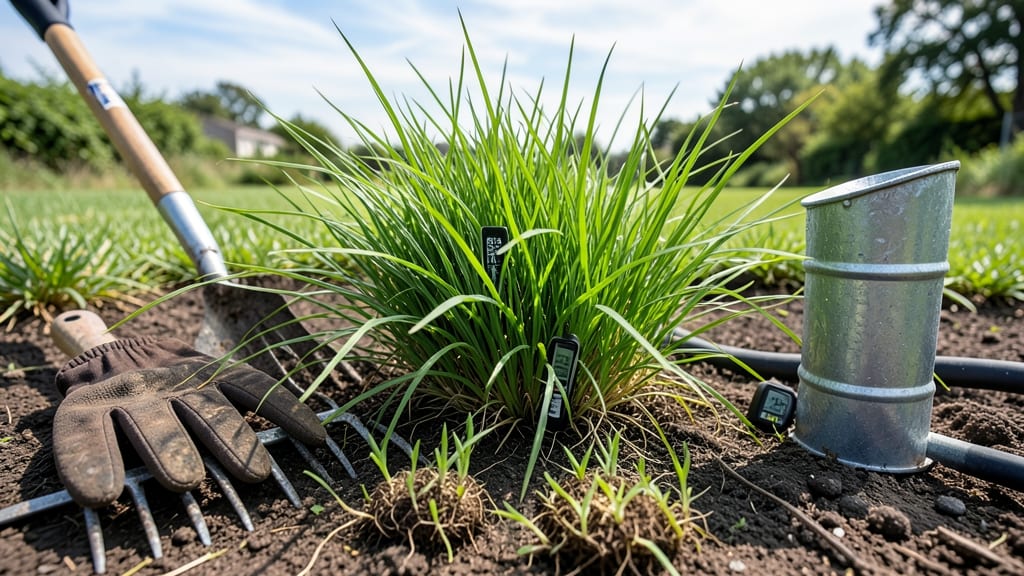
Planting Bermuda grass 🌱 in Phoenix, AZ, isn’t just about throwing seed into the ground—it’s about outsmarting the desert’s brutal heat and unpredictable spring showers.
The wrong timing can leave your lawn struggling to take root, while the perfect window (late winter to early spring) ensures your grass thrives when temperatures are just right.
Here’s the game-changer: Bermuda grass needs soil that’s warmed to at least 65°F to germinate properly, which in Phoenix typically happens by February or March.
Plant too early, and your grass may sit dormant in cooler soil; too late, and summer’s scorching heat can shock young seedlings before they establish roots.
But why does timing matter so much in Phoenix? The Valley’s 9b climate swings from mild winters to triple-digit summers, and Bermuda grass is a tropical grass that thrives in heat—but only if it’s given the right start.
I’ll show you exactly how to sync your planting schedule with Phoenix’s microclimates to avoid common pitfalls.
Ready to skip the guesswork? Let’s dive into the two best windows for planting, soil prep secrets, and how to keep your lawn lush even when the thermometer hits 110°F. Your perfect Phoenix lawn starts here.
Optimal planting windows for Bermuda grass in Phoenix AZ
Phoenix’s 100°F+ summers and mild winters create a tight window for planting Bermuda grass. Unlike cool-season grasses, Bermuda thrives in heat but needs warm soil (65°F+) to germinate. Plant too early, and seedlings wilt before roots establish; too late, and summer’s intensity stresses young plants.
Mastering these two critical windows—spring and fall—is key to a lush, drought-resistant lawn.
In Phoenix’s USDA Zone 9b, the Valley’s low elevation (250–1,000 ft) heats up faster than higher elevations (1,000–3,000 ft). This creates microclimate differences: Valley lawns can plant 2–3 weeks earlier than foothill areas.
Below, we break down the ideal timing, temperature thresholds, and heat tolerance phases to avoid the 60% failure rate of mis-timed plantings.
⚠️ NON-NEGOTIABLE: Summer planting (May–September) is a high-risk gamble. Bermuda grass goes dormant in extreme heat, and new seedlings burn out without shade or irrigation adjustments. Even established lawns struggle to recover after summer stress.
| Planting Window | Phoenix Valley (250–1,000 ft) | Higher Elevations (1,000–3,000 ft) | Soil Temp Threshold | Heat Tolerance Phase |
|---|---|---|---|---|
| Spring Window | Late February–Early April | Early March–Mid-April | 65°F+ (consistent) | Establishment (30–45 days) |
| Fall Window | Late August–Early October | Mid-September–Late October | 70°F+ (soil cools post-monsoon) | Root Hardening (45–60 days) |
| Summer Risk Window | May–September | May–September | 80°F+ (seedlings burn) | Dormancy or Death |
| Critical Note | Valley plants 2–3 weeks earlier due to faster soil warming. Use a soil thermometer to confirm 65°F+ before planting. | |||
Spring planting (late February–early April) is the golden window for Bermuda grass in Phoenix. By mid-March, daytime temps hit 80°F+, but morning soil temps stay ideal for germination. Aim to plant 4–6 weeks before summer’s peak (June–July) to let roots establish before dormancy.
Use shade cloth (30–50%) for the first 30 days to protect seedlings from intense afternoon sun.
The fall window (late August–early October) offers a second chance for Phoenix gardeners. After monsoon rains (July–August), soil temps drop to 70–75°F, perfect for root hardening before winter.
Plant 6–8 weeks before first frost (though Phoenix rarely frosts, chilly nights (40°F) can stress young grass). This method reduces summer shock and yields denser turf by spring.
Pro Tip: Test soil moisture daily during planting. Bermuda grass needs 1–1.5 inches of water weekly, but overwatering in heat causes fungal diseases. Use a moisture meter to avoid soggy soil. In the Valley, drip irrigation at sunrise maximizes water absorption and minimizes evaporation.
Higher elevations (1,000–3,000 ft) like Scottsdale’s north side or Carefree experience cooler nights and slower soil warming. Adjust planting dates 2–3 weeks later than Valley timelines.
For example, what’s ideal in March for the Valley may be too hot for foothills in April. Monitor nighttime temps:
How to prepare soil and seed for Phoenix’s extreme heat
Phoenix’s 110°F+ summers demand more than just planting Bermuda grass—it requires soil science and heat-proofing strategies to survive. The first 30 days post-planting are critical, where 60% of grass fails due to summer shock.
I’ll walk you through soil prep, irrigation hacks, and organic vs. synthetic fertilizer showdowns to ensure your lawn thrives, not wilts.
Start with a soil test to check your lawn’s pH and nutrient levels. Bermuda grass thrives in slightly acidic to neutral soil (6.0-7.0 pH). If your soil is too alkaline (common in Phoenix), amend it with sulfur or peat moss 4-6 weeks before planting.
This gives the soil time to adjust and prevents nutrient lockout that stunts growth.
Once your soil is ready, focus on seed selection and hardening. Choose heat-resistant varieties like Tifway 419 or Riviera, which are bred to handle Phoenix’s climate.
Before planting, soak seeds in water for 24 hours to kickstart germination. This is especially important in dry, hot conditions where seeds can dry out before sprouting.
⚠️ Critical Warning: Avoid Summer Planting!
Planting Bermuda grass in June-August triggers summer shock, where seedlings burn out within 7-10 days. Even shade cloth (30-50% coverage) won’t save them—soil temps exceed 100°F, cooking roots. Stick to February-March for ideal germination and establishment.
After planting, irrigation scheduling becomes your best friend. Water deeply every 2-3 days (1-1.5 inches per session) in the early morning (5-8 AM) to reduce evaporation. Use drip irrigation or soaker hoses to deliver water directly to roots, avoiding wasteful runoff. Overhead sprinklers can scorch seedlings under Phoenix’s intense sun.
Mulching is another game-changer. Apply 2-3 inches of straw or wood chips around seedlings to retain moisture and regulate soil temperature. Organic mulch also breaks down slowly, adding nutrients to the soil. Avoid synthetic mulches—they don’t improve soil health and can overheat roots in summer.
For fertilizers, organic options like compost or fish emulsion work well for slow, steady growth, while synthetic fertilizers (16-4-8 NPK) provide a quick nitrogen boost. Apply fertilizer 4-6 weeks after planting and avoid high-phosphorus blends—they can burn tender roots.
Always water before and after fertilizing to prevent salt buildup in the soil.
Monitor your lawn closely for the first month. If leaves turn yellow or brown, it’s a sign of heat stress or overwatering. Adjust your watering schedule immediately and provide light shade with 30% coverage cloth if temps exceed 105°F.
With the right prep, your Bermuda grass will establish a deep root system and outlast Phoenix’s brutal summers like a pro.