
Plants
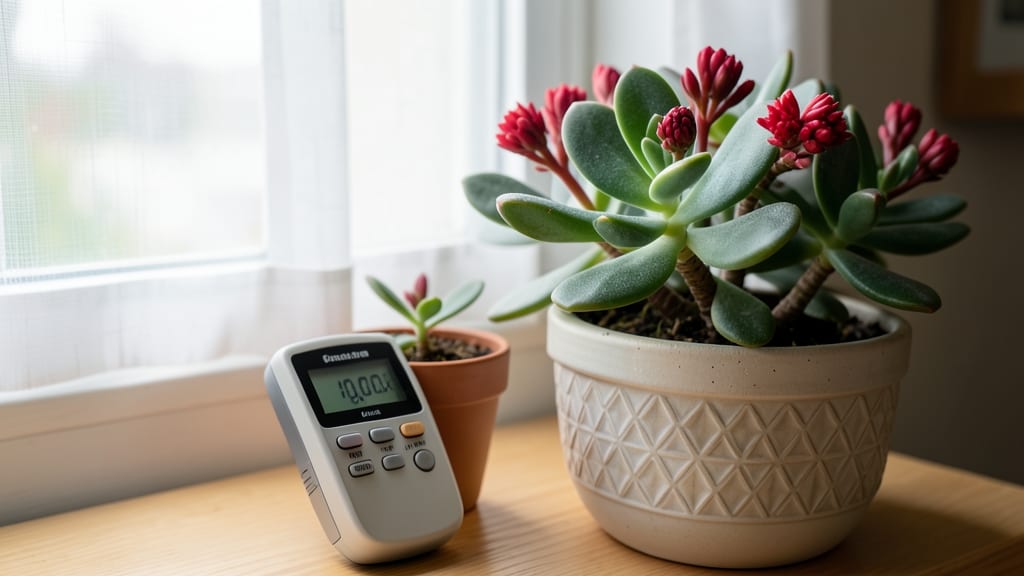
If your Kalanchoe 🌸 looks sad with stretched-out leaves or faded blooms, chances are it’s not getting the right amount of light—specifically, how much light does a kalanchoe plant need?
This tough little succulent actually thrives with just 3–4 hours of bright indirect sunlight daily—more than most people think!
Too little light makes them leggy, while too much can scorch those pretty leaves. The key is finding that sweet spot where your Kalanchoe stays compact, vibrant, and ready to bloom.
I’ll break down exactly how to spot the signs and adjust your plant’s light situation—whether you’re dealing with a dim corner or a sun-soaked windowsill.
Don’t worry if your home doesn’t have perfect natural light—artificial options work too. We’ll cover everything from the best window placements to grow lights that mimic sunlight without the risk of burning. Your Kalanchoe will thank you with bold colors and healthy growth all season long.
Ready to transform your plant’s light struggles into a thriving, blooming success? Let’s get started with the simple fixes that make all the difference for your Kalanchoe 🌸.


Kalanchoe light requirements: the ideal 3–4 hours of bright indirect sun explained
If you're wondering how much light does a kalanchoe plant need, the answer lies in its native habitat. These succulents thrive in bright indirect sunlight, mimicking the dappled light of their African highlands.
Too little light causes leggy growth, while too much can scorch delicate leaves. Let's break down the perfect balance for your Kalanchoe blossfeldiana or other varieties.
The ideal light exposure for kalanchoe is 3-4 hours of bright indirect light daily. This means placing your plant near an east-facing window or 2-3 feet from a south-facing window.
Direct midday sun can cause leaf burn, turning edges crispy and brown. Think of it like giving your plant a sunbath with built-in sunscreen!
| Light Condition | Daily Duration | Plant Response | Best For |
|---|---|---|---|
| Bright indirect | 3-4 hours | Healthy growth, vibrant blooms | Indoor windows, filtered light |
| Partial sun | 2-3 hours direct | Moderate growth, fewer blooms | East/west windows, patio shade |
| Low light | <1 hour | Leggy stems, pale leaves | North windows, dark corners |
| Direct sun | >4 hours | Brown patches, leaf burn | South windows, outdoor midday |
Understanding photosynthesis efficiency helps explain why kalanchoes need this balance. These succulents perform CAM photosynthesis, which means they open their stomata at night to absorb CO₂ and store it for daytime use. This adaptation lets them thrive in bright but indirect light without losing excess water through transpiration.
Watch for visual cues that reveal your plant's light needs. If your kalanchoe develops stretched stems and sparse leaves, it's craving more light. This etiolation occurs when the plant reaches for sunlight.
Conversely, yellowing leaves or crispy brown edges signal too much direct sun. Adjust placement gradually—never move a kalanchoe from low to bright light suddenly, or you risk shocking its delicate system.
Seasonal adjustments are key to maintaining your kalanchoe's health. During summer months, morning sun is ideal, while afternoon shade prevents overheating. In winter, when natural light diminishes, supplement with a grow light for 4-6 hours daily.
A simple LED bulb placed 6-12 inches above the plant mimics the ideal spectrum for growth.
For indoor gardeners, window placement makes all the difference. South-facing windows provide the most consistent light, while east-facing windows offer gentler morning rays. Avoid north-facing windows entirely—they provide insufficient light for kalanchoes to thrive.
If your only option is a north window, consider adding a reflective surface like a white wall or mirror to maximize light exposure.
When in doubt, observe your plant's growth patterns. Healthy kalanchoes have compact rosettes, glossy leaves, and vibrant blooms. If you notice pale green leaves or reduced flowering, it's time to increase light exposure.
Remember, these plants are resilient—with the right light balance, your kalanchoe will reward you with months of cheerful blooms.
Pro tip: Rotate your kalanchoe quarterly to ensure even growth. Plants naturally lean toward their light source, so turning them 90 degrees every month keeps them balanced and encourages uniform foliage development. This simple habit prevents lopsided growth and ensures your plant stays as attractive as it is healthy.
Balancing light for your kalanchoe isn't just about preventing problems—it's about creating the perfect conditions for vibrant growth and prolonged blooming. With 3-4 hours of bright indirect light daily, your plant will thrive year-round, proving that sometimes, the simplest care routines yield the most stunning results.
Best window placements and artificial light solutions for kalanchoe care
Finding the perfect spot for your Kalanchoe starts with understanding window directions. A south-facing window is ideal because it provides bright indirect light for 6+ hours daily—closer to your plant’s natural desert habitat.
If you only have an east or west-facing window, place your Kalanchoe within 2-3 feet to avoid weak, leggy growth.
North-facing windows are a no-go unless you supplement with grow lights. Without extra light, your plant will stretch toward any available source, creating those unsightly long, thin stems.
Even worse, leaves may turn pale or lose their vibrant color. The key is mimicking natural sunlight as closely as possible.
| Light Source | Best For | Effectiveness | Setup Tips |
|---|---|---|---|
| South Window | Direct sun 2-3 hrs/day | ⭐⭐⭐⭐⭐ | 2-3 ft from glass; rotate weekly |
| East/West Window | Indirect light 4-5 hrs/day | ⭐⭐⭐⭐ | Use sheer curtain; supplement if pale |
| LED Grow Light | 12-14 hrs/day | ⭐⭐⭐⭐⭐ | 6-12" above plant; full spectrum |
| Fluorescent Light | 8-10 hrs/day | ⭐⭐⭐ | 12-18" away; cool white bulb |
For indoor growers, LED grow lights are the gold standard because they mimic sunlight’s spectrum while using less energy. Place your light 6-12 inches above the plant and run it for 12-14 hours daily to compensate for weaker natural light.
A fluorescent bulb works in a pinch, but you’ll need to keep it closer (12-18 inches) and run it longer (8-10 hours).
DIY setups are simple: clip a full-spectrum LED bulb to a lamp and place it on a timer. My favorite budget-friendly option is a 10-watt LED clip light ($15-$20) that hangs just above the leaves. Just remember to rotate your plant weekly so it doesn’t lean toward the light source.
If your Kalanchoe starts stretching toward the window or losing color, it’s begging for more light. Artificial light beats weak natural light any day—just don’t overdo it.
Too much direct sun (even from a window) can scorch leaves, so always use a sheer curtain during peak afternoon hours when rays are strongest.
Pro tip: Monitor leaf color—deep green means perfect light, while yellow or red edges signal stress. Adjust your setup until you find that sweet spot where your Kalanchoe stays compact, vibrant, and blooming all year.