
Plants
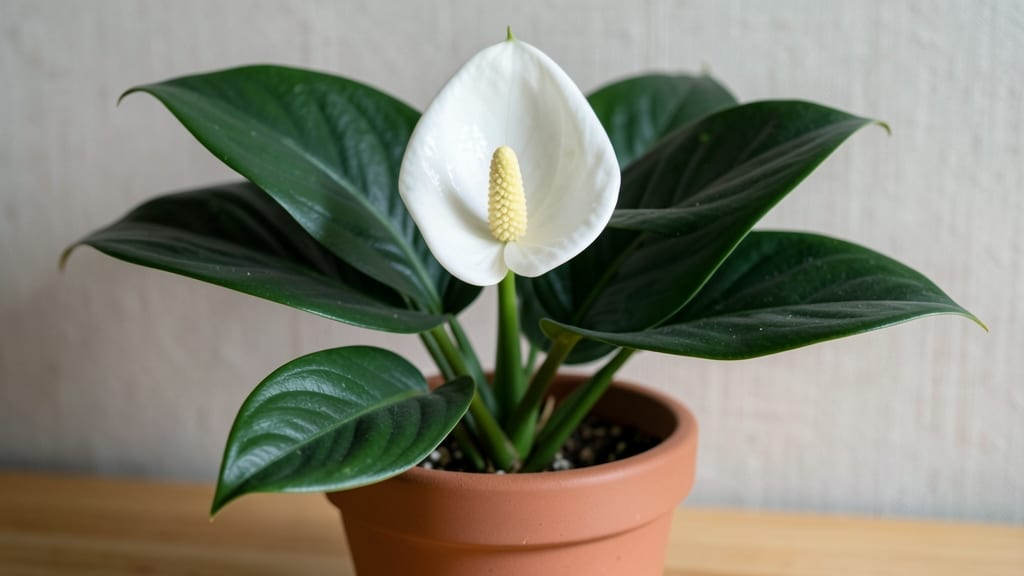
If your peace lily 🌿 is struggling with drooping leaves or sparse blooms, you might be getting its light needs all wrong—and it's not as simple as "more is better."
These elegant plants thrive in conditions most people overlook, and understanding exactly how much indirect light they need could be the game-changer for your plant's health.
Peace lilies are famous for their low-maintenance reputation, but their secret weapon is actually their ability to adapt to low to medium indirect light. Too much direct sun can scorch those beautiful leaves, while too little leaves them weak and leggy.
The key lies in finding that sweet spot where they get just enough brightness without the harsh rays.
In this guide, I'll break down exactly how to create the perfect lighting environment for your peace lily, from identifying the best spots in your home to troubleshooting common light-related problems.
You'll learn how to spot signs of over- or under-lighting and what to do about them—so your plant can finally flourish the way it's meant to.
Whether you're dealing with a 3-foot-tall specimen or just starting with a small pot, these insights will help you transform your peace lily from a struggling survivor into a thriving centerpiece. Let's get started!


Peace lily light requirements: ideal sunlight conditions for healthy growth
Peace lilies (Spathiphyllum) thrive in conditions most other houseplants would find too dim, making them perfect for offices or dimly lit rooms. However, their light needs are often misunderstood—too little light causes weak growth, while direct sunlight burns their delicate foliage.
The key lies in indirect, filtered light, which mimics their native rainforest habitat where sunlight dapples through dense canopies.
Understanding the light spectrum is crucial. Peace lilies use photosynthesis efficiently in low to medium light (50-200 foot-candles), but their chlorophyll struggles with harsh, direct rays. This is why they often struggle near south-facing windows or under grow lights without proper shielding.
The goal is to replicate the dappled shade of their natural environment.
Science note: Peace lilies have adapted to low-light conditions by evolving crassulacean acid metabolism (CAM), a process that allows them to absorb CO₂ at night and store it for daytime photosynthesis. This makes them more efficient in low-light environments than many other houseplants, but it doesn’t mean they can thrive in complete darkness.
Here’s what happens when light conditions are off: Too little light → Slow growth, pale leaves, no blooms Too much light → Brown leaf tips, crispy edges, leaf scorch The sweet spot is bright, indirect light for 4-6 hours daily, which we’ll break down in the table below.
Notice how medium light (100-200 ft-c) produces the best results? This range mimics the dappled shade peace lilies prefer. For reference, a typical office has about 100-200 ft-c, while a bathroom with a north-facing window might only get 50-100 ft-c.
If your space is dimmer than 50 ft-c, supplement with a 15-watt LED grow bulb 12 inches away for 6-8 hours daily.
Direct sunlight is the #1 killer of peace lilies. Even 2 hours of afternoon sun can cause leaf burn on their thin, waxy surfaces. The UV index spikes between 10 AM and 4 PM, so avoid placing your peace lily near unfiltered windows during these hours.
Instead, position it 3-6 feet back from an east or west window, or use a sheer curtain to diffuse harsh rays.
Pro tip: Rotate your peace lily quarter-turn weekly to ensure even light exposure. This prevents one-sided growth (where the plant leans toward the light source) and keeps foliage lush and symmetrical. Think of it like giving your plant a gentle sunbath without the risk of sunburn.
For indoor gardeners, artificial lighting can be a game-changer. A full-spectrum LED grow light (like the Samsung LM301B) placed 12-18 inches above the plant for 10-12 hours daily mimics natural light perfectly. Just avoid incandescent bulbs, which emit too much heat and can scorch leaves.
Remember: Peace lilies are forgiving but not indestructible. If you notice yellowing leaves or drooping foliage, it’s often a sign of light stress. Move your plant to a shadier spot immediately and monitor for improvement within 2-4 weeks.
With the right light, your peace lily will reward you with glossy leaves and frequent blooms all year round.
Signs your peace lily isn't getting enough (or too much) light
Your peace lily 🌿 might be silently screaming for help if its leaves are telling a different story than you expect. Light stress is often misdiagnosed as watering issues or nutrient deficiencies, but the truth?
Most peace lily problems trace back to light imbalances. Whether it's pale, leggy growth from too little light or crispy brown edges from too much, your plant's appearance holds all the clues.
Peace lilies thrive in bright, indirect light, but they're famously adaptable—until they're pushed too far. The key is finding that sweet spot where leaves stay deep green and glossy, not yellow or bleached. Let's decode the visual symptoms so you can rescue your plant before it's too late.
Lighting Issues & Fixes for Peace Lilies
Underlighting
- Slow growth (stunted new leaves)
- Small, sparse leaves (leggy stems)
- No flower spikes (no blooms)
- Pale green foliage (lacks vibrancy)
Fix: Move to 3-6 ft from north/west window or use grow lights 12" above for 6-8 hours/day.
Overlighting
- Brown leaf tips (dry, crispy edges)
- Crispy edges (like paper burning)
- Leaf scorch (yellow/brown patches)
- Stunted growth (despite bright light)
Fix: Filter light with sheer curtain or relocate to indirect east light. Avoid south-facing windows.
Notice how underlighting creates pale, weak growth while overlighting causes burn-like damage? The solution isn't just moving your plant—it's about understanding your home's light map. Bathrooms with northern exposure often work perfectly, while south-facing rooms can fry leaves in hours. Test different spots for 2-3 days before committing.
Pro tip: Rotate your peace lily quarter-turn weekly to prevent one-sided growth from uneven light exposure. Even in ideal conditions, 20% of light comes from indirect sources, so positioning matters.
If your plant still struggles, supplemental LED grow lights (10,000K color temp) can mimic natural light spectra for 12 hours/day during winter.
Remember: Yellow leaves often mean overwatering, but brown tips almost always scream light stress. Check your plant's soil moisture first, but don't ignore the light environment—it's the foundation of all other care. A happy peace lily starts with the right light! 🌱