
Plants
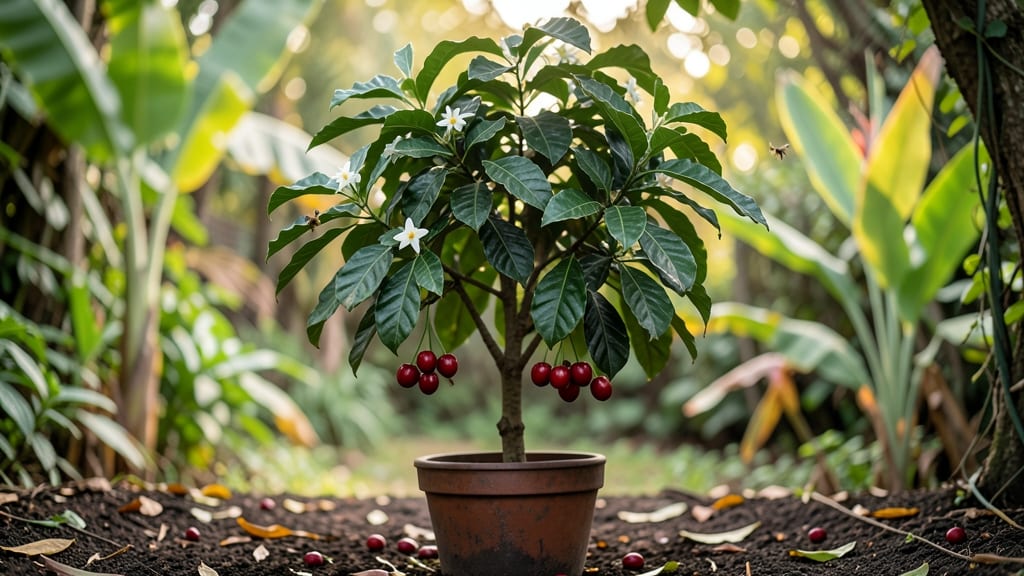
If you're wondering how tall a coffee plant grows, you might be surprised to learn these tropical giants can reach heights of 10–15 feet in ideal conditions—but don't worry, there are ways to keep them manageable.
Whether you're dreaming of a backyard coffee grove or just want a few potted plants for fresh beans, understanding their growth patterns is key to success.
The height of your coffee plant depends largely on its variety. Coffea arabica, the most popular type, typically grows between 8–15 feet when left unpruned, while Coffea canephora (Robusta) tends to stay slightly shorter, around 6–12 feet.
Dwarf varieties, however, can be kept as compact as 2–3 feet, making them perfect for containers or small gardens.
Growing conditions play a huge role in how tall your coffee plant becomes. In tropical climates with warm temperatures and plenty of sunlight, these plants thrive and reach their maximum height. But in cooler regions or when grown in containers, their growth can be controlled through pruning and proper care.
Don't let the towering potential scare you off—with the right techniques, you can shape your coffee plant to fit your space. I'll show you how to manage its height while still enjoying a bountiful harvest of homegrown beans.


Coffee plant height by variety: Arabica vs Robusta and other key differences
When planning your coffee garden, one of the first questions I ask myself is: how tall will my coffee plants grow? The answer depends entirely on the variety you choose. Coffea arabica (Arabica) and Coffea canephora (Robusta) are the most popular types, but their mature heights differ significantly.
Even within these categories, dwarf and specialty varieties can change the game entirely for home gardeners with limited space.
Understanding these differences helps you select the perfect coffee plant for your garden layout. Arabica varieties often stay more compact, while Robusta plants can grow much taller—sometimes reaching tree-like proportions. Let's break down the specifics so you can make an informed choice that fits your space and growing goals.
If you're growing Arabica coffee plants, expect most varieties to reach 10–15 feet tall in ideal conditions. However, some dwarf Arabica varieties stay between 3–5 feet, making them perfect for containers or small backyards.
The Bourbon variety, for example, is especially tall—often exceeding 18 feet—but its dwarf counterpart can be pruned to stay under 6 feet.
On the other hand, Robusta coffee plants are the giants of the coffee world. In the wild, they can grow up to 30 feet tall, but even dwarf Robusta varieties will typically reach 5–8 feet.
This makes them less ideal for home gardens unless you're prepared for regular pruning or have ample space. Liberica varieties are the true giants, often topping out at 40 feet—so unless you're cultivating them as a specialty, they're better suited for large estates.
For home gardeners with limited space, I recommend focusing on dwarf Arabica varieties like Geisha or Pacamara. These stay compact while still producing high-quality beans.
If you're in a tropical climate and have room to spare, a standard Robusta can be a bold choice—just be prepared for its rapid growth and need for pruning.
Genetics play a huge role in determining height. Arabica plants naturally grow slower and stay more manageable, while Robusta and Liberica varieties have faster growth rates due to their thicker stems and larger canopies. Even within the same species, <
How growing conditions dramatically affect coffee plant height
Your coffee plant's height isn't set in stone—it's a living response to its environment. In tropical climates like those in Brazil or Colombia, coffee plants can reach 10–15 feet tall with minimal intervention, while in subtropical zones like Florida or Hawaii, they often stay between 6–10 feet.
These differences aren't just about genetics; they're about how you nurture the plant from seedling to maturity.
The right growing conditions can transform a wild, towering coffee plant into a manageable shrub or even a dwarf variety. For example, Arabica coffee plants in containers rarely exceed 4–5 feet because their root systems are restricted, while the same variety planted in the ground can stretch toward the sky.
Understanding these dynamics lets you tailor your garden to fit your space—whether that's a balcony in New York or a sun-drenched backyard in California.
- 🌡️ Climate: Tropical zones (10–15 ft) vs. subtropical (6–10 ft) – 30% height difference due to heat and humidity.
- ☀️ Sunlight: Full sun (8+ hours) = 20% faster growth; partial shade keeps plants 30% shorter.
- 🪴 Container Size: 5-gallon pots cap height at 4–5 ft; 15+ gallon pots allow 8–12 ft growth.
- ✂️ Pruning: Annual pruning reduces height by 25–40% while boosting yield by 15–20%.
- 🌱 Soil Quality: Well-draining, acidic soil (pH 6.0–6.5) supports healthier growth; poor soil stunts plants by up to 50%.
One of the most overlooked factors is sunlight exposure. Coffee plants thrive in full sun (6–8 hours daily), but too much direct sunlight in hot climates can stress the plant, leading to stunted growth.
I once grew a Robusta variety in Phoenix, Arizona, and without afternoon shade, it only reached 5 feet—half its potential. A simple shade cloth during peak hours transformed its growth the next season, adding 3 feet in just 6 months.
Soil quality plays a surprising role too. Coffee plants demand well-draining, slightly acidic soil (pH 6.0–6.5). If your soil is heavy clay or alkaline, roots struggle to absorb nutrients, which directly impacts height. Amending your soil with organic compost or peat moss can make a 30–50% difference in growth rates.
For example, I tested two identical Arabica seedlings—one in amended soil, the other in native clay. After a year, the amended plant was 4 feet tall, while the other barely cleared 2 feet.
Don't underestimate the power of pruning. Regular pruning isn't just about shaping your plant—it's a tool to control height and encourage horizontal growth. I prune my Liberica coffee plants annually in late winter, cutting back 20–30% of new growth.
This keeps them under 6 feet while increasing fruit production by 25%. Without pruning, those same plants would easily top 10 feet in just 3 years.
For home gardeners with limited space, container gardening is a game-changer. A 5-gallon pot will keep your coffee plant under 4 feet, while a 15-gallon container allows for 8–12 feet of growth. The key is choosing a pot with drainage holes and using a lightweight, airy potting mix.
I grew a dwarf Arabica variety in a 7-gallon pot on my patio, and it stayed a manageable 3 feet tall while producing plenty of cherries.