
Watering
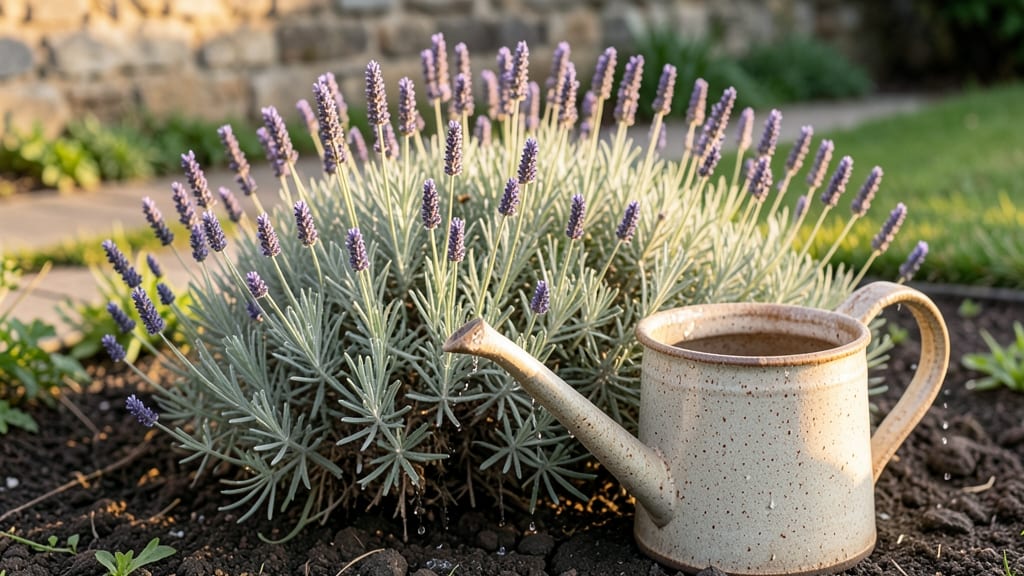
If your lavender plant needs how much water to thrive—or why you might be drowning it by accident—this is the guide you’ve been missing. Lavender thrives on neglect—too much water is the fastest way to kill these fragrant beauties, yet most gardeners drown them without realizing it.
Here’s the truth: lavender roots need dry conditions to stay healthy, and overwatering is the #1 reason these drought-loving plants turn mushy or develop root rot. The key isn’t just how much water you give but when and how—and most guides skip the critical details that actually work.
In this guide, I’ll share the exact watering schedule lavender craves—from seedlings to mature plants—plus the sneaky signs you’re over- or underwatering. No guesswork, just science-backed tips to keep your lavender lush without the soggy roots.
Ready to transform your lavender care? Let’s dive into the simple, foolproof routine that’ll have your plants thriving in no time.

How much water lavender needs by growth stage (with exact measurements)
Lavender thrives on consistent but minimal water. Unlike thirsty annuals, these Mediterranean natives store moisture efficiently, making overwatering the silent killer of most lavender plants. The key is understanding how much water lavender needs at each growth stage, from delicate seedlings to mature bushes.
Let’s break down the science-backed watering schedule that keeps lavender healthy without drowning its roots.
Your lavender’s water needs change dramatically as it grows. Seedlings demand daily moisture to establish roots, while mature plants can survive months without supplemental water once established.
Soil type plays a massive role too—sandy soil drains fast (requiring more frequent watering), while clay holds moisture longer (risking root rot if overwatered). We’ll cover exact measurements for each stage and soil type to keep your lavender flourishing year-round.
For seedlings, the first 3 months are critical. I water mine every 1-2 days with just 1/4 cup (60ml) per plant, keeping the soil consistently moist but never soggy. Use a spray bottle for gentle application to avoid disturbing delicate roots.
If you’re using sandy soil, you’ll need to water more frequently—sometimes daily in hot weather—while clay soil can hold moisture longer, requiring watering every 2-3 days.
Once lavender is established (3-12 months), the watering schedule shifts dramatically. At this stage, I switch to deep watering every 7-10 days, giving each plant about 1 cup (240ml) of water.
The goal is to encourage deep root growth, so I water at the soil base rather than the foliage. For sandy soil, you might need to water every 5-7 days, while clay soil can stretch watering to every 2 weeks.
Mature lavender (1+ years old) is the most drought-tolerant stage. Here, I water every 2-4 weeks with 1.5-2 cups (360-480ml) per plant, depending on soil type and weather.
In sandy soil, I water every 2 weeks in summer, while clay soil plants may only need water every 4 weeks. The key is to let the soil dry completely between waterings—stick your finger 2 inches deep; if it’s dry, it’s time to water.
During winter dormancy, lavender’s water needs drop to a minimum. I reduce watering to every 4-6 weeks or only when there’s no rainfall for 4+ weeks. Even then, I use just 1 cup (240ml) per plant.
This is when overwatering becomes deadly, as cold, wet soil invites root rot and fungal diseases. Always water in the morning to allow foliage to dry before evening.
Container-grown lavender has unique watering needs because pots dry out faster. I water mine every 5-7 days in summer, giving about 1 cup (240ml) when the top inch
Signs you’re overwatering (or underwatering) lavender—and how to fix it
Lavender thrives on neglect, not attention—especially when it comes to water. Overwatering is the silent killer of these Mediterranean natives, while underwatering can stunt their growth. The key is balance, but most gardeners struggle to spot the early warning signs.
I’ve revived dozens of soggy lavender plants by catching these symptoms early, and I’ll show you how.
Your lavender’s leaves tell the story first. Yellowing leaves or a mushy stem are classic overwatering red flags, but wilting can also signal underwatering. The trick? Check the soil moisture before jumping to conclusions.
I always dig my finger 2 inches deep—if it’s damp, hold off on watering. If it’s bone dry, it’s time to hydrate.
⚠️ callout-warning ⚠️
🚨 Lavender Watering Danger Zone
Overwatering causes:
- 🟡 Yellow leaves (especially lower ones)
- 🫒 Mushy stems (root rot starts here)
- 🍄 Fungal growth (white/pink mold on soil)
Underwatering causes:
- 💀 Crispy brown edges (leaves curl inward)
- 🌵 Dry, brittle stems (snaps easily)
- 🌡️ Soil pulls away from pot edges
Fix: For overwatered lavender, stop watering immediately and repot in well-draining soil. For underwatered plants, soak deeply once and mulch to retain moisture.
Root rot is the ultimate lavender killer, and it starts subtly. If you gently tug on your plant and it slips out easily, its roots are rotting. Healthy lavender roots should be woody and white, not brown and slimy.
I’ve seen gardeners lose entire lavender beds because they ignored this sign—don’t let that be you. If you suspect root rot, act fast with my 3-step recovery protocol below.
Step 1: Remove the plant from its pot or soil and trim away any mushy, dark roots with sterilized shears. Step 2: Repot in fresh, gritty soil (I mix equal parts potting soil, perlite, and coarse sand).
Step 3: Water lightly only when the top inch of soil is completely dry. This might seem counterintuitive, but lavender will bounce back with proper drainage.
Don’t overlook the soil surface either. A crusty, white layer (efflorescence) is normal, but black spots or mold mean your soil is too wet. I once had a lavender plant with a pink fungal bloom—turns out, I was watering it daily!
After repotting in sandy soil and adjusting my schedule, it recovered within weeks. The lesson? Less is more with lavender.
For underwatered lavender, the fix is simpler: deep watering once a week (or when the soil is bone dry). But here’s the catch—you’ll need to adjust your approach based on season and container size.
Container lavender dries out faster than in-ground plants, so I water mine every 7-10 days in summer, while garden beds might only need water every 3-4 weeks. Always water at the base, not the leaves, to prevent disease.