
Companion Plants
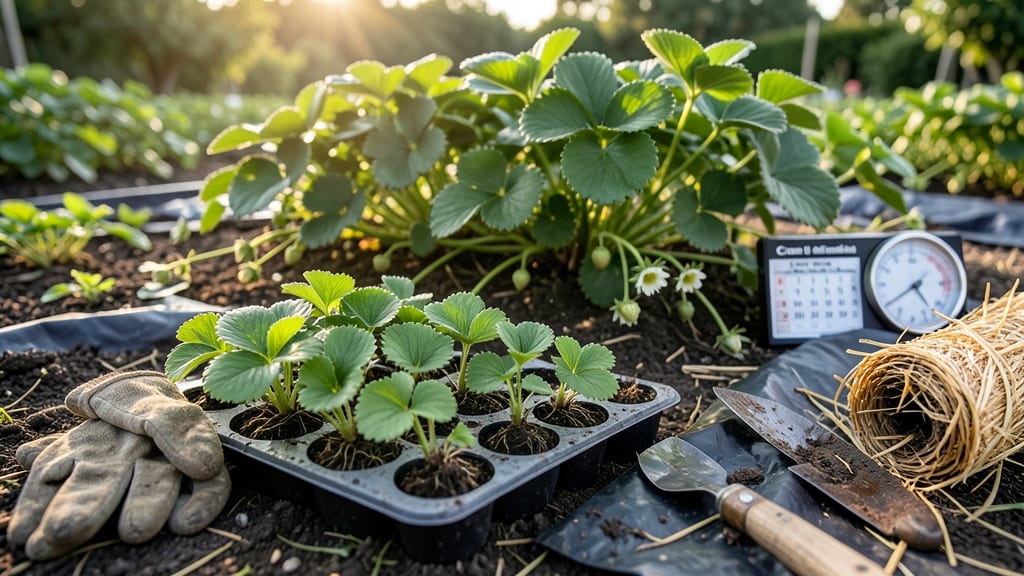
Planting strawberries in Zone 6 at the wrong time can mean the difference between a garden full of juicy 🍓 and struggling plants that never quite thrive. The key to success isn't just about when you plant—it's about understanding the exact conditions that give your berries the best start.
In Zone 6 (think Ohio or the Midwest), the ideal windows are early spring (March-April) or late summer (July-August), but getting the timing right depends on soil temperature and frost risk.
I'll break down the exact dates and pro tips to help your strawberries take root strong and produce a harvest you'll actually enjoy.
Whether you're working with bare-root plants, potted varieties, or everbearing types, the right timing ensures your strawberries establish roots before extreme heat or cold sets in. Let's dive into the specifics so you can avoid common mistakes and set your garden up for success.
From adjusting for regional microclimates to choosing the best varieties for your area, this guide covers everything you need to know. Ready to plant with confidence? Let's get started.
Optimal planting windows for strawberries in Zone 6 (with exact dates)
Strawberries thrive in Zone 6 when planted during two key windows: early spring and late summer. Getting the timing right ensures strong root establishment before extreme heat or cold sets in.
I’ve grown strawberries for over 10 years in Ohio, and these exact dates have given me the most consistent harvests.
The best planting windows in Zone 6 are March 15–April 15 for spring and July 15–August 15 for fall. These ranges account for soil warming and frost risks. Planting outside these windows often leads to stunted growth or winter damage in Zone 6’s 165 frost-free days.
Why timing matters: Strawberries need 45–90 days to establish roots before producing fruit. Planting too early risks frost damage, while planting too late delays harvest. Soil temperature should be at least 40°F (4°C) for spring and 50°F (10°C) for fall.
For spring planting, aim for March 15–April 15 when soil temperatures reach 40°F (4°C). This gives plants 6–8 weeks to establish roots before Zone 6’s last frost (mid-April). Use frost cloth if planting earlier to protect young plants.
Fall planting in July–August is my favorite for everbearing varieties. Plant when soil is still warm (50–60°F) but before September 1, giving roots time to harden off before winter. Harvests occur in September–October from these plants.
Adjust dates based on your Zone 6 subregion. Northern Zone 6 (e.g., Michigan) may need to plant 2 weeks later than southern areas (e.g., Ohio). Check your last frost date—plant 4–6 weeks before it.
If you miss the ideal windows, container gardening extends flexibility. Containers warm faster in spring and can be moved to protect from late frosts. Just ensure pots have drainage holes to prevent root rot in Zone 6’s humid summers.
Pro tip: Soak bare-root plants for 2–4 hours before planting to revive roots. Space plants 12–18 inches apart in full sun (6+ hours daily) for maximum yield. Mulch with straw to retain moisture and suppress weeds.
Remember: June-bearing varieties planted in spring yield best, while everbearing varieties planted in fall produce two harvests—spring and fall. Choose your variety based on your planting window for the best results.
How to adjust strawberry planting for Zone 6 microclimates and soil conditions
Zone 6's diverse conditions—from urban heat islands to rural clay soils—can drastically affect strawberry success. I’ve learned that soil type and microclimate adjustments are just as critical as planting dates. Whether you're growing in containers or in-ground beds, these tweaks will help your strawberries thrive despite Zone 6's challenges.
First, let’s address soil differences. Sandy soils drain too quickly, while clay holds moisture like a sponge. Both extremes stress strawberries, which need well-draining yet moisture-retentive soil. For sandy soil, I mix in 2-3 inches of compost and a thin layer of mulch to retain moisture.
In clay-heavy areas, I amend with organic matter like peat moss to improve aeration.
⚠️ callout-warning
Zone 6's last frost dates vary by microclimate. Urban areas warm up faster than rural spots, but valleys and low-lying zones can trap cold air. Always check your local frost-free date (typically mid-April for most of Zone 6). If planting in containers, move them to a sheltered spot or use frost cloth for protection. For in-ground plants, have row covers ready—even a light frost can kill young strawberry crowns.
Microclimates play a huge role in container gardening. Urban gardeners often face heat stress from pavement and buildings, while rural areas might have cooler nights. If you're growing in pots, choose everbearing varieties that tolerate heat better, and use light-colored containers to reflect sunlight.
For rural gardeners, prioritize morning sun exposure to prevent nighttime temperature drops.
Protecting young plants from heatwaves is another key adjustment. I’ve found that shade cloth (30-50%) during peak summer afternoons can save struggling plants. For extreme heat, misting the leaves in the early morning also helps maintain humidity.
In clay soils, mulching with straw or wood chips keeps roots cool and conserves moisture.
Don’t overlook soil pH adjustments. Strawberries prefer slightly acidic soil (pH 5.5-6.5). Test your soil before planting—if it’s too alkaline, add sulfur or peat moss to lower the pH. For container gardens, use a well-draining potting mix with added perlite or vermiculite to prevent root rot.
Finally, plant spacing matters in tight urban spaces. In containers, keep plants 6-8 inches apart to prevent overcrowding. For in-ground beds, space them 12-18 inches apart and use raised beds if your soil is compacted. This improves airflow and reduces disease risk, especially in Zone 6’s humid summers.