
Flowers
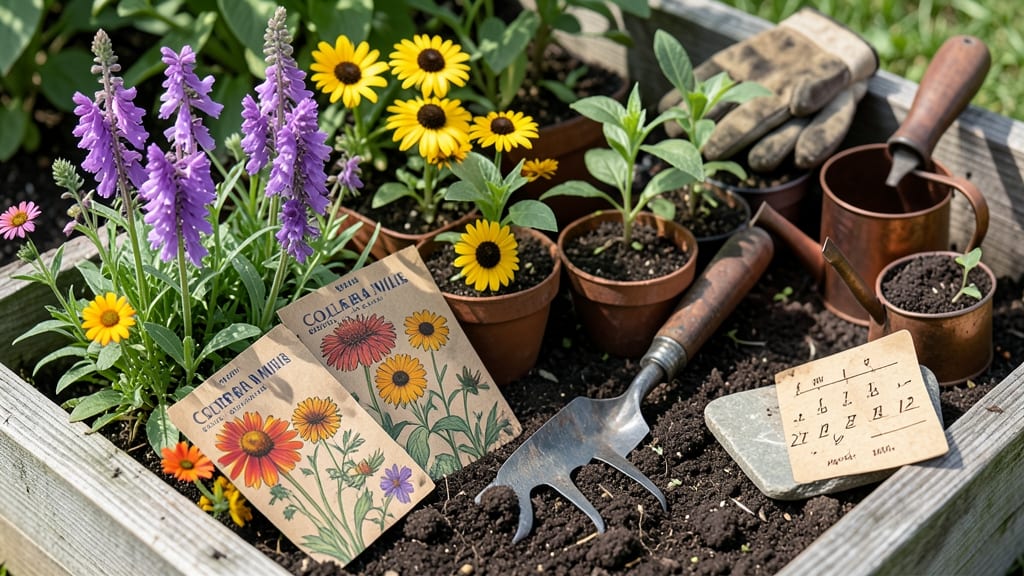
Timing your flowers in Colorado planting can make or break your garden’s success—get it wrong, and frost might turn your blooms into sad, wilted memories. The 5-7 USDA zones here mean your elevation dictates everything, from mid-April starts in lower areas to waiting until late May in the mountains.
I’ve watched 🌸 gardens thrive in Denver’s dry heat while my high-altitude friends in Summit County struggle with late frosts. The key? Knowing your last frost date—and how microclimates (like urban heat islands) can shift those windows by weeks.
Let’s break it down so you can plant with confidence, whether you’re in Zone 5 or Zone 7.
You’ll learn the exact planting windows for annuals, perennials, and bulbs—plus how to stretch your season with simple tricks like row covers or succession planting. No more guessing whether your zinnias or delphiniums will survive the first frost or flop in the heat.
Ready to turn your Colorado garden into a blooming paradise? I’ll walk you through the science, share my hard-won tips, and even help you pick the best flowers for your elevation. Let’s get those 🌸 planted right!
Colorado’s frost-free planting zones by elevation (with exact dates)
Colorado’s dramatic elevation changes—from desert lowlands to alpine peaks—create wildly different planting windows. At 3,000 feet, your last frost might arrive by April 15, while at 9,000 feet, you’re still waiting until June 1.
Understanding these zones helps you avoid frost damage and maximize bloom time. Let’s break down the three key elevation bands and their exact frost-free dates.
For lowland gardens (3,000–5,000 ft), like Denver or Colorado Springs, the average last frost date is April 15–May 1. This means you can plant cool-season flowers like pansies and sweet peas as early as March 15, while warm-season annuals (marigolds, zinnias) wait until May 15.
The growing season stretches until October 15, giving you a 180-day window for blooms.
At foothills elevations (5,000–7,000 ft), such as Fort Collins or Manitou Springs, frost lingers longer. Expect your last frost around May 1–May 15, with first frosts arriving by September 30–October 1.
This 150-day season favors hardy perennials (coneflowers, lavender) and cool-tolerant annuals (snapdragons, lobelia). Plant warm-season flowers no earlier than May 20 to avoid frost.
Above 7,000 feet, in mountain towns like Aspen or Leadville, the season shrinks dramatically. Last frosts often hit June 1–June 15, with first frosts as early as September 15.
Here, focus on alpine-tolerant flowers (columbines, penstemons) and short-season annuals (pansies, sweet peas). Start seeds indoors by March 1 to give them a head start.
Hardiness zones adjust by elevation: Lowlands sit in USDA Zone 6–7, foothills in Zone 5–6, and mountains in Zone 4–5. Choose plants rated for your zone—Zone 4 plants (like delphiniums) thrive in mountains but may struggle in lowlands. Always check the microclimate of your yard (e.g., south-facing slopes warm faster).
To pinpoint your exact last frost date, check local records from Colorado State University Extension or use a frost calendar tool. Urban areas (like Denver) often warm faster than rural spots, so monitor your yard’s microclimate.
Plant heat-loving flowers (like sunflowers) only after soil reaches 60°F—use a soil thermometer to test.
For fall planting, aim for August 1–September 15 in
Best flowers to plant by Colorado’s elevation zones (cold-hardy vs. heat-loving)
Colorado’s dramatic elevation shifts—from 3,000 feet in Denver to 10,000 feet in the mountains—mean your flower choices should match your microclimate. Lowland gardens (3,000–5,000 ft) can handle heat-loving perennials like black-eyed Susans, while mountain zones (7,000+ ft) thrive with cold-hardy sweet peas and pansies.
Let’s break down the best blooms for each zone and when to plant them for maximum impact.
For low-elevation gardens (Denver, Colorado Springs), focus on drought-tolerant perennials that love the hot afternoons but can handle cool nights. Coneflowers and Russian sage are top picks—they bloom from June to October with minimal water once established.
In contrast, high-elevation gardens (Aspen, Estes Park) need quick-start annuals like lobelia or stock flowers, which tolerate shorter growing seasons and brisk winds.
Pro Tip: Always check your last frost date (typically May 15 in lowlands, June 15 in mountains) before planting tender annuals. Use row covers to extend your season by 2–4 weeks in cooler zones.
🌱 Lowland Zones (3,000–5,000 ft) vs. Mountain Zones (7,000+ ft)
| Factor | Lowland Zones (3,000–5,000 ft) | Mountain Zones (7,000+ ft) |
|---|---|---|
| Best Perennials | Coneflowers, Black-Eyed Susans, Lavender | Yarrow, Columbine, Alpine Roses |
| Best Annuals | Marigolds, Zinnias, Petunias | Sweet Peas, Pansies, Stock |
| Planting Window | Mid-April to mid-June (after frost) | Late May to early July (soil >50°F) |
| Water Needs | Moderate (deep watering 2x/week) | Consistent (daily in containers) |
| Sun Requirements | Full sun (6+ hours) | Partial shade (4–6 hours) |
💡 Key Difference: Lowland zones can support heat-loving perennials like salvia, while mountain zones need cold-tolerant varieties that bloom earlier in the season.
If you’re gardening in foothill zones (5,000–7,000 ft), like Woodland Park or Manitou Springs, aim for a mix of both. Daylilies and beebalm bridge the gap—they handle temperature swings and dry spells better than most.
For containers, choose compact petunias or geraniums, which thrive in partial shade and cooler temps.
For mountain gardeners, prioritize fast-growing annuals that bloom quickly, like sweet peas (plant in late May) or stock flowers (tolerates light frosts). Perennials like yarrow return year after year with minimal care, making them ideal for high-altitude gardens.
Always mulch heavily (3–4 inches) to protect roots from temperature fluctuations.
No matter your elevation, deadhead spent blooms regularly to encourage longer flowering. In lowland zones, this extends blooms into October, while in mountains, it triggers reblooming before the first frost. Happy gardening! 🌼