
Planting
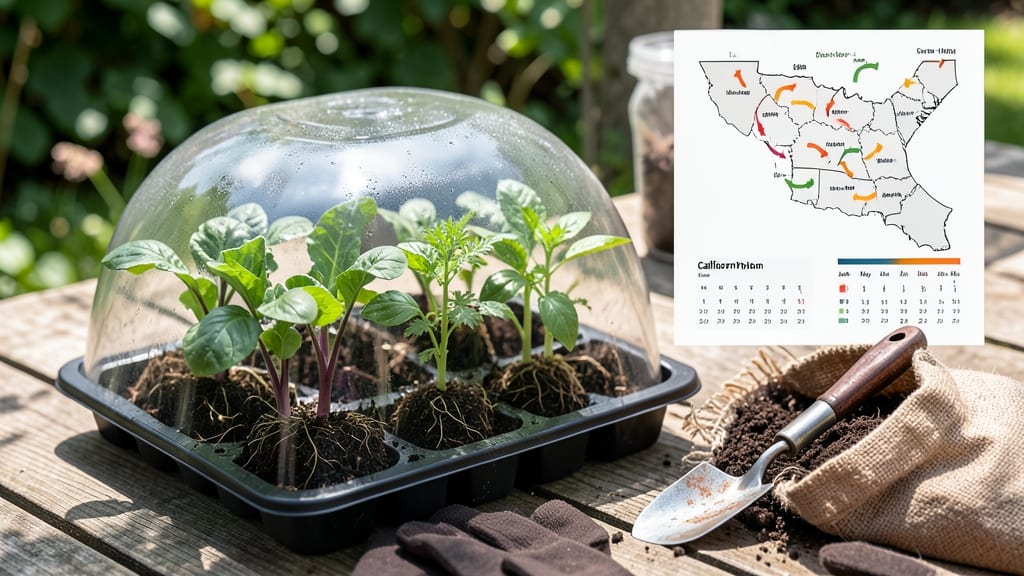
Planting your 🌱 vegetable garden in California at the wrong time can mean the difference between a thriving harvest and bitter disappointment—especially when coastal fog clashes with desert heat just miles apart.
The key isn’t just knowing when to plant, but understanding how your local microclimate dictates the perfect window for every crop, from frost-sensitive tomatoes to heat-loving peppers.
Let’s cut through the confusion: I’ll break down the exact months to start your garden in coastal areas like San Francisco, desert regions near Palm Springs, and the Central Valley’s fertile soil—plus how to adjust for your specific USDA zone.
Whether you’re a first-time gardener or a seasoned green thumb, these microclimate-specific tips will help you avoid bolting, maximize yields, and grow food year-round.
You’ll discover why planting lettuce in July might as well be a gamble, how to stretch your growing season with simple row covers, and which crops thrive in the fall’s cooler temperatures. No more guessing—just science-backed timing that works for California’s wild range of climates.
Ready to turn your garden into a productive powerhouse? Let’s dive into the planting calendar that’ll keep your veggies happy, healthy, and ready to harvest all year. Your future salads (and zucchini overload) will thank you.
California planting zones by microclimate: coastal vs. desert vs. Valley timing charts
California’s microclimates create a gardening puzzle where one region’s perfect planting time becomes another’s disaster. Coastal areas like San Francisco and Los Angeles enjoy mild winters with rare frost, while desert zones like Palm Springs face extreme summer heat.
Meanwhile, the Central Valley (Sacramento, Fresno) balances both extremes with defined frost dates. Understanding these differences ensures your vegetable garden thrives—not just survives.
For example, leafy greens like lettuce and spinach can grow year-round in coastal Zone 9b, but they’ll bolt in desert Zone 10a by May. Conversely, tomatoes and peppers need soil temperatures above 60°F, which desert regions hit by March, while coastal areas wait until May.
The key? Aligning your planting schedule with local frost-free dates and heat thresholds.
Below is a comparative planting chart for California’s three dominant microclimates, broken down by crop type. Use this as your garden’s roadmap—adjust for your exact location using the USDA Plant Hardiness Zone Map or your local Cooperative Extension office.
Bolting Risk: May–Aug
Bolting Risk: Mar–Apr
Bolting Risk: Apr–May
Ideal Soil Temp: 50–75°F
Ideal Soil Temp: 60–70°F
Ideal Soil Temp: 55–75°F
Heat Tolerance: Up to 85°F
Heat Tolerance: Up to 100°F
Heat Tolerance: Up to 90°F
Frost Tolerance: Down to 25°F
Frost Tolerance: Down to 30°F
Frost Tolerance: Down to 20°F
Avg Last Frost: Jan 15
Avg Last Frost: Never
Avg Last Frost: Jan 30
Notice how desert regions can grow warm-season crops like tomatoes as early as March, while coastal gardeners must wait until May to avoid heat stress. Conversely, leafy greens in the desert bolt by April, but coastal gardeners can enjoy them through summer’s end with shade cloth.
The Central Valley sits in the middle, offering a longer frost-free window but requiring careful succession planting to avoid overlapping heat-sensitive and cold-sensitive crops.
Pro tip: Use row covers in coastal areas to extend your spring planting window for warm-season crops like peppers. In the desert, shade cloth (30–50%) protects leafy greens from premature bolting.
For the Central Valley, black plastic mulch warms soil faster in spring, giving you a head start on tomatoes and cucumbers.
Another critical factor? Soil temperature. Desert soils hit 60°F by February, while coastal soils lag until April. Use a soil thermometer to confirm readiness—especially for warm-season crops. If your soil is below 60°F, wait or use black plastic mulch to accelerate warming.
For coastal gardeners, focus on fall and winter planting (September–March) for maximum yields. Desert gardeners should prioritize early spring and late summer (March–May and September–October) to avoid peak
How to avoid bolting in California: heat and cold sensitivity triggers by vegetable type
Bolting—the sudden flowering and seed production—can turn your California vegetable garden from productive to bitter in weeks. The problem? Heat-sensitive crops like lettuce bolt when summer temperatures rise above 75°F, while cold-sensitive crops such as broccoli bolt when winter temps dip below 40°F.
Understanding these triggers is key to extending harvests year-round.
I’ve learned the hard way: planting leafy greens in summer or broccoli in winter without protection leads to wasted space and lost yields. The solution? Succession planting and microclimate awareness.
For example, coastal San Francisco gardeners can grow lettuce year-round, while Central Valley growers must use shade cloth or plant in fall for bolting-free harvests.
🌱 California Bolting Triggers & Solutions
- 🌡️ Heat-Sensitive Crops (bolt above 75°F): Lettuce, Spinach, Arugula, Radishes, Peas Plant in fall/winter or use shade cloth.
- ❄️ Cold-Sensitive Crops (bolt below 40°F): Broccoli, Cauliflower, Kale, Cabbage, Celery Use row covers in winter or plant in spring/fall.
- ☀️ Heat-Tolerant Crops (thrive in summer): Tomatoes, Peppers, Okra, Sweet Potatoes, Eggplant Plant after last frost (March-April in most regions).
- ⏳ Succession Planting Strategy: Sow lettuce every 2 weeks in fall/winter for continuous harvests. For broccoli, plant in September and March to avoid winter bolting.
- 🌿 Microclimate Adjustments:
- Coastal (e.g., SF): Grow winter lettuce year-round; use shade cloth in summer.
- Desert (e.g., Palm Springs): Plant heat-tolerant varieties (e.g., Romaine lettuce) in fall/spring.
- Central Valley (e.g., Fresno): Use drip irrigation to cool soil for leafy greens in summer.
For leafy greens, the secret is shade cloth or partial shade during summer. I’ve had success with 30-50% shade cloth over lettuce beds in July and August, which keeps temps down and delays bolting by 2-3 weeks.
Pair this with daily watering to prevent stress—dry soil accelerates bolting in heat-sensitive crops.
On the flip side, broccoli and cabbage bolt when winter chills linger. My trick? Row covers made of frost cloth (1.2 oz weight) protect young plants from 30-40°F temps. I also plant these cool-season crops in September and March to avoid the coldest months entirely.
This succession planting method ensures I have fresh broccoli from November to May.
Don’t overlook succession planting—it’s the game-changer for year-round harvests. For example, sow radishes every 2 weeks from September to March to avoid the heat bolting that hits in May.
Similarly, spinach bolts in summer, but planting heat-tolerant varieties like Tyee in late summer (with shade) can extend harvests into October.
Pro tip: Monitor soil temperature with a soil thermometer. Most leafy greens prefer 60-70°F soil, while warm-season crops like tomatoes thrive at 75-85°F. If your soil hits 80°F in summer, it’s time to switch to heat-tolerant varieties or shade cloth.
For broccoli, aim for 50-65°F soil—any colder and you’ll trigger bolting.
With these strategies, you can avoid bolting and enjoy fresh vegetables from your California garden all year. Start with one or two crops, test what works in your microclimate, and gradually expand. Trust me, the flavor and yield difference is worth the effort! 🌱