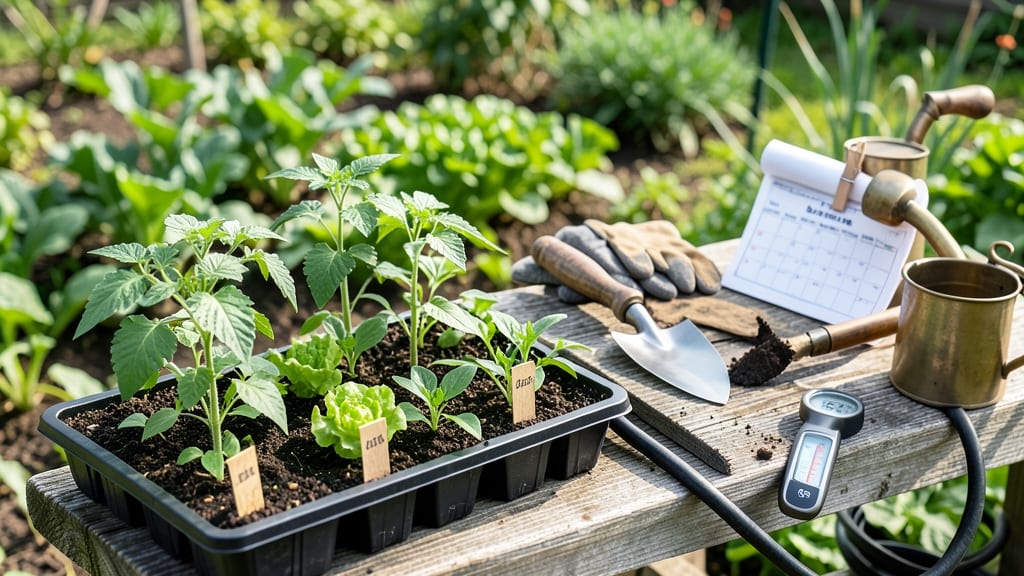
Planting a vegetable garden in Pennsylvania at the wrong time can mean the difference between a bountiful harvest and sad, wilted plants.
The last frost date in your county isn’t just a number—it’s the key to knowing when to tuck seeds into the soil for tomatoes, peppers, and other warm-lovers, or when to sow spinach and peas for a spring feast.
With USDA Zones 5-7 across the state, your planting window varies from Philadelphia’s early March start to Pittsburgh’s later April timing. But here’s the catch: even within those zones, microclimates—like urban heat pockets or sheltered valleys—can shift your schedule by weeks.
That’s why I’ve broken down the exact frost-free deadlines by region, so you never guess again.
Whether you’re dreaming of crisp 🥬 lettuce in May or juicy tomatoes by July, this guide gives you the month-by-month roadmap for PA’s most popular crops.
We’ll also show you how to stretch your season with row covers and cold frames, because why let frost or heat ruin your hard work?
Ready to grow like a pro? Let’s dive into the planting calendar that’ll have your garden thriving—no matter where in Pennsylvania you’re digging in the dirt.
🥬
When to Plant Vegetable Garden Garden
Jan
❄️
Feb
❄️
Mar
🌱
Apr
🥬
May
🥬
Jun
🌱
Jul
🥬
Aug
🥬
Sep
🌱
Oct
🍂
Nov
🍂
Dec
❄️
Pennsylvania’s frost-free deadlines by hardiness Zone (2024 guide)
Pennsylvania’s last frost dates vary dramatically across its USDA Zones 5-7, making timing everything for your vegetable garden. In Zone 5 (northwest PA), expect your last frost around April 25-30, while Zone 7 (southeast PA) typically warms up by April 10-15.
Understanding these deadlines helps you avoid frost damage to tender crops like tomatoes and peppers while maximizing yields for cool-season crops like spinach and kale.
Urban areas like Philadelphia and Pittsburgh often experience urban heat islands, which can delay frost by 1-2 weeks compared to rural counties. Meanwhile, mountainous regions like the Poconos may see frost lingering until May 10.
Using these frost-free dates as your guide ensures you plant warm-season crops after the last frost and cool-season crops early enough to harvest before winter sets in.
Below is a county-by-county breakdown of Pennsylvania’s 2024 frost-free deadlines, including early vs. late planting windows for both cool-season and warm-season crops. This table will help you align your planting schedule with your local climate, whether you’re in Allegheny County or Lancaster County.
| Region/City |
USDA Zone |
Last Frost Date |
First Frost Date |
Cool-Season Planting Window |
Warm-Season Planting Window |
| Philadelphia |
Zone 7a |
April 10-15 |
October 15-20 |
March 15 - April 10 |
April 20 - May 10 |
| Pittsburgh |
Zone 6a |
April 15-20 |
October 20-25 |
March 1 - April 15 |
April 25 - May 5 |
| Lancaster |
Zone 6b |
April 12-17 |
October 25-30 |
March 10 - April 12 |
April 20 - May 2 |
| Erie |
Zone 5b |
April 25-30 |
October 30 - Nov 5 |
March 15 - April 20 |
May 5 - May 15 |
| Poconos (Wayne/Monroe) |
Zone 5a |
May 1-10 |
October 20-25 |
April 1 - May 1 |
Best vegetables to plant by month in PA (avoid these mistakes)
Pennsylvania’s cool springs and warm summers create a perfect two-season gardening window. But timing matters—plant spinach too late, and it bolts; plant tomatoes too early, and frost kills them. Let’s break down the best month-by-month schedule to maximize your harvest.
Start with cool-season crops like lettuce and peas in early spring. These thrive in 40–60°F soil, so don’t wait until the ground warms. Then, transition to warm-season favorites like zucchini and peppers after the last frost—usually mid-April to early May in most of PA.
⚠️ callout warning ⚠️
🚨 Common Mistake: Planting frost-sensitive crops (like tomatoes or peppers) before the last frost date. Even a light frost can kill young plants. Solution: Use row covers or start seeds indoors 6–8 weeks before transplanting.
For example, in Philadelphia (Zone 7a), the last frost is around March 15, while in Pittsburgh (Zone 6b), it’s closer to April 15. Adjust your schedule accordingly—cool crops like kale can handle light frosts, but warm crops need warmth to thrive.
June is prime time for summer squash, cucumbers, and beans. These love the heat but need consistent moisture. Succession plant bush beans every 2 weeks for a continuous harvest.
Meanwhile, fall crops like carrots and radishes can go in as early as late July to avoid bolting.
Don’t forget late-season extenders! Use cold frames or low tunnels to protect spinach and garlic into November. This trick lets you harvest greens even after the first frost. Just avoid planting warm-season crops like eggplant after July 15—they won’t mature before frost.
Pro tip: Keep a gardening journal to track what works in your specific microclimate. Note when frost hits early or when heat waves arrive late—these tweaks will make next year even better. With the right timing, you’ll enjoy homegrown veggies from spring to fall!
★★★★★4.8(10 reviews)
|