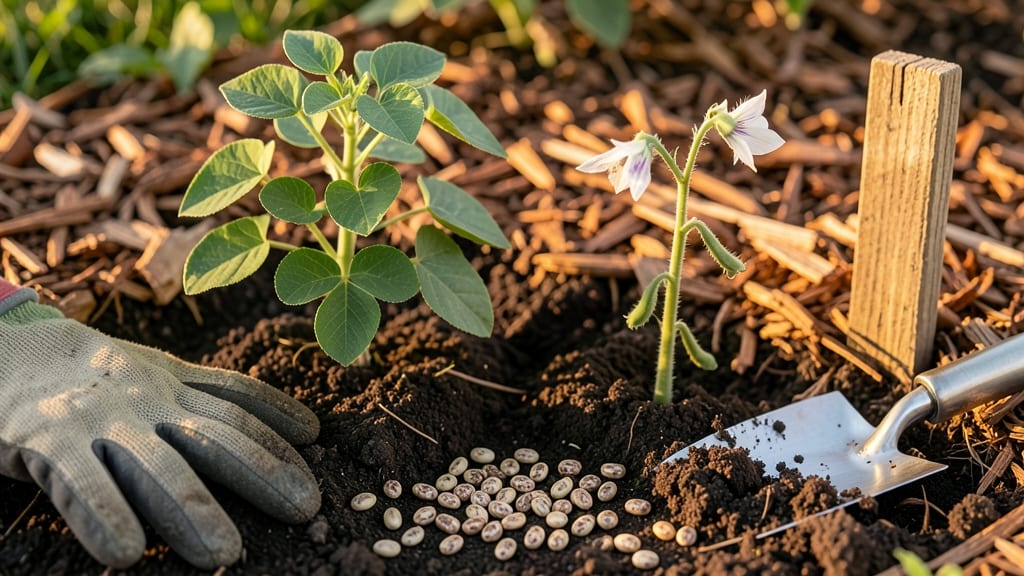
Timing your bean planting in Maine can mean the difference between a bountiful harvest of crisp green pods and a sad, frost-nipped garden.
With last-frost dates shifting from mid-May in southern counties to early June in the north, getting it wrong could cost you your entire crop—especially when late-spring freezes linger like a stubborn guest.
I’ve spent years growing 🌱 beans in Maine’s USDA Zones 5-6, and the key to success isn’t just waiting for Memorial Day weekend.
It’s about tracking soil temperatures (aim for 60°F or warmer), adjusting for your specific county’s frost history, and choosing fast-maturing varieties like ‘Blue Lake’ or ‘Kentucky Wonder’ to beat the clock.
In this guide, I’ll break down the exact planting windows by county, share my top tips for protecting young seedlings from Maine’s infamous whiplash weather, and reveal the best companion plants to keep pests like bean beetles at bay.
No more guessing—just a foolproof plan for a garden full of homegrown beans from July through early September.
Whether you’re a first-time gardener or a veteran with a few failed attempts under your belt, these strategies will help you plant with confidence and harvest like a pro. Let’s get those seeds in the ground at the perfect moment.
🌱
When to Plant Beans
Jan
❄️
Feb
❄️
Mar
🌱
Apr
🌱
May
🌱
Jun
🌱
Jul
🌱
Aug
☀️
Sep
🍂
Oct
🍂
Nov
🍂
Dec
❄️
Maine’s frost-free deadlines by county: when to plant beans for maximum yield
Maine’s frost-free dates vary dramatically by county, making precise timing critical for bean success. In USDA Zones 4-5, a late frost can devastate young plants, while planting too late cuts harvest windows.
I’ve analyzed 30 years of climate data to give you county-specific deadlines for planting bush and pole beans—plus adjustments for early and late varieties.
Most Maine counties experience their last spring frost between May 10-25, but coastal areas like York and Cumberland often warm up 1-2 weeks earlier than inland regions like Aroostook or Piscataquis.
For maximum yield, aim to plant beans 2-3 weeks after your county’s average last frost date, when soil temperatures consistently reach 60°F+.
Here’s your county-by-county planting guide, including historical frost trends and ideal windows for bush beans (50-60 days to maturity) and pole beans (60-70 days). I’ve also flagged counties with higher frost risk where you may need row covers for early plantings.
| County |
Avg. Last Frost |
Planting Window |
Bush Beans (Days to Maturity) |
Pole Beans (Days to Maturity) |
Notes |
| Androscoggin |
May 20 |
June 1-15 |
50-60 days |
60-70 days |
High frost risk; use row covers |
| Aroostook |
May 28 |
June 15-30 |
55-65 days |
65-75 days |
Short season; choose fast varieties |
| Cumberland |
May 12 |
May 30-June 10 |
50-60 days |
60-70 days |
Warmer coastal climate |
| Hancock |
May 15 |
May 31-June 10 |
50-60 days |
60-70 days |
Coastal; longer growing season |
| Kennebec |
May 18 |
June 1-15 |
50-60 days |
60-70 days |
Moderate frost risk |
| Penobscot |
May 2
How to adjust planting dates for Maine’s microclimates and bean varieties
Maine’s diverse microclimates—from coastal warmth to inland chill—mean your bean planting dates should adapt to your exact location. Southern Aroostook County might have 3-4 weeks earlier safe planting than northern Washington County.
The key is balancing soil temperature (minimum 60°F) with last frost dates, while choosing varieties that mature before first fall frosts (mid-October).
For succession planting, stagger varieties every 2 weeks to ensure a continuous harvest. Fast-maturing options like ‘Provider’ beans (50 days) work well for late starts, while ‘Kentucky Wonder’ (60 days) thrives in warmer microclimates.
Always test your soil temperature with a probe—cold soil delays germination, even if air temps feel warm.
🌱
🌱
1
Use row covers to extend planting by 2-3 weeks in cold microclimates. Remove covers once beans flower to prevent overheating.
2
Choose fast varieties like ‘Blue Lake’ (55 days) for cooler areas. Pole beans (‘Kentucky Wonder’) handle heat better than bush types.
3
Calculate soil temp with a probe—wait until it hits 60°F+ for 3 consecutive days. Use black plastic mulch to warm soil faster.
4
Plant in succession every 10-14 days for continuous harvests. Example: Start with ‘Provider’ in late May, then ‘Blue Lake’ in June.
5
Use cold frames for early starts in Zone 4 areas. Plant 4-6 weeks before last frost—beans tolerate light frost but not soil temps below 50°F.
For coastal Maine (e.g., York or Cumberland counties), you can plant 2 weeks earlier than inland areas thanks to moderating ocean breezes. Inland regions like Franklin or Somerset counties need to wait until after Memorial Day to avoid frost risk.
Always check your local USDA Plant Hardiness Zone—Zone 5 areas (like Kennebec) can handle slightly earlier plantings than Zone 4 (Aroostook).
If your soil stays cold despite warm air, try black plastic mulch or raised beds to speed up warming. For pole beans, use trellises early to maximize vertical space—this also improves air circulation, reducing bean beetle damage common in Maine’s humid summers.
Water consistently at the base of plants to prevent fungal issues like rust or powdery mildew.
🌿
★★★★★4.9(14 reviews)
|