
Plants
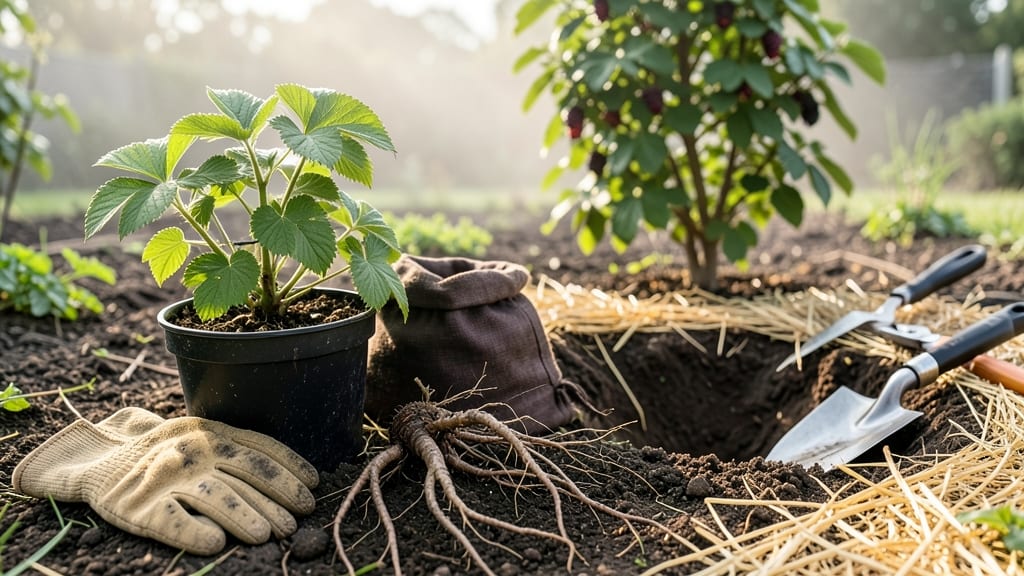
Planting blackberries in Colorado isn't just about grabbing canes and sticking them in the ground—timing your 🫐 blackberry planting window can mean the difference between thriving bushes and struggling vines.
Whether you're in Denver's USDA Zone 5 or the high desert of Zone 7, getting the season right is critical for root establishment before summer heat or winter frost strikes.
Most gardeners assume spring is the only option, but Colorado's unique climate actually gives you two prime windows: early spring (March-April) when soil warms above 50°F, or fall (September-October) when temperatures cool but before hard frost hits.
Each approach has distinct advantages depending on your microclimate—whether you're battling Front Range winds or dealing with Western Slope drought conditions.
I've tested both methods across Colorado's diverse elevations, and what I'm about to share will help you avoid the #1 mistake most new growers make: planting too late in spring when summer's intensity arrives, or too early in fall when roots can't establish before freeze.
Let's break down exactly when to plant for your specific location and how to give your blackberries the best possible start.
You'll discover how to read your local frost dates, prepare soil for Colorado's alkaline conditions, and choose between spring's rapid growth or fall's cooler establishment. By the end, you'll know exactly when to plant for maximum berry production—no guesswork required.
Optimal Colorado blackberry planting seasons: spring vs fall breakdown
Colorado’s diverse climate—from the Front Range’s high-altitude valleys to the Western Slope’s arid deserts—means blackberry planting timing varies dramatically. In USDA zones 5-7, your success hinges on avoiding late spring frosts (which can kill tender canes) and early fall freezes (which stunt root growth).
Let’s break down when to plant for each region’s unique frost patterns and soil conditions.
Most Colorado gardeners choose between early spring (March-April) and fall (September-October) planting. Spring planting gives canes 6-8 weeks to establish roots before summer heat, while fall planting takes advantage of cool soil temperatures and reduced pest pressure.
The best choice depends on your elevation and microclimate—Denver’s zone 5b has different frost risks than Grand Junction’s zone 7a.
The comparison below highlights key differences between spring and fall planting, including soil temperature thresholds, frost risk windows, and establishment timelines. Use this as your guide to pick the optimal window for your blackberry patch.
For Front Range gardeners in zones 5-6 (Denver, Boulder, Fort Collins), spring planting is often safer. Aim for mid-April when soil temperatures consistently stay above 50°F. This gives canes 6-8 weeks to root before summer’s 100°F+ heat stresses young plants.
If you choose fall, plant by mid-September to allow roots to harden before October’s first frost.
On the Western Slope (Grand Junction, Durango, zone 7), fall planting often wins due to warmer soils and less frost risk. Plant in late September when nights cool to 60°F—this mimics natural dormancy cycles.
Spring planting here requires earlier timing (March) to avoid April’s unpredictable late frosts, which can delay fruit production by a year.
In the Eastern Plains (Pueblo, Colorado Springs, zone 6), your best bet is fall planting. The region’s dry climate and hot summers make spring establishment difficult.
Plant in October when soil stays 55-65°F, and mulch heavily to retain moisture. Spring planting here should wait until late April to avoid frost damage.
How to choose the perfect planting month for Colorado blackberries
Colorado’s diverse elevations create microclimates that drastically affect blackberry planting success. At 5,280 feet in Denver, last frost averages April 15, while Grand Junction at 4,400 feet warms earlier.
Always wait until soil reaches 50°F+—cold soil stunts root growth and invites rot. Use a soil thermometer to verify before planting.
For Denver/Boulder (USDA Zone 5b), aim for mid-April to early May in spring or late September for fall. Colorado Springs (Zone 6a) can plant 2 weeks earlier due to lower elevation. Western Slope areas like Grand Junction (Zone 6b) extend spring planting to late April thanks to warmer temperatures.
| Region | Best Planting Window | Soil Temp Threshold | Elevation Range |
|---|---|---|---|
| Denver/Boulder | Mid-April to May 15 | 50°F+ | 5,000-7,000 ft |
| Colorado Springs | Late March to April 30 | 50°F+ | 6,000-6,500 ft |
| Grand Junction | Late April to May 10 | 55°F+ | 4,000-5,000 ft |
| Fall Planting (All) | September 15-October 1 | 60°F+ | N/A |
Fall planting offers a 6-week head start on root growth before winter dormancy. Choose September 15-October 1 to ensure roots establish before first frost (typically October 15).
Test soil moisture—dry fall soils need deep irrigation to prevent transplant shock. Mulch with 4-6 inches of straw to retain moisture and insulate roots.
High-altitude gardens above 7,000 feet (e.g., Fort Collins) should delay planting until May 1 to avoid late frosts. Check local CoCoRaHS frost data for your exact elevation—microclimates vary even within cities. South-facing slopes warm faster than north-facing yards, allowing 2-3 weeks earlier planting in spring.
Use bare-root canes for spring planting—they establish faster than potted plants. Soak roots in water for 2 hours before planting to rehydrate. For fall, opt for container-grown plants to minimize root disturbance. Always plant on a cloudy day to reduce transplant shock from afternoon sun.
Monitor 7-day forecasts for frost warnings. If nighttime temps drop below 32°F within 2 weeks of planting, protect young canes with row covers or burlap wraps. Colorado’s Chinook winds can create false springs—verify soil temps weekly, not just air temps.