
Plants
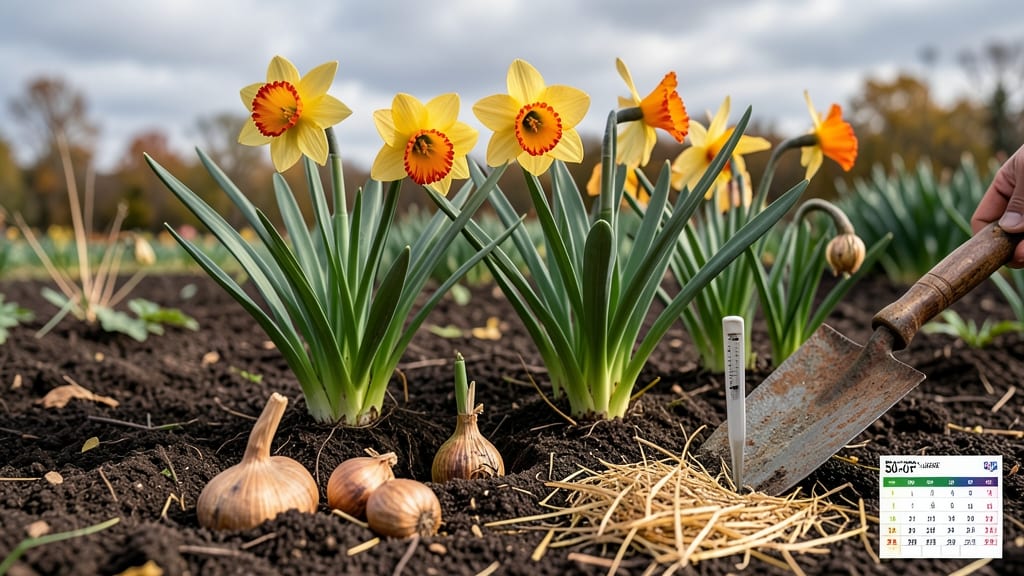
Planting daffodils in Colorado isn't just about dropping bulbs in the ground—it's about outsmarting the state's unpredictable frost dates and high-altitude challenges.
With the right timing, your 🌼 blooms can thrive even in Denver's chilly USDA Zones 5-7, where a single late freeze can wipe out a whole season's work.
Most gardeners know fall is the prime window, but Colorado's September-to-November planting schedule isn't one-size-fits-all. Whether you're in the Front Range or mountain regions, the key lies in planting 6-8 weeks before your first frost—typically between early September and mid-October.
This gives those bulbs the perfect head start to establish roots before winter sets in.
What happens if you miss the fall boat? Don't panic—spring planting can still work with some strategic adjustments. I'll show you exactly how to time it right, including soil prep tricks and bulb pre-chilling methods that actually make a difference in Colorado's variable climate.
Let's get those daffodils growing strong, no matter when you plant.
The secret to zero-frost survival isn't just about timing—it's about choosing the right varieties and giving them the care they need. From cold-hardy cultivars that handle Colorado's extremes to proper planting depth techniques, I've got the insider tips that'll have your garden bursting with color come spring.
Let's make this your most successful daffodil season yet.
Optimal fall planting dates for Colorado daffodils by elevation Zone
Colorado’s three distinct elevation zones create wildly different planting windows for daffodils. In the Front Range (Denver/Boulder), you’ve got 6-8 weeks between summer heat and first frost—perfect for establishing strong roots.
Meanwhile, mountain regions like Aspen face earlier freezes, demanding precise timing. The Western Slope offers a slightly extended window, but soil temperatures still dictate success.
Science shows daffodils need 4-6 weeks of root growth before winter dormancy. Planting too early risks rot, while waiting too long means bulbs won’t establish before frost. Colorado’s USDA Zones 5-7 complicate things further—Denver’s Zone 5b freezes earlier than Zone 6b in Fort Collins.
Let’s break down the exact windows by region, plus soil prep secrets to guarantee zero-frost survival.
For Front Range gardeners in Denver or Boulder (Zone 5b-6b), aim for September 15 to October 15. Soil temperatures should hover between 50-60°F (10-15°C)—use a soil thermometer to confirm.
Plant bulbs 6-8 inches deep, with the pointed end up, and space them 4-6 inches apart for optimal airflow. This window gives roots 6-8 weeks to establish before winter.
In mountain regions like Aspen or Leadville (Zone 4a-5a), you’ve got less than 8 weeks before frost. Plant between August 25 and September 20 when soil temps reach 45-55°F (7-13°C).
Deeper planting (8-10 inches) protects bulbs from temperature fluctuations. Pro tip: Add 2 inches of mulch after planting to insulate soil and retain moisture.
Western Slope areas like Grand Junction (Zone 6a-7a) enjoy a later frost date, allowing planting until October 30. Soil should be 55-65°F (13-18°C), and bulbs can go slightly shallower (5-7 inches).
However, don’t wait too long—bulbs planted after October 15 risk poor root development. Test soil moisture weekly; Colorado’s dry fall winds can dry out newly planted areas quickly.
All Colorado regions benefit from pre-planting soil prep. Work in 2-3 inches of compost to improve drainage—the last thing you want is waterlogged bulbs. Add a slow-release bulb fertilizer at planting time for an early-season boost.
For high-altitude gardens, mix in sand or perlite to prevent compaction from freeze-thaw cycles.
One common mistake? Planting daffodils too deep. While 8-10 inches works in mountains, 5-6 inches suffices in Denver. Over-deep planting delays flowering and weakens stems. Use a bulb planter for precision—it marks the perfect depth and spacing automatically. For rocky soil, create small mounds to ensure bulbs sit level.
Chilling requirements are often overlooked, but Colorado’s cold winters naturally satisfy daffodils’ need for 12-16 weeks below 40°F (4°C). No pre-chilling is needed unless you’re in a mild
Spring planting hacks for Colorado gardeners who missed fall
Don’t panic if you missed the ideal fall planting window for daffodils in Colorado! With the right adjustments, spring planting can still yield vibrant blooms—but timing and prep are critical.
Colorado’s last-frost dates vary dramatically by elevation, so I’ll break down region-specific strategies to maximize success. The key? Mimicking nature’s chilling process and protecting young shoots from late frosts.
First, check your local last-frost date. In Denver (Zone 5b), expect frost until mid-April, while mountain areas like Aspen (Zone 4b) may see frost until late May.
Planting too early risks frost damage, while waiting too long delays blooming. Aim to plant 4-6 weeks before your last frost, but with Colorado’s unpredictable weather, flexibility is key.
⚠️ WARNING: Spring-Planted Daffodils Need Extra Care ⚠️
- Late frosts can kill emerging shoots—Colorado’s microclimates mean frost can occur anytime until May in high-altitude areas.
- Poor root establishment from delayed planting reduces winter hardiness, making bulbs vulnerable to freeze-thaw cycles.
- Competition from established perennials can starve young daffodil roots of nutrients.
- Pre-chill bulbs for 6-8 weeks in a cool, dark place (like a fridge) to simulate winter dormancy.
- Use black plastic mulch or straw bales to warm soil and protect shoots after planting.
- Choose late-blooming varieties (e.g., ‘Ice Follies’ or ‘Tête-à-Tête’) to avoid frost-sensitive bloom times.
To compensate for lost fall planting time, start by pre-chilling your bulbs. Place them in a paper bag in your fridge’s crispier drawer (around 35-40°F) for 6-8 weeks before planting.
This mimics the natural chilling period daffodils need to bloom. Skip this step, and you’ll likely see weak or no flowers—or worse, bulbs that rot from failed dormancy.
Once your bulbs are chilled, plant them 2-3 weeks before your last frost date, but only if soil temps are above 50°F. Use a hand trowel to dig holes 6-8 inches deep (twice the bulb’s height) and space them 4-6 inches apart.
Mix in compost or well-rotted manure to give roots a nutrient boost, but avoid fresh manure—it can burn delicate roots.
Protect your new plantings with companion plants that act as living mulch. Try low-growing thyme or creeping phlox around daffodils—they’ll suppress weeds, retain moisture, and insulate roots during late frosts.
For extra protection, drape frost cloth over beds on cold nights until shoots are 4 inches tall. Remove it during the day to let sunlight warm the soil.
After planting, water deeply once a week (more if your area is dry) to encourage root growth. Avoid overhead watering—it can spread fungal diseases like gray mold. Instead, use a soaker hose or drip irrigation to deliver moisture directly to the soil.
By mid-June, your daffodils should be established enough to handle Colorado’s summer heat—just keep an eye out for deer or squirrels digging up bulbs!
With these adjustments, your spring-planted daffodils can still deliver bold, early blooms next year. The trade-off? They may take 1-2 years to reach full vigor compared to fall-planted bulbs.
But for Colorado gardeners, the payoff—vibrant yellow and white blooms popping up in late April or May—is worth the extra effort. Happy planting! 🌼