
Plants
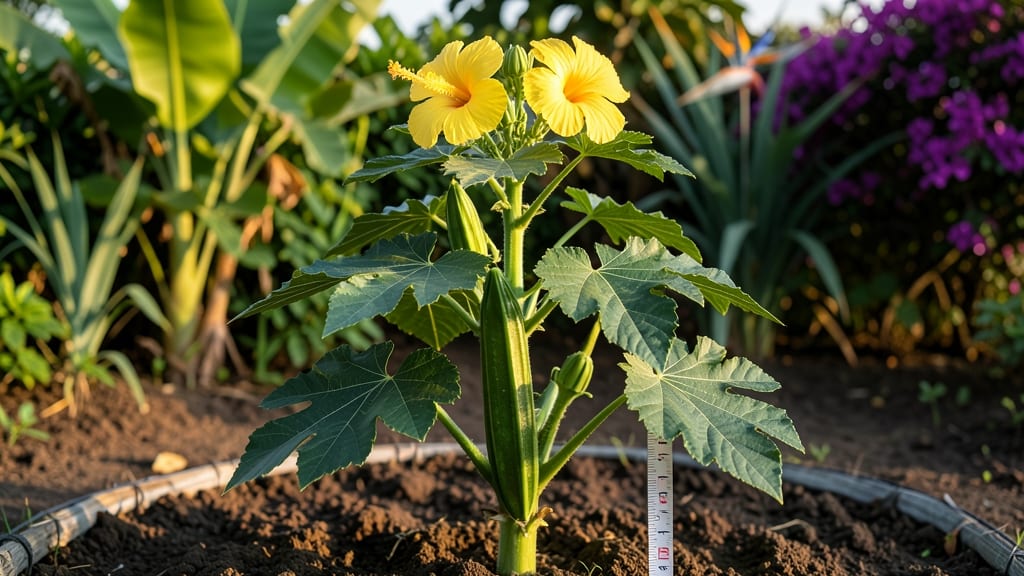
If you're wondering how tall okra plants grow, get ready for a surprise—these summer staples can reach heights of up to 10 feet in ideal conditions! Whether you're planning a backyard garden or a container setup, knowing your okra's mature size is the first step to avoiding space struggles later.
Okra isn't one-size-fits-all—some varieties stay compact at just 2-4 feet, while others shoot up like sky-scrapers. The key to choosing the right type depends on your growing space and climate in zone 6a.
Let me break down the height differences so you can pick the perfect fit for your garden.
You might think taller plants mean more work, but with the right techniques, you can manage even the tallest okra without losing control. From dwarf varieties for small spaces to standard types for open gardens, we'll cover everything you need to know to keep your plants thriving—and your harvests bountiful.
Ready to grow okra that matches your space? I'll share the best height ranges by variety, plus tips to control growth naturally. Let's get started!


Okra plant height by variety: from compact to sky-high
Choosing the right okra variety is essential if you're working with limited garden space or dreaming of a towering harvest. Okra plants can range from compact bush varieties under 4 feet to giant tropical types reaching 10 feet or more.
The variety you select directly impacts your garden layout, trellising needs, and even your harvest strategy.
For urban gardeners or balcony growers, dwarf okra varieties are game-changers, offering all the flavor without the space requirements. Meanwhile, traditional gardeners often prefer taller varieties for their impressive yields and classic appearance.
Let's explore the full spectrum of okra heights so you can make the perfect choice for your growing conditions.
📏 Height matters because it determines your spacing needs, trellising requirements, and even how you'll harvest those prized pods. A 6-foot okra plant needs completely different care than a 3-foot dwarf variety, from pruning strategies to support structures.
| Variety Type | Mature Height | Space Needs | Best For |
|---|---|---|---|
| Dwarf Varieties | 2-4 ft | 12-18" apart | Containers, small gardens, urban plots |
| Semi-Dwarf | 4-6 ft | 24-30" apart | Balconies, raised beds, small yards |
| Standard | 6-8 ft | 36-48" apart | Traditional gardens, trellised growing |
| Giant/Tropical | 8-10+ ft | 48-60" apart | Large gardens, tropical climates |
| Popular Examples | Clemson Spineless (6-8 ft), Emerald (4-5 ft), Bambino (3-4 ft) | Varies by type | Home gardens, commercial plots |
Let's start with the dwarf okra varieties like Bambino or Little Lady, which max out at just 3-4 feet tall. These are perfect for container growing or when you're working with limited vertical space.
I've successfully grown Bambino in 5-gallon pots on my balcony, harvesting tender pods all summer long without needing any support structures.
The semi-dwarf varieties like Emerald or Bluestem offer a happy medium, reaching 4-6 feet tall. These work beautifully in raised beds or along fences where you can provide light trellising. They're my go-to for small suburban gardens because they produce well without taking over the space.
For traditional gardeners, standard varieties like Clemson Spineless or Jinjerling are classic choices, growing 6-8 feet tall. These need proper spacing and often benefit from trellis support to handle their weight and keep pods accessible.
I've found that giving them 3 feet of space in all directions prevents overcrowding and improves air circulation.
The giant varieties like Red Burgundy or Perennial Okra can reach 10 feet or more in ideal conditions. These are stunning plants that make a dramatic statement in the garden, but they require significant space and often need strong trellis systems or even small cages to support their massive growth.
When selecting your okra variety, consider your garden layout and how you plan to harvest. Taller varieties produce pods higher up, which can make harvesting more challenging unless you provide proper support. Meanwhile, dwarf varieties keep everything at eye level, making them ideal for easy access and frequent harvesting.
Remember that environmental factors also influence height. Okra grown in tropical climates often reaches its maximum potential height, while cooler climates may see slightly shorter plants.
I've noticed that my Clemson Spineless plants in Zone 7 reach about 7 feet, while the same variety in Zone 9 can easily exceed 8 feet.
If you're new to growing okra, I recommend starting with a medium-height variety like Emerald. It gives you the best of both worlds—enough height for good production without the space requirements of giant varieties. Plus, you'll have time to learn the plant's growth habits before committing to taller types.
For maximum
How to control okra height for small spaces & containers
If your garden space is limited but you still want to grow okra, don’t worry—there are smart ways to manage its height without sacrificing yield. Okra naturally grows 3 to 10 feet tall, but with the right techniques, you can keep it compact enough for containers or small yards.
The key is choosing the right variety and using growth-control methods like pruning and trellising.
For urban gardeners or balcony growers, dwarf varieties like 'Burgundy' or 'Emerald' are perfect, reaching only 2 to 4 feet tall. Even standard varieties can be trained to stay smaller with proper care. Let’s explore how to keep your okra plants in check while maximizing your harvest potential.
🌱 Did You Know?
Okra’s height depends on genetics, sunlight, and pruning. Without intervention, a single plant can shoot up to 10 feet—but with dwarf varieties and trellising, you can easily halve that height while boosting pod production.
Start by selecting a container-friendly variety. Look for labels like "bush" or "compact," which are bred to stay shorter. These varieties often produce pods closer to the ground, making them easier to harvest.
For example, 'Clemson Spineless' is a semi-dwarf that tops out at 4 to 6 feet, ideal for small gardens.
Once planted, use pruning shears to trim back leggy growth. Pinch off the tips of new shoots to encourage bushier growth and more pods. Focus on removing taller, unproductive stems while leaving shorter, productive branches intact. This method keeps the plant under 5 feet and redirects energy to fruit production.
Trellising is another game-changer for small spaces. Install a 5-foot tall trellis or stake next to your okra plant and gently weave the main stems upward as they grow. This not only saves space but also improves airflow, reducing the risk of pests and diseases.
Choose a trellis with wide spacing between supports to accommodate okra’s broad leaves.
Don’t forget about container gardening. Okra thrives in 5-gallon pots or larger, provided they have drainage holes. Use a lightweight potting mix with compost to ensure nutrients aren’t depleted quickly.
Place the container in a sunny spot and water deeply every 2-3 days to keep the soil moist but not soggy.
With these techniques, you can enjoy a bountiful okra harvest even in the smallest of spaces. Whether you’re growing in a balcony pot or a backyard corner, controlling height is all about smart variety selection, pruning, and support systems. Happy gardening! 🌿