
Planting
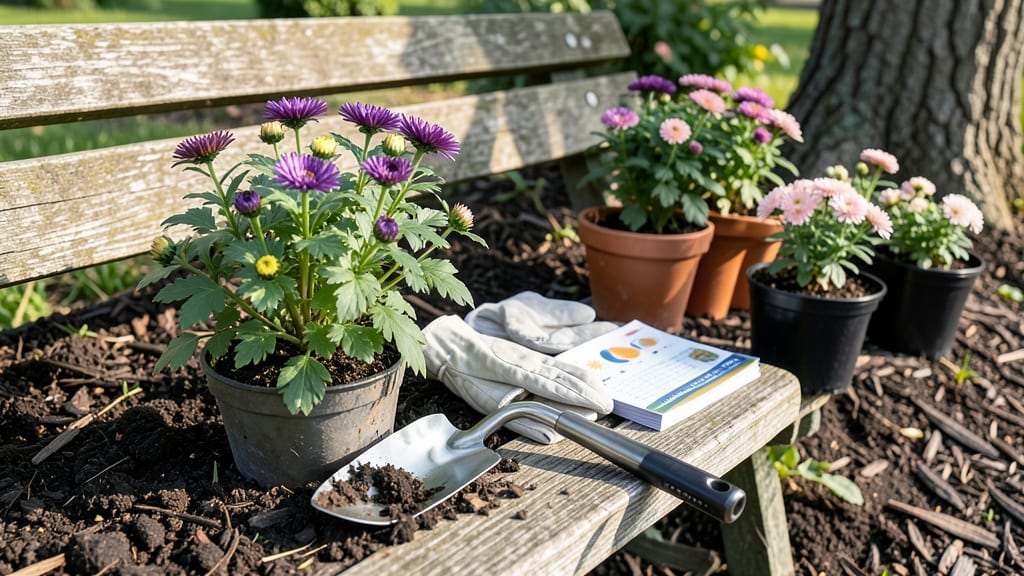
Planting your 🌼 mums in the ground at the right time is the secret to those show-stopping fall blooms—but miss the window, and you might end up with sad, stunted plants.
The best time to plant mums in the ground depends on your USDA zone, with two key windows: spring (April–May) for early blooms or fall (August–September) for classic autumn color.
If you're in Zone 6a like me, aim for April 15–May 15 in spring or August 1–September 15 for fall planting. These dates give your mums enough time to establish roots before frost hits, ensuring they burst into color when you need them most.
Too early, and they’ll bolt; too late, and frost will nip them before they even bloom.
What makes this timing tricky? Mums hate soggy soil and sudden temperature swings, so soil prep is just as critical as the calendar.
I’ll walk you through how to pick the perfect spot, amend your soil, and harden off nursery plants so they thrive from day one—no guesswork, just gorgeous blooms.
Ready to turn your garden into a fall spectacle? Let’s break down the exact planting deadlines for your zone, plus pro tips to keep your mums looking their best all season. Your future self (and your neighbors) will thank you!
USDA Zone planting deadlines for mums: exact dates by region
Planting mums (chrysanthemums) at the right time ensures they thrive and bloom beautifully. The key is avoiding late spring frosts or early fall freezes, which can damage tender roots. Most gardeners focus on two main planting windows: late spring (for summer blooms) and early fall (for classic autumn color).
Your USDA zone determines the exact dates, so let’s break it down by region.
To find your last frost date, check the USDA Plant Hardiness Zone Map or use local weather resources. A general rule is to plant 4-6 weeks before your first frost for fall blooms.
For spring planting, wait until the soil warms to at least 55°F (13°C) to prevent root rot. Let’s dive into the specifics for each zone.
Comparison Table: Mum Planting Deadlines by USDA Zone
| USDA Zone | Spring Planting Window | Fall Planting Window | Key Considerations | Example States |
|---|---|---|---|---|
| Zones 3-4 | May 15 - June 15 | August 1 - August 15 | Short growing season; prioritize hardy varieties like 'Bonanza' or 'Mammoth'. | Minnesota, Maine, Montana |
| Zones 5-6 | April 15 - May 15 | August 15 - September 1 | Moderate climate; ideal for both spring and fall planting. | New York, Wisconsin, Colorado |
| Zones 7-8 | March 15 - April 30 | September 1 - September 15 | Longer frost-free season; can plant earlier in spring and later in fall. | Virginia, North Carolina, Oklahoma |
| Zones 9-10 | February 15 - March 15 | September 15 - October 15 | Mild winters; fall planting extends into October for winter blooms. | California, Florida, Texas (coastal) |
If you’re in Zone 5 or colder, focus on fall planting for vibrant autumn blooms. In Zones 7-10, you can experiment with spring planting for summer color or fall planting for winter interest.
For example, in Zone 9 (California), you can plant mums as late as October 15 and still enjoy blooms through winter.
For accurate local dates, use the Almanac’s Frost Calculator or your local Cooperative Extension Service. These tools provide hyper-local frost data, which is critical for container-grown mums or tender varieties.
Pro tip: Mark your calendar 6 weeks before your first frost—this is your fall planting deadline.
In Zone 6 (like my garden in Illinois), I plant mums in early May for summer blooms and again in mid-August for fall color. The key is to harden off nursery plants for 7-10 days before transplanting to reduce shock.
This means gradually exposing them to outdoor conditions over a week.
If you’re unsure about your last frost date, err on the side of caution. Planting too early in cool soil can stunt root growth, while planting too late may result in underdeveloped plants that struggle to bloom.
For container mums, you can extend your planting window by 2-3 weeks since pots warm up faster than garden soil.
Don’t forget to amend your soil with compost before planting. Mums thrive in well-draining, slightly acidic soil (pH 6.0-6.5). In heavy clay soils, mix in sand or perlite to improve drainage. After planting, water deeply to settle roots and apply a 2-inch layer of mulch to retain moisture.
For perennial mums, which return year after year, focus on fall planting in Zones 5-9. These hardy varieties establish stronger roots in cooler weather, giving you earlier and more abundant blooms the following season.
In Zones 10 and warmer, treat mums as annuals or tender perennials and replant each fall.
Timing isn’t just about dates—it’s about observing your garden’s microclimate. A north-facing bed may stay cooler longer, while a south-facing slope warms up faster. Adjust your planting window by 1-2 weeks based on these factors.
With the right timing, your mums will reward you with months of color and minimal fuss.
How to prepare mums for planting: soil, spacing, and hardening off
Once you’ve nailed down your planting timeline, preparing the soil and nursery mums for transplant is the next critical step. The right soil prep and spacing can mean the difference between a lush, blooming mum patch and struggling plants.
I’ve learned that even the hardiest mums need a little TLC to thrive after leaving the nursery.
Start by testing your soil pH—mums prefer a slightly acidic to neutral range of 6.0 to 7.0. If your soil is too alkaline, add sulfur or peat moss to adjust it gradually.
Poor drainage is another common issue, so amend heavy clay soil with compost or perlite to improve aeration. A well-prepared bed gives mums the strong start they need to handle transplant shock.
🌼 When Can I Plant Mums in the Ground?
Spring Planting: After last frost date (typically April–May in most zones).
Fall Planting: 4–6 weeks before first frost (typically August–September).
Soil Temp: At least 60°F (15°C) for root establishment.
Spacing: 12–24 inches apart (dwarf varieties: 12"; standard: 24").
Hardening Off: Gradually expose nursery mums to outdoor conditions for 7–10 days before planting.
Proper spacing is often overlooked but is vital for air circulation and preventing disease. Space dwarf mums 12 inches apart and standard varieties 24 inches apart. This gives roots room to spread and reduces competition for nutrients.
I’ve seen leggy, crowded mums struggle with powdery mildew—something you can avoid with just a little extra space.
If you’re planting nursery-grown mums, hardening off is a must to prevent transplant shock. Over 7–10 days, gradually expose the plants to outdoor conditions: start with 2–3 hours of shade and work up to full sun.
Reduce watering slightly during this time to toughen the roots. This step is especially important if you’re planting in hot summer months or cool spring.
Finally, consider adding companion plants like marigolds or lavender to deter pests and improve blooms. These plants also enhance the visual appeal of your mum garden. A little extra care in the prep stage pays off with longer-lasting, more vibrant blooms all season.
With the right soil amendments, spacing, and hardening off routine, your mums will transition smoothly from nursery pots to your garden bed. The key is patience—rushing this step often leads to stressed plants that struggle to recover.
Give them the best start, and they’ll reward you with months of colorful blooms! 🌼