
Plants
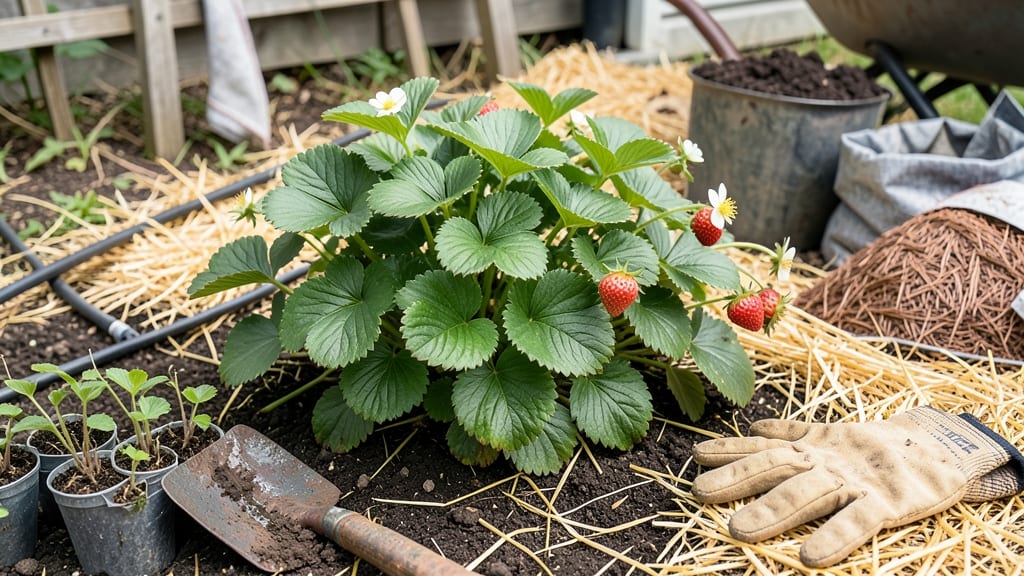
Planting strawberries in Kentucky isn’t just about checking a calendar—it’s about reading your soil’s temperature cues, because those 40-50°F triggers make all the difference between thriving 🍓 plants and wasted effort. If you’ve ever watched your strawberries struggle or bolt in Kentucky’s 6a-7a climate, you’re not alone.
The key to success lies in planting when the ground warms enough to support root growth, not just when the weather feels spring-like. Whether you’re working with bare-root plants in early spring or potted varieties in fall, timing matters more than you might think.
Let’s break down the exact windows—and why missing them can cost you your harvest.
You’ll discover how Kentucky’s two planting seasons—early spring and early fall—work together to extend your harvest window. We’ll also cover soil prep secrets to handle Kentucky’s clay-heavy dirt and when mulching becomes your best friend against winter’s chill. Ready to grow strawberries that actually produce?
By the end, you’ll know exactly when to plant for fast germination, how to protect your investment from late frosts, and which varieties perform best in your specific corner of the state. No more guesswork—just science-backed results.
Kentucky’s ideal strawberry planting windows by soil temperature (not calendar dates)
Forget guessing by calendar dates—Kentucky’s soil temperature is the real planting trigger for strawberries. Cold soil slows root growth, while warm soil speeds germination. In Kentucky’s USDA zones 6a-7a, bare-root plants need 40-50°F soil, while potted strawberries thrive at 60-70°F.
This microclimate divide matters: Bluegrass regions warm faster than Appalachian zones, so timing varies by yard elevation.
Use a soil thermometer (insert 4” deep) to check temperatures daily. Morning readings are most accurate. In Lexington or Louisville, soil hits 50°F by mid-March, but in Eastern KY’s higher elevations, wait until late April.
Fall planting? Aim for 60°F soil by September 15th to establish roots before first frost (mid-October).
Spring planting is riskier in Kentucky due to late frosts. If you plant bare-root strawberries too early (soil <40°F), roots stay dormant, and plants wilt when warm weather arrives. My trick? Start with potted strawberries in early March under row covers—they’ll root faster in warmer soil.
For Appalachian KY, delay until after Easter (soil typically hits 50°F then).
Fall planting offers a second harvest window but requires precision. Plant 6-8 weeks before first frost (aim for September 1-15 in most of Kentucky). Use potted plants for faster root establishment.
In Western KY, where soil warms quicker, you can stretch planting to mid-October—just mulch heavily (4-6” of straw) to insulate roots.
Kentucky’s microclimates create 30-day planting shifts between regions. For example, Paducah’s soil may be plant-ready by March 1st, while Pikeville’s waits until April 1st. Check local weather stations (like UK Ag Weather) for real-time soil data.
Pro tip: Raised beds warm 2-3 weeks earlier than in-ground soil—ideal for early spring or late fall planting.
Never plant strawberries when soil temps fluctuate daily. A 10°F swing (e.g., 50°F days, 35°F nights) shocks roots. Use black plastic mulch to warm soil 5-10°F faster in spring or straw mulch to slow cooling in fall.
For Appalachian gardens, add black landscape fabric 2 weeks before planting to jumpstart soil warmth.
Frost risk is the biggest spring mistake. Kentucky’s last frost averages April 15th, but Appalachian zones can see frost into May. If planting bare-root
How to prepare Kentucky soil for strawberries: pH, drainage, and organic amendments
Kentucky’s clay-heavy soils, especially in western regions, can be a double-edged sword for strawberries. While they retain moisture well, they often compact easily, leading to poor drainage and root suffocation. Strawberries, however, thrive in loose, well-aerated soil with a pH between 5.5 and 6.5.
Without proper amendments, your plants may struggle to establish roots or become vulnerable to fungal diseases like gray mold.
Before planting, test your soil’s pH using a home test kit or send a sample to your local Cooperative Extension Service. Kentucky’s natural limestone bedrock often raises pH levels above the ideal range, requiring sulfur applications to acidify the soil.
Aim to adjust pH 3-4 weeks before planting—this gives amendments time to integrate fully into the soil profile.
⚠️ callout-warning
For drainage improvements, mix in organic matter like composted leaves or well-rotted manure at a ratio of 1 part organic matter to 3 parts soil. Avoid fresh manure, which can burn delicate strawberry roots.
Raised beds are another excellent option for clay soils—they allow you to control soil composition entirely and improve drainage by 30-50% compared to in-ground planting.
Incorporate perlite or coarse sand (up to 20% of the soil mix) to further enhance aeration. Strawberries hate soggy feet, so ensure your planting area has a slight slope (1-2 inches per foot) to encourage water runoff.
If your yard is flat, create a raised mound for planting to prevent water pooling around the crowns.
Finally, top-dress with 2-3 inches of mulch (straw or shredded leaves) after planting. Mulch helps regulate soil temperature, suppresses weeds, and slowly releases nutrients as it breaks down. Replenish mulch annually in early spring to maintain soil fertility and moisture levels throughout the growing season.
With these adjustments, your Kentucky soil will transform from a clay-heavy challenge into a nutrient-rich haven for strawberries. The key is patience—amendments take time, but the payoff is healthier plants, bigger yields, and fewer pests. Happy planting! 🌱