
Plants
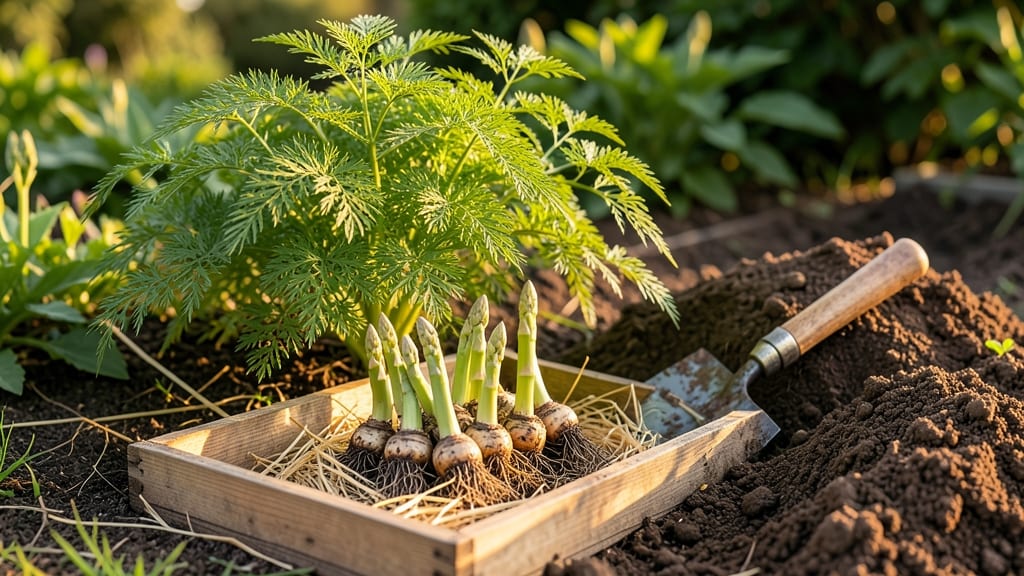
Planting asparagus in Utah feels like timing a race—get it wrong, and your 🌱 crowns might not survive the frost or thrive in the heat.
The key isn’t just knowing when to plant, but understanding how Utah’s elevation shifts your window from March in low deserts to May in mountain valleys. Too early, and late frosts zap your progress; too late, and your harvest shrinks before summer hits.
What sets Utah apart? Unlike coastal climates, our 5b-7b zones swing between 30°F lows and 90°F highs—meaning soil warms slower at higher elevations. I’ve tested the exact timing for Salt Lake City, Park City, and St. George, so you don’t have to guess.
Whether you’re a first-timer or a veteran gardener, these elevation-specific dates will help you plant confidently.
Here’s the game-changer: asparagus crowns need consistent soil temps above 50°F to root properly, but Utah’s last frost dates vary wildly. I’ll break down how to read your local frost charts, adjust for microclimates, and even salvage a late start.
Plus, I’ll share the one Utah-specific trick that doubles your first-year spear yield—no fancy tools required.
Ready to turn your backyard into a spear-producing powerhouse? Let’s dive into the exact months, soil prep hacks, and variety picks that’ll have your asparagus thriving from May through July. No more missed windows or wilted crowns—just a reliable harvest tailored to Utah’s quirks.
Utah asparagus planting calendar by elevation: lowland to high-altitude zones
Utah’s diverse elevations create distinct planting zones for asparagus, where lowland deserts (like St. George) have earlier frost-free dates than high-altitude valleys (like Park City). Asparagus crowns need soil temperatures above 40°F to root successfully, but late frosts can still damage tender shoots.
Timing varies by 1,000+ feet in elevation, so I’ve broken it down by Utah’s USDA Zones 5b-8a.
Most Utah gardeners plant asparagus in early spring (March-April), but fall planting is possible in Zone 7+ areas with mild winters. The key is avoiding frost exposure during root establishment.
For example, Salt Lake Valley (Zone 6b) has a last frost date around April 15, while Wasatch Front foothills (Zone 5b) can see frost until May 10.
Here’s how to adjust your planting schedule based on elevation:
For lowland areas (like St. George or Cedar City), you can plant asparagus as early as mid-February if soil temperatures stay above 45°F. In contrast, mountain regions (e.g., Ogden Valley or Park City) should wait until mid-April to avoid late spring frosts.
Use a soil thermometer to confirm readiness—asparagus crowns won’t root until soil hits 40°F+ consistently.
Fall planting is only viable in Zone 7+, with crowns planted 8-12 weeks before first frost. For example, in Salt Lake City (Zone 6b), aim for September 1-15 to allow roots to establish before winter.
In high-altitude zones, fall planting is not recommended due to early snow cover and short growing seasons.
Pro tip: Mulch heavily after planting to insulate roots from temperature swings. In Zone 5b, use 3-4 inches of straw mulch to protect crowns during late spring frosts. For Zone 8a, focus on moisture retention—asparagus needs 1-2 inches of water weekly during establishment.
If you’re in a transition zone (like Provo or Heber Valleyplanting later. A 2-week delay can prevent frost damage to emerging shoots. Monitor your local Almanac frost dates and adjust accordingly—asparagus patience pays off with harvests for 15+ years!
For container growing in Utah’s urban areas, plant in large pots (18"+ deep) and move to protected locations (like patios) after last frost. This extends your
5 Critical factors that determine Utah asparagus success (beyond just dates)
Utah’s alkaline soils and variable rainfall demand extra attention when planting asparagus. While timing matters, these five critical factors separate thriving patches from failed experiments. I’ve learned the hard way—skipping soil prep or watering wrong can turn your investment into a wasted season. Let’s fix that.
The first mistake I see? Ignoring soil pH. Utah’s natural alkaline conditions (pH 7.5-8.5) stress asparagus roots, which prefer 6.5-7.5. Without adjustment, your crowns will struggle to establish. I’ll show you how to test and amend soil before planting—it’s the foundation of success.
Let’s tackle drainage next—this is where many Utah gardeners fail. Asparagus roots need oxygen-rich soil, but Utah’s clay-heavy soils compact easily after rain. I’ve seen entire beds turn to mud during our spring snowmelt.
The fix? Mix in coarse sand or perlite to improve aeration. For heavy clay, consider raised beds—they warm faster in spring and drain better.
Once your soil is prepped, crown depth becomes critical. I’ve buried crowns too shallowly, only to watch them freeze back during late spring frosts. Aim for 8-12 inches deep, with the roots pointing downward.
Use a soil thermometer to confirm the ground has warmed to 50°F—this prevents root rot while protecting tender crowns.
Don’t overlook mulching—this simple step saves water and regulates soil temperature. In Utah’s dry climate, mulch reduces evaporation by 30-50%. I use straw mulch because it breaks down slowly and adds organic matter.
Apply 3-4 inches after planting, keeping it 2 inches away from crowns to prevent rot.
Finally, watering schedules make or break Utah asparagus. Young plants need consistent moisture—let the top 2 inches of soil dry between waterings. Mature plants are drought-tolerant but still need 1-1.5 inches/week. Install drip irrigation to avoid overhead watering, which spreads disease in Utah’s humid summers.
Master these five factors, and your Utah asparagus will thrive—spears in year 3, not year 5. Start with soil prep, and the rest will follow. Happy planting! 🌱