
Companion Plants
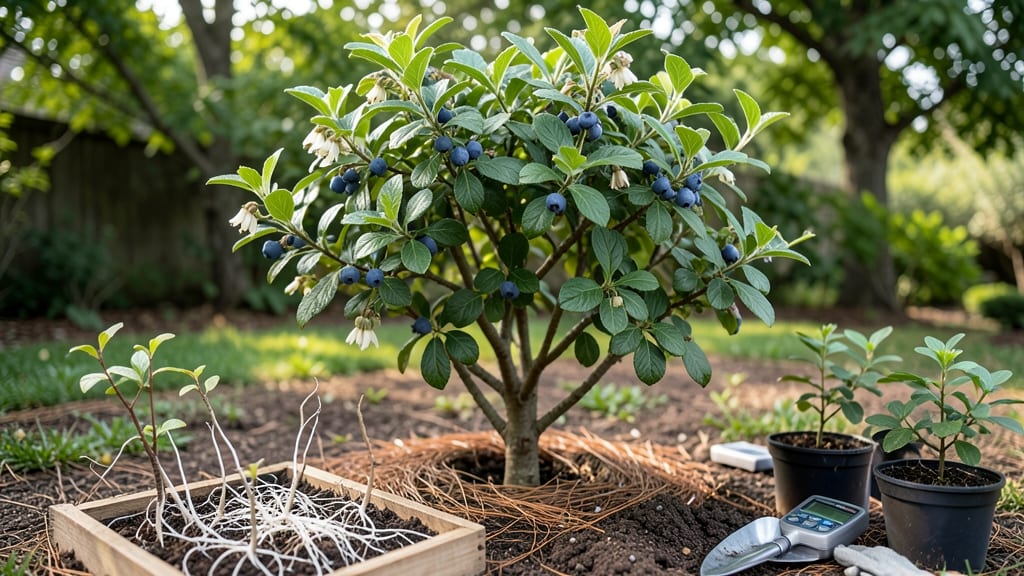
Timing your blueberry bush 🫐 planting in Pennsylvania wrong could mean wasted money and years waiting for fruit—especially since these shrubs need 500-900 chill hours to thrive in zones 5b-7a.
Too early, and frost will shock delicate roots; too late, and your plants won’t establish before winter. The sweet spot? Early spring or fall, when soil is workable but temperatures cooperate.
I’ve learned the hard way that September or October is ideal for fall planting, giving roots time to settle before the ground freezes. But if you prefer spring, aim for late March to April—after the last frost—so your blueberries get a full growing season to reward you.
The key? Knowing your microclimate, whether you’re in Pittsburgh’s cooler hills or Lancaster’s warmer valleys.
Beyond timing, Pennsylvania’s acidic soil demands (pH 4.5-5.5) make prep just as critical. Skipping this step means stunted growth or no berries at all. I’ll walk you through how to test and amend your soil, plus the top 3 varieties that handle PA’s chill hours like champs.
Ready to turn your yard into a blueberry patch?
Let’s break down the exact steps to plant your blueberry bush at the perfect moment—so you’re harvesting juicy berries in July or August instead of waiting another year. Trust me, your future self will thank you.
Best planting months in PA based on chill hours & climate Zones
Pennsylvania’s diverse climate—spanning USDA Zones 5-7—means blueberry bushes need precise timing to thrive. Most varieties require 500-900 chill hours, so planting too early or late risks frost damage or poor root establishment.
The ideal window is late winter to early spring (February-April) or early fall (September-October), when soil temps are cool but frost-free.
Eastern PA’s Zone 6-7a regions (like Philadelphia) can plant slightly later than western PA’s Zone 5b-6 areas (e.g., Pittsburgh). For example, Patriot variety (a top PA choice) needs 600-800 chill hours, so timing matters more in colder zones like Erie.
Always check your last frost date—typically April 15 in most areas.
Spring planting (March-April) gives bushes 6-8 weeks to establish roots before summer heat. Fall planting (September-October) avoids summer stress but requires 6-8 weeks before first frost (usually October 15). Container-grown bushes offer flexibility, while bare-root plants must be planted ASAP after arrival to prevent drying.
Western PA’s cooler microclimates (e.g., State College) favor early spring planting (March) to capitalize on longer growing seasons. Eastern PA’s warmer pockets (e.g., Lancaster) can extend fall planting to mid-October if soil temps stay above 40°F. Always mulch heavily after planting to insulate roots.
Chill hour requirements dictate variety selection. Northern Highbush types (e.g., Bluecrop) need 700+ hours and thrive in Zones 5-7, while Southern Highbush (e.g., Premier) suit Zones 7-9. PA’s 500-900 hour range makes half-high varieties (like Top Hat) ideal for smaller gardens.
Here’s how PA’s regions break down for optimal planting:
Avoid planting in late spring (May-June)—soil warmth triggers root growth before establishment, while late fall (November-December) risks winter heaving. For container planting, extend windows to April-June or August-September, but monitor soil temps closely. Mulch 3-4 inches deep with pine bark or leaves to regulate temps.
PA’s acidic soil needs (pH 4.5-5.5) mean testing before planting is critical. Use a soil test kit ($15-$25) to check levels—many PA soils are naturally alkaline.
Amend with sulfur or peat moss if needed, and avoid lime at all costs. Evergreen bushes (like Rabbiteye) can handle slightly lower chill hours but struggle in PA’s winters.
Pro tip: Mark your planting dates on a calendar with frost dates to avoid surprises. For example, if your last frost is April 20, plant by March 15 for spring.
In Zone 5b, aim for September 1-15 in fall. Root growth slows below 40°F, so time it right!
Remember, blueberries are perennial—proper planting now means decades of harvests. Whether you’re in Erie’s chillier climate or Philadelphia’s warmer pockets, aligning with chill hours and soil prep will set your bushes up for success. Happy planting! 🫐🌱
Soil preparation checklist: how to acidify PA soil for blueberry success
Pennsylvania’s native soils often test high in alkalinity, creating a major hurdle for blueberry bushes that thrive in acidic soil (pH 4.5–5.5). Without proper soil acidification, your plants will struggle to absorb iron and phosphorus, leading to yellow leaves and poor fruit production.
The good news? With the right amendments, you can transform even heavy clay soils into a blueberry paradise.
Start by testing your soil’s current pH using a home test kit (available for $10–$20) or send a sample to your local Penn State Extension office. Most PA soils hover around 6.5–7.5, which is far too alkaline.
Once you confirm your pH, it’s time to lower it gradually—blueberries hate sudden pH shifts, which can burn roots.
⚠️ callout warning
Adding too much sulfur or peat moss at once can drop your pH below 4.0, creating toxic conditions for blueberries. Test your soil every 3–4 months during the amendment process. If your pH drops below 4.5, mix in lime-free compost to gently raise it back up.
🌱 Pro Tip: Split amendments into two applications—half before planting, half 6 weeks later—for safer results.
For clay-heavy soils common in PA, mix in 2–3 inches of peat moss or sphagnum peat into the top 12 inches of soil. Peat moss is a natural acidifier and improves drainage, but avoid sawdust or pine needles unless you’re sure they’re sulfur-free.
Work the amendment into the soil 2–3 weeks before planting to let it break down.
Incorporate organic matter like composted leaves or well-rotted manure to boost soil structure and microbial activity. Aim for a 25% organic matter content—this helps buffer pH swings and retains moisture. For extra acidity, sprinkle elemental sulfur (½–1 pound per 100 sq ft) over the soil and water it in.
Sulfur takes 2–3 months to lower pH, so plan ahead if you’re planting in early spring.
After planting, maintain soil acidity by applying a 2-inch layer of pine straw mulch annually. This slow-release acidifier also suppresses weeds and retains moisture. Avoid wood chips, which can raise pH over time.
Re-test your soil in late fall and adjust as needed—blueberries reward patience with juicy, sweet berries for decades.
💧 Remember: Blueberries need consistent moisture to thrive. Water deeply 2–3 times per week during the first growing season, especially if your soil was amended heavily. A drip irrigation system keeps roots evenly moist without disturbing the soil’s acidity.