
Plants
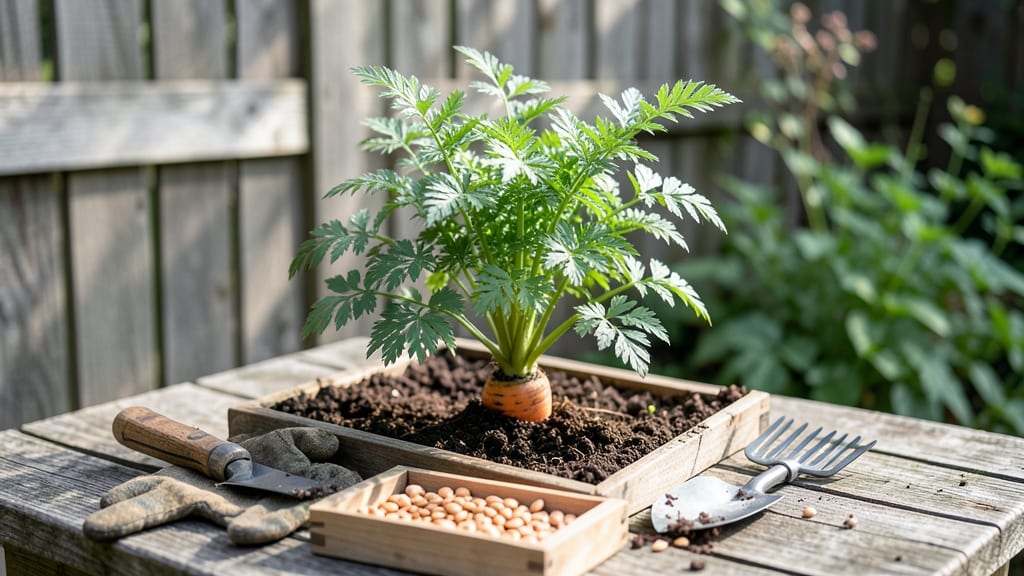
If you've ever pulled a bendy, bitter carrot from your Connecticut garden, you know when to plant carrots in Connecticut is everything. Planting too early risks frost damage, while waiting too long means your harvest arrives when summer heat turns roots tough and woody.
The key to crisp, sweet 🥕 every time? Nailing those exact planting windows before the last frost hits.
Connecticut's USDA Zone 6a climate gives us just 165 frost-free days, which means we need to work smarter—not harder.
Whether you're a first-time gardener or a seasoned green thumb, knowing when to plant carrots in Connecticut can mean the difference between a disappointing harvest and a bounty of perfect roots. Let me show you the precise schedule that works for our unpredictable spring weather.
Most gardeners in Connecticut plant carrots between March 15 and May 15 for spring crops, then again from July 15 to August 15 for summer harvests. But here's the secret: the 3-4 week window before your last frost date (typically around April 15) is your golden opportunity.
Plant too soon, and you risk stunted growth from cold soil. Plant too late, and you might miss the chance for a full-season harvest.
In this guide, I'll walk you through the exact planting schedule, soil prep tips, and even how to extend your growing season with succession planting.
By the end, you'll know not just when to plant carrots in Connecticut, but how to get the most flavorful, crisp roots all season long—no guesswork required.
Optimal planting weeks before Connecticut’s last frost (with exact dates)
Connecticut’s USDA Zones 6a and 6b create a short but productive growing window for carrots, where timing is everything. The average last frost date varies by region—April 15 in Hartford, April 20 in New Haven, and April 25 in coastal Stamford—so adjust your schedule accordingly.
Planting too early risks frost damage, while waiting too long shortens your harvest window. For crisp, sweet carrots, aim for 4-6 weeks before last frost in spring and 8-10 weeks before first frost in fall.
Soil temperature is just as critical as air temperature. Carrot seeds need soil temps above 50°F (10°C) to germinate reliably. In Hartford and inland areas, this typically aligns with mid-to-late April, while coastal Stamford may see suitable conditions by early April.
Use a soil thermometer to confirm—seeds won’t sprout in cold, damp soil, no matter how eager you are to start!
Spring planting is your best bet for a summer harvest, with March 15–April 15 being the ideal window. For a fall harvest, sow seeds July 15–August 15 to mature before first frost (October 20). Succession planting every 2-3 weeks ensures a continuous supply of fresh carrots all season long.
For early spring plantings, use cold-hardy varieties like 'Danvers' or 'Nantes', which tolerate cooler soils better than 'Chantenay' or 'Paris Market' types.
If you’re planting in late April or early May, opt for shorter-day varieties to avoid bolting (flowering prematurely). Row covers can extend your planting window by 2-3 weeks in early spring or late fall.
Soil preparation is non-negotiable in Connecticut, where rocky, clay-heavy soil can stunt carrot growth. Amend your beds with 2-3 inches of compost and sand or perlite to improve drainage.
Test your soil’s pH—carrots thrive in 6.0–6.8, and lime or sulfur may be needed to adjust. Loosen soil to 12 inches deep to prevent forked or misshapen roots, a common issue in CT gardens.
After sowing, maintain consistent moisture—carrot seeds need even watering to germinate, but avoid waterlogging. Once seedlings emerge, thin to 2-3 inches apart to prevent competition. Mulch with straw to retain moisture and suppress weeds, which can outcompete young carrot plants.
In hot summer months, provide afternoon shade to prevent bolting, especially for late-summer plantings.
Harvest timing depends on variety, but most carrots are ready in 60–80 days. 'Paris Market' varieties mature in 50–60 days, while 'Danvers' take 70–80 days.
Pull carrots when roots reach 1–2 inches in diameter for baby carrots or wait until 3–4 inches for full-sized roots. Harvest before soil freezes—carrots left in the ground over winter may split or become woody.
Protect late-season plantings with frost cloth or row covers to extend your harvest into November. In Stamford’s milder coastal climate, you might even squeeze in a third planting in early September for a late-fall harvest.
Store freshly pulled carrots in moist sand in the fridge for up to 3 weeks or cure and store for long-term preservation.
Remember, Connecticut’s unpredictable weather means flexibility is key. Keep a planting journal to track your success—note when you sow, how long germination takes, and any frost surprises. With the right timing and soil prep, you’ll enjoy homegrown carrots from June through November—no store-bought roots needed!
How to extend your carrot growing season in Connecticut (succession planting guide)
Connecticut’s short growing season doesn’t mean you have to settle for just one carrot harvest. With succession planting and the right cold-hardy varieties, you can enjoy fresh, crisp carrots for three to four harvests each year.
The key is timing your plantings to avoid frost while maximizing soil warmth. I’ve grown carrots in Connecticut for over 10 years, and this strategy has given me continuous harvests from early summer through late fall.
Start with early spring plantings of frost-tolerant varieties like 'Danvers', which can handle light frosts down to 25°F. Follow with summer succession plantings every 2-3 weeks to keep a steady supply.
For late-season harvests, use row covers or cold frames to protect tender varieties like 'Nantes' until the first hard frost. These techniques let me extend my harvest well into November!
For early spring plantings, aim to sow seeds when soil temperatures reach 50°F—typically mid-March to early April in Connecticut. Use a seedling heat mat if needed to jumpstart germination in cooler soil.
My favorite early variety is 'Danvers Half Long', which matures in 60 days and handles Connecticut’s cool springs beautifully. I’ve found that planting in raised beds with compost-amended soil gives these early carrots the best start.
Summer succession plantings should continue every 2-3 weeks through mid-July. This keeps a steady supply of 'Nantes' and 'Paris Market' varieties ready for harvest. The trick is to keep the soil consistently moist—drought stress causes carrots to split or become woody.
I use drip irrigation on my summer plantings to maintain even moisture without overwatering. For late summer, choose shorter-day varieties like 'Chantenay' that mature faster in cooler fall temperatures.
Don’t overlook fall harvests! With row covers or cold frames, you can extend your season until mid-November. I plant my final succession around early August, choosing varieties that mature in 70-75 days. These late carrots develop sweeter flavors from the cooler fall weather.
Just be sure to remove covers during the day in warm spells to prevent overheating. For extra protection, add a layer of straw mulch around plants to insulate roots from temperature swings.
Remember that soil preparation is just as important as timing. Connecticut’s clay-heavy soils need amending with compost and sand to prevent forking. I double-dig my beds in fall and add aged manure to create the loose, stone-free soil carrots crave.
This extra effort pays off with straighter, sweeter roots all season long. With these strategies, you’ll enjoy homegrown carrots from June through November—no grocery store needed!