
Plants
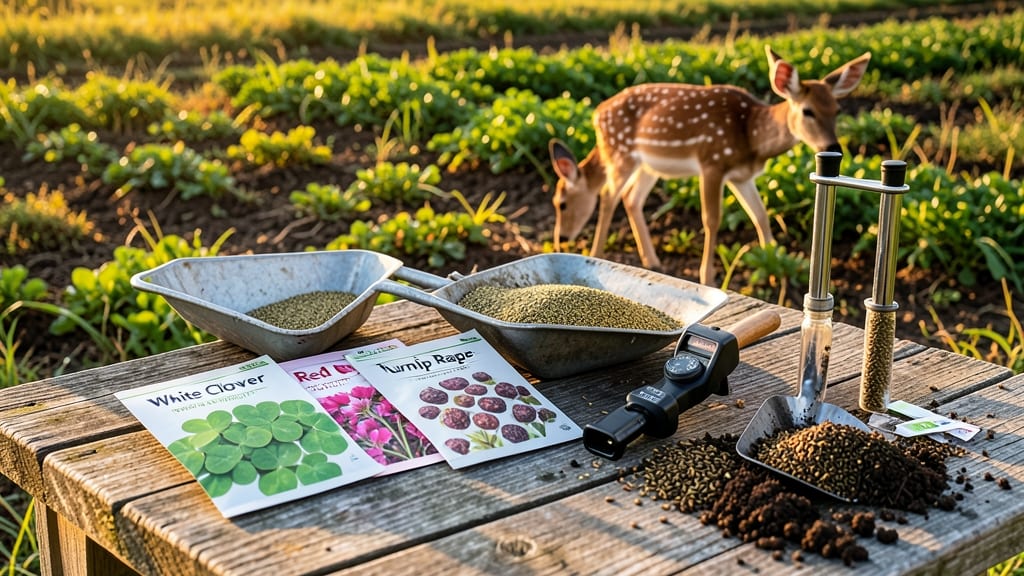
Planting food plots in Georgia at the wrong time can leave you staring at bare soil while deer browse elsewhere. The key to lush, deer-magnetizing plots lies in understanding Georgia's 7b-8b climate zones, where timing matters more than the seed you choose.
If you've ever wondered why some plots thrive while others fail, it's often because of missed planting windows. Georgia's unpredictable spring rains and scorching summers demand precision—late winter to early spring and mid-summer are your best bets for cool-season and warm-season crops, respectively.
I'll break down the exact months to plant, from clover in February to brassicas in June, so you can align your food plots with Georgia's frost-free window. Whether you're in the Piedmont or Coastal Plain, these strategies will help you avoid common mistakes and maximize deer impact.
Ready to transform your property into a year-round deer destination? Let's dive into the month-by-month planting schedule that works for Georgia's unique conditions.
Georgia food plot planting calendar: best months by season for maximum deer impact
Timing your food plot planting in Georgia is all about reading the microclimates and soil temperature triggers.
The Peach State’s USDA Zones 7b-8b create distinct planting windows between North Georgia’s cooler mountains and South Georgia’s warmer coastal plains. Spring and fall are your golden periods, but even a two-week delay can mean the difference between a thriving plot and a failed experiment.
For cool-season crops like clover and brassicas, aim for planting when soil temperatures drop below 75°F—typically late February to early March in North Georgia and March to early April in the South. Warm-season crops like sorghum and millet, however, need to wait until soil temps hit 65°F+, usually late April to early May in the mountains and March to April in the coastal region.
Regional adjustments are critical: North Georgia’s higher elevations can experience frost until mid-April, while South Georgia’s longer growing season allows for extended fall plantings until early November. Always check your local frost-free dates—the GA Extension Service offers free soil temperature maps to guide your timing.
Here’s your Georgia food plot planting calendar broken down by season and region:
| Season | Region | Ideal Planting Window | Soil Temp Trigger | Key Crops |
|---|---|---|---|---|
| Early Spring | North GA (Mountains) | Late Feb - Early Mar | Below 75°F | Clover, Rye, Brassicas |
| Early Spring | South GA (Coastal) | Mar - Early Apr | Below 75°F | Clover, Turnips, Radishes |
| Late Spring | North GA (Mountains) | Late Apr - Early May | Above 65°F | Sorghum, Millet, Sunflowers |
| Late Spring | South GA (Coastal) | Mar - Apr | Above 65°F | Cowpeas, Peanuts, Soybeans |
| Fall | North GA (Mountains) | Late Aug - Early Sep | Below 80°F | Clover, Winter Rye, Turnips |
| Fall | South GA (Coastal) | Sep - Early Nov | Below 80°F | Clover, Brassicas, Radishes |
My #1 rule for Georgia food plot success? Plant early—before the spring heatwave hits. Cool-season crops like red clover and turnips bolt (go to seed) quickly when temps exceed 85°F, so get them in the ground by mid-April at the latest. I’ve seen plots in
Top 5 fast-growing food plot crops for Georgia’s climate and their exact planting times
Georgia’s warm climate and long growing season make it perfect for fast-growing food plot crops that deer can’t resist. I’ve tested these top 5 varieties over the years, and they consistently deliver rapid biomass production while thriving in GA’s USDA zones 7b-8b.
The key? Planting at the right time to avoid spring floods or summer drought stress.
For maximum impact, focus on cool-season crops like clover and brassicas for early spring/fall, then transition to warm-season grasses by late spring. My secret? Always check soil temperatures—aim for 50°F+ for cool-season and 65°F+ for warm-season crops before planting. This ensures germination and avoids wasted seed.
Crimson clover is my #1 recommendation for Georgia—it thrives in cool spring soil and produces 3-4 tons of forage per acre by summer. Plant it between February 15 and March 15 when soil temps hit 50°F+. For fall plantings, aim for September 1-15 to establish before frost. Deer love the high protein content (20-25%), making it a year-round favorite.
Next, radishes and turnips (brassicas) grow blazing fast—ready for deer in just 30-45 days. Plant radishes in early spring (Feb 1) or late summer (Aug 15) for fall grazing. Turnips prefer soil temps of 60°F+, so wait until April 15 for spring or August 1 for fall.
These high-yielding crops produce 2-3 tons per acre and attract deer with their sweet, leafy greens.
For summer heat resistance, sorghum-sudangrass hybrids are unbeatable. Plant them after May 1 when soil temps exceed 65°F. These warm-season powerhouses mature in 60-70 days and produce 5-8 tons of forage.
Deer adore the tall, sweet stalks, and they handle Georgia’s 90°F+ summers like champions. My pro tip: Mow at 12 inches to encourage regrowth.
Don’t overlook sunflowers—they’re a deer magnet with high oil content that attracts wildlife from miles away. Plant them after last frost (April 15) or in late summer (July 15) for fall harvest.
These fast growers reach maturity in 70-90 days and thrive in poor soil, making them perfect for marginal areas.
Finally, wheat or oats planted in late summer (Aug 15) create a fall/winter food source when other plots fade. These cool-season grasses establish quickly and provide year-round grazing if managed properly. My secret? Overseed with clover in spring for a longer production window.