
Trees
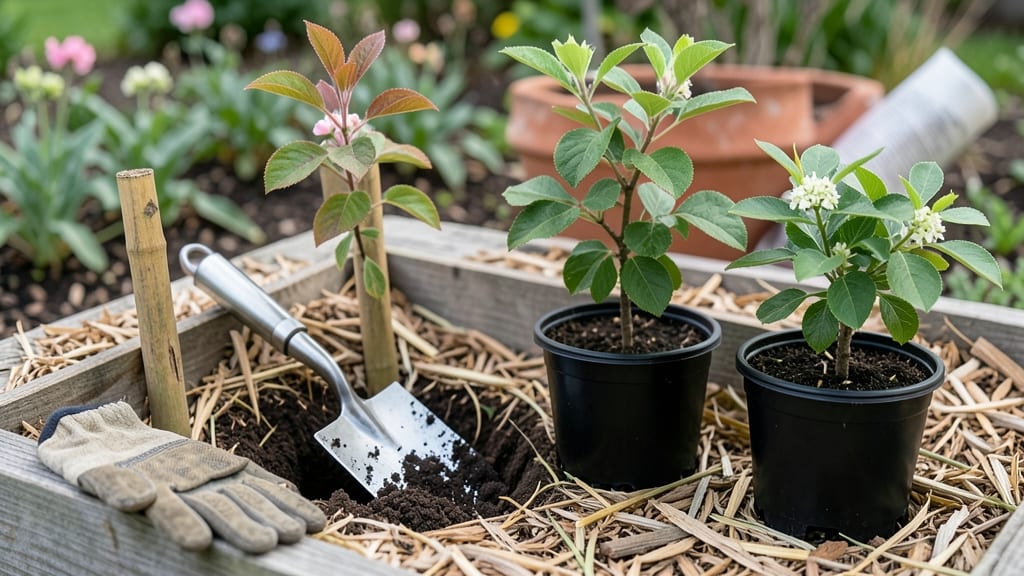
Planting fruit trees in Massachusetts at the wrong time can mean the difference between a thriving orchard and a sad pile of frost-killed saplings.
The 5b-6b zone gives you two prime windows—spring and fall—but getting the timing right depends on your specific tree's chill-hour needs and whether you're coastal or inland.
Most Massachusetts gardeners swear by fall planting, especially for bare-root trees, because cooler soil and consistent moisture give roots a head start before winter.
But if you're dealing with peaches or other low-chill varieties, early spring might be your best bet to avoid late frosts that could wipe out tender new growth.
I've seen firsthand how a single week can make or break a fruit tree's success—whether it's waiting too long in spring and dealing with drought stress or planting too late in fall and risking winter heaving.
Let me break down the exact deadlines, soil prep secrets, and variety-specific tips to help you plant with confidence.
From apples that need 800+ chill hours to peaches that thrive with just 300-500, we'll cover which trees work best in your microclimate and how to prepare your planting site for maximum success. Ready to turn your backyard into a productive orchard?
Massachusetts fruit tree planting deadlines by season (spring vs fall)
Massachusetts gardeners face a critical window for planting fruit trees—just a few weeks can make the difference between thriving trees and lost investments. The last frost date (typically mid-April) and soil temperature thresholds (above 40°F) determine whether spring planting is viable.
Meanwhile, fall offers a more forgiving timeline, but early October is the absolute cutoff before winter dormancy sets in.
Your regional microclimate plays a huge role: coastal areas like Cape Cod (Zone 6b-7a) can plant slightly later than inland Pioneer Valley (Zone 5b-6a). For example, apples and pears need 800+ chill hours, while peaches thrive with 500-600 hours—this directly impacts your planting window.
🌱
Spring planting in Massachusetts is high-risk because late frosts can still hit after Memorial Day. I recommend waiting until mid-May for inland areas, but coastal gardeners can start as early as late April if soil temps stay above 40°F.
The key is monitoring local frost forecasts—tools like the National Weather Service or Massachusetts Climate Office provide real-time alerts.
Fall planting, however, is my top recommendation for Massachusetts. Trees planted between September 15 and October 15 have 10-12 weeks to establish roots before winter dormancy.
Aim for 6 weeks before first frost (typically mid-October) to ensure success. Bare-root trees planted in fall show 30% faster growth the following spring compared to spring-planted trees.
For container-grown trees, you have more flexibility—they can be planted year-round except winter. But even then, avoid planting when soil temps drop below 40°F or during extreme heat waves (above 90°F).
If you missed the fall window, early spring (before bud break) is your next best option.
🌳
One critical mistake I see often is ignoring soil preparation. Massachusetts soils are often compacted or acidic—amend with compost and lime (if pH is below 6.0) before planting.
Also, mulch heavily (3-4 inches) to protect roots from temperature swings. In spring, use straw mulch; in fall, switch to wood chips for insulation.
Pro tip: If you're planting stone fruits like peaches or plums, prioritize fall planting—they need
Best fruit trees for Massachusetts by chill-hour needs (ranked by hardiness)
Massachusetts’ diverse climate—from coastal warmth to inland cold snaps—means not all fruit trees thrive equally. Chill-hour requirements (the number of hours below 45°F needed to trigger flowering) are critical.
Coastal areas like Cape Cod (Zone 6b) need low-chill varieties, while inland regions like Western MA (Zone 5b) can handle high-chill trees.
I’ve curated the top apple, pear, cherry, and plum varieties that align with MA’s 300–1,000 chill-hour range. For coastal gardeners, ‘Honeycrisp’ apples (300–400 hours) or ‘Redhaven’ peaches (400–500 hours) are ideal. Inland growers can confidently plant ‘McIntosh’ apples (800+ hours) or ‘Montmorency’ cherries (800–1,000 hours).
For apples, the ‘Liberty’ variety (600–800 hours) is a workhorse in MA, balancing disease resistance and high yield. It’s perfect for Zone 5b–6b and handles late frosts better than many others. Pair it with ‘Cortland’ (700–900 hours) for a pollination duo—they’ll cross-pollinate to boost fruit set.
If you’re growing pears, ‘Bartlett’ (400–600 hours) is a coastal favorite, but inland growers should opt for ‘Moonglow’ (700–900 hours). Plums like ‘Stanley’ (400–500 hours) thrive in warmer microclimates, while ‘Montmorency’ tart cherries (800+ hours) are inland staples—just be prepared for bird predation!
Always check rootstock too—dwarf varieties (like M.9) need fewer chill hours than standard trees. For urban gardens, columnar apples (e.g., ‘Urban Apple’) fit small spaces and often require 400–500 chill hours.
Plant in well-draining soil with full sun (6+ hours daily) to maximize chill-hour success.
Remember: Coastal MA can push low-chill limits, but inland freezes may damage buds if chill hours are too low. Test your local chill hours for 3 years before committing to a high-chill tree—it’s the only way to future-proof your orchard.