
Trees
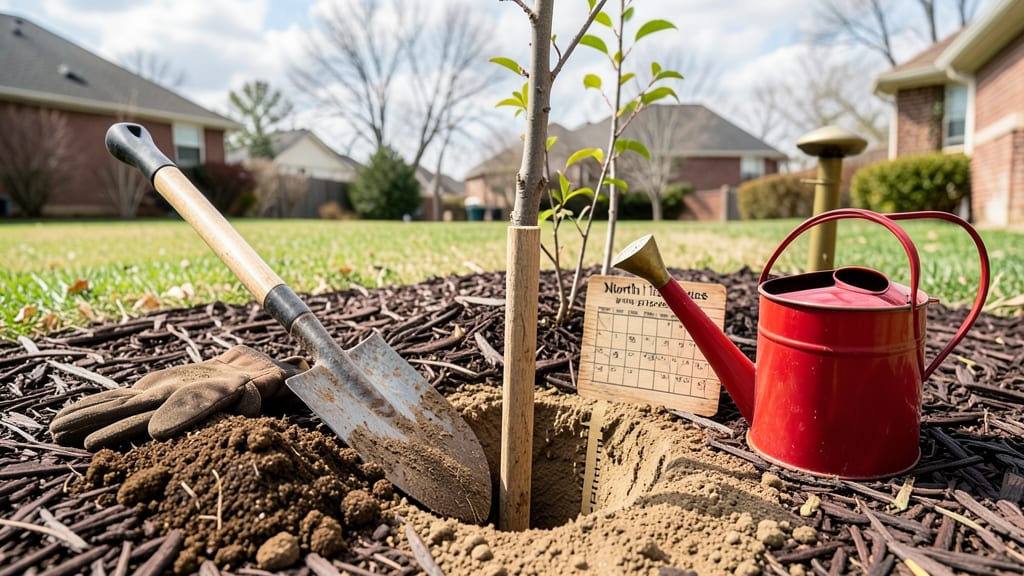
Planting a fruit tree 🍎 in North Texas at the wrong time could mean watching it struggle—or worse, die—before it even takes root. The best planting window isn’t just about the calendar; it’s about avoiding frost, giving roots time to establish, and setting your tree up for decades of harvests.
For most varieties like peaches, plums, and figs, late winter to early spring—February through March—is your golden opportunity. This timing lets roots settle before summer heat arrives, while citrus and other tender types need even more caution.
But here’s the catch: not all fruit trees thrive on the same schedule, and North Texas’s 7b-8a climate adds another layer to the equation.
I’ll break down the exact months to plant each type, how to prep your soil for success, and pro tips to avoid common mistakes—like planting too late and risking weak roots.
Whether you’re a first-time gardener or a seasoned grower, these insights will help you pick the perfect moment for your fruit tree’s future.
Ready to grow a thriving orchard? Let’s get started with the best months to plant—and why timing really does matter.
Best planting months for fruit trees in North Texas by variety
North Texas gardeners face a unique challenge when planting fruit trees—the region's hot summers and unpredictable frosts demand precise timing. Peaches and plums need cool dormancy periods, while figs and citrus thrive in warmer microclimates. Understanding these differences ensures your trees establish strong roots before extreme heat or cold arrives.
In USDA Zones 7b-8a, the last frost typically hits around March 15, but microclimates like Dallas (warmer) and Lubbock (cooler) shift these dates by weeks. Planting too early risks frost damage, while late planting delays root growth, leaving trees vulnerable to summer stress.
Let’s break down the ideal windows for each popular fruit tree variety.
Soil temperature is just as critical as air temperature. Most fruit trees need soil to warm to 60°F (15°C) before planting, which usually happens by mid-March in Dallas but can be delayed until April in Lubbock. Well-draining, slightly acidic soil (pH 6.0–7.0) is ideal, but North Texas often has alkaline soil, requiring amendments like sulfur or compost.
For peaches and plums, the February–March window is critical. These trees need chilling hours (300–600 hours below 45°F) to break dormancy, so planting too late reduces fruit production.
In Dallas, where frosts are rare after March, you can extend planting to early April, but Lubbock’s later frosts demand earlier action.
Figs and citrus are the exceptions—plant them in March–May when soil is consistently warm. Figs handle heat well but struggle with frost, so avoid planting in Lubbock’s cooler pockets. Citrus (like meyer lemons) need protection from winter freezes; container-grown trees can be moved indoors during cold snaps.
Adjust for microclimates by observing your yard. A south-facing slope in Dallas warms faster than a north-facing yard in Lubbock. Use a soil thermometer to confirm temperatures before planting—60°F (15°C) soil is the magic number for most varieties. If soil is
How to prepare North Texas soil and site for fruit tree success
North Texas soil can be tricky—often alkaline and heavy with clay, which fruit trees despise. But with the right prep, you can transform your yard into a thriving orchard. Start by testing your soil pH; most fruit trees prefer a range of 6.0 to 7.0.
If your soil tests higher, don’t panic—sulfur or peat moss can lower it gradually over months.
Next, focus on drainage. Fruit trees hate soggy roots, and North Texas clay holds water like a sponge. Amend the soil with organic matter like compost or well-rotted manure to improve aeration. For heavy clay spots, consider raised beds or mounding soil to create better drainage paths.
Sunlight is non-negotiable—most fruit trees need 6 to 8 hours of full sun daily. Scan your yard for the sunniest spot, avoiding areas shaded by buildings or mature trees. If your yard lacks ideal sunlight, choose dwarf varieties or container-grown trees for flexibility.
⚠️ callout warning
1. Skipping Soil Tests: North Texas soil is often alkaline (pH 7.5+), which locks out essential nutrients like iron and zinc. Test first!
2. Over-Amending with Lime: If your soil is already alkaline, adding lime will make it worse. Use elemental sulfur instead to lower pH slowly.
3. Planting in Low Spots: Clay soil + low areas = root rot risk. Always plant on mounds or slopes for better drainage.
Before planting, loosen the soil to a depth of 12 to 18 inches to encourage root penetration. Mix in mycorrhizal fungi—a natural soil additive that boosts root growth and nutrient uptake. This is especially helpful in Texas, where soil microbes can be stressed by heat and drought.
Finally, mulch around the base of your new tree with 2 to 4 inches of organic mulch (like wood chips or straw). Mulch retains moisture, regulates soil temperature, and suppresses weeds. Just keep it 3 inches away from the trunk to prevent rot.
With these steps, your fruit trees will establish strong roots and thrive in North Texas’s challenging climate. Patience is key—give them the first year to settle in before expecting heavy fruit production.