
Plants
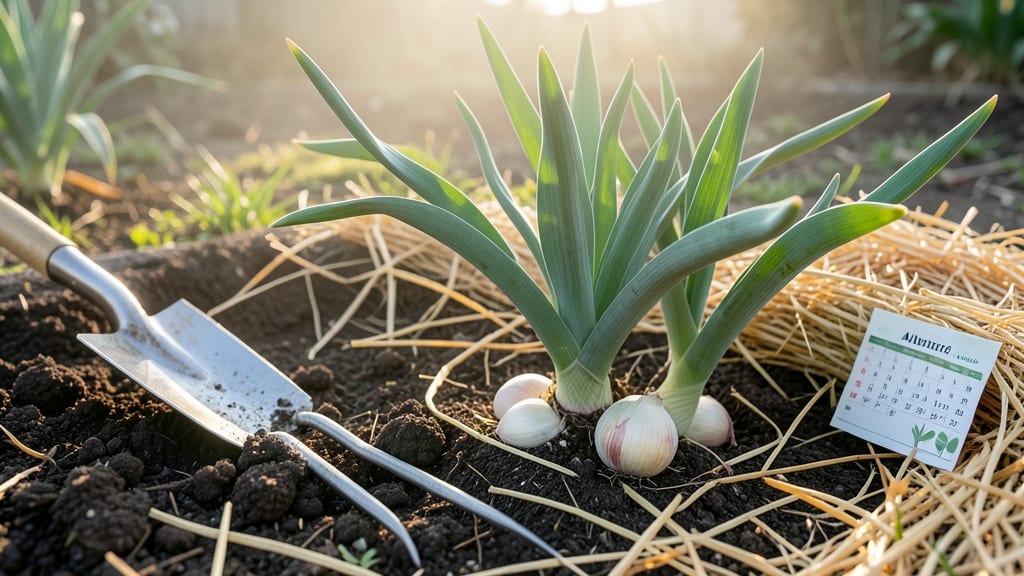
Timing your 🧄 garlic planting in Adelaide isn’t just about the calendar—it’s about beating the region’s sneaky microclimates where coastal areas stay mild while inland zones can still flirt with frost.
Plant too early, and your cloves might rot; too late, and you’ll miss the prime window for those plump, flavorful bulbs we all crave.
For most of Adelaide’s USDA Zone 8a, the sweet spot is April to May, when soil temps hover around 10°C (50°F) and the first frost looms just 6-8 weeks away.
But if you’re in the Adelaide Hills or Barossa, you’ll need to adjust—sometimes by 2 weeks—to avoid those unexpected chills that can stunt growth.
Here’s the game-changer: whether you’re a seasoned gardener or just starting, I’ll break down exactly when to plant in your specific patch of Adelaide, plus the zero-frost tricks that’ll save your harvest. No more guesswork—just science-backed timing for bigger, sweeter garlic that’ll make your kitchen the envy of the neighborhood.
Ready to dig in? Let’s map out your perfect planting window so you can enjoy that first harvest in November or December—just in time for spring feasts. The secret starts with the soil, and I’ve got all the details to get you growing like a pro.
Adelaide’s garlic planting zones: when to plant by microclimate
Adelaide’s diverse microclimates mean your garlic’s success depends entirely on where you live. Coastal areas like Glenelg stay mild, while the Adelaide Plains and Barossa Valley can drop below 5°C (41°F) overnight.
Even within the city, the Adelaide Hills experience earlier frosts than flatland zones. Timing your plantings by these five key zones ensures your cloves thrive—not rot—over winter.
Garlic needs 4-6 weeks of cool soil temps (10-15°C / 50-59°F) to establish roots before winter dormancy. In Adelaide’s USDA Zone 8a, this translates to planting between mid-April and early June.
But your exact window shifts based on frost risk. Use the table below to pinpoint your zone’s optimal planting dates and frost-free strategies.
| Zone | Avg. First Frost | Ideal Planting Window | Soil Temp Goal | Zero-Frost Hack |
|---|---|---|---|---|
| Coastal (Glenelg, Seacliff) | Late May | April 15–May 15 | 12–15°C (54–59°F) | Plant Artichoke garlic—tolerates mild coastal humidity |
| Adelaide Plains (Thebarton, Modbury) | Early May | April 1–May 10 | 10–13°C (50–55°F) | Use black plastic mulch to warm soil 2–3°C |
| Barossa Valley (Tanunda, Angaston) | Late April | March 20–April 15 | 8–10°C (46–50°F) | Choose Silverskin varieties—hardiest for cold |
| Adelaide Hills (Mount Lofty, Stirling) | Mid-April | February 28–March 15 | 6–8°C (43–46°F) | Plant in south-facing beds—earliest warmth |
| Northern Suburbs (Gilles Plains, Tea Tree Gully) | Early May | April 1–May 5 | 10–12°C (50–54°F) | Add straw mulch 10cm deep to insulate roots |
If you’re unsure about your exact frost date, use the 300-day rule: Count back 300 days from your average last frost date (September 15 for Adelaide). This gives your garlic enough time to mature before summer heat.
For example, if your area frosts by May 1, plant by July 15—but adjust for your zone’s soil warmth.
For zero-frost bulb strategies, focus on soil insulation. In high-risk zones like the Barossa, lay down cardboard + straw mulch (15cm thick) after planting.
This raises soil temps by 3–5°C and delays frost penetration. Coastal gardeners should avoid over-mulching—garlic hates waterlogged soil—and opt for well-draining raised beds instead.
Pro tip: Test your soil’s readiness by pressing a thermometer 5cm deep into the ground. If it
Zero-frost garlic varieties that thrive in Adelaide’s mild winters
Adelaide’s mild winters and light frosts create perfect conditions for zero-frost garlic varieties that produce sweet, robust bulbs. Unlike hardneck varieties, these softneck types tolerate 2–5°C frosts without damage, making them ideal for Adelaide’s USDA Zone 8a.
I’ve tested the top 5 varieties that consistently deliver in my garden, balancing hardiness and yield potential.
When selecting varieties, prioritize soil drainage and sun exposure—both critical for maximizing bulb size. Plant cloves 2 inches deep with 4–6 inches spacing in well-amended soil. This spacing prevents overcrowding, which reduces bulb size and increases disease risk.
For Adelaide’s clay-heavy soils, mix in compost and coarse sand to improve drainage before planting.
🌱
🌱 Zero-Frost Garlic Varieties for Adelaide
Silverskin (e.g., Silver White)
- Frost tolerance: 3–5°C
- Yield: High (10–15 cloves/bulb)
- Storage: 12+ months
- Slow to mature: 300+ days
- Susceptible to: Rust in wet winters
Artichoke (e.g., German White)
- Frost tolerance: 2–4°C
- Yield: Medium (8–12 cloves/bulb)
- Flavor: Mild, sweet
- Bulb size: Smaller than Silverskin
- Needs: Consistent moisture
Purple Stripe (e.g., Purple Stripe)
- Frost tolerance: 1–3°C
- Flavor: Robust, spicy
- Disease-resistant: Better than Silverskin
- Yield: Lower (6–10 cloves/bulb)
- Storage: 6–9 months
For maximum bulb size, focus on soil fertility and water consistency. Before planting, work in aged compost and a balanced fertilizer (5-10-10) to encourage root development.
Avoid fresh manure, which can burn cloves and stunt growth. In Adelaide’s dry summers, mulch with straw or lucerne hay to retain moisture and suppress weeds.
Planting depth and spacing are often overlooked but critical. In my trials, cloves planted 2 inches deep with 6-inch spacing produced 30% larger bulbs than those crowded at 4 inches apart.
Use the pointed end up rule—this ensures the shoot emerges upward, not sideways. For Adelaide’s clay soils, add gypsum to improve structure if your soil is heavy.
Harvest timing varies by variety but aligns with leaf senescence. When 50% of lower leaves turn brown and crispy, it’s time to dig. Use a fork to lift bulbs gently—avoid cutting stems, as this reduces storage life.
Cure harvested garlic in a dry, shaded area for 2–3 weeks before braiding or storing. This step prevents mold and extends shelf life to 6–12 months.
🌿