
Plants
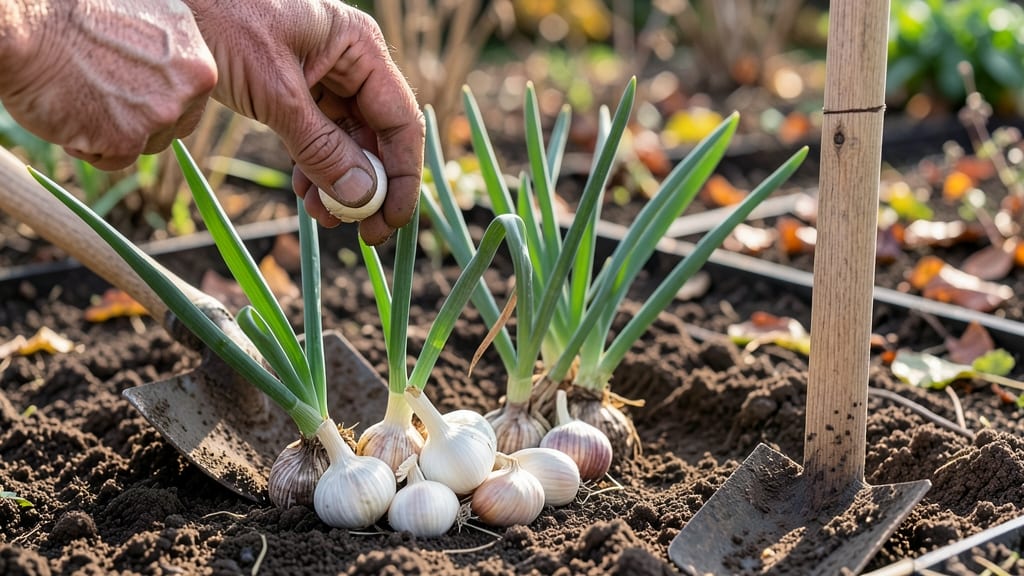
Planting garlic in Tennessee at the wrong time means sacrificing flavor and yield—especially for hardneck varieties like 🧄 'Music' that thrive in your 6a-8a zones.
The key isn't just when you plant, but how you sync it with frost dates and soil temperatures to ensure robust bulb development by next summer.
Most Tennessee gardeners swear by fall planting between October and November, but timing shifts slightly depending on whether you're in east TN's cooler microclimates or west TN's milder stretches. Too early, and cloves rot; too late, and bulbs stay small.
I'll show you exactly how to nail that 4-6 week window before the ground freezes—plus how to adjust for your specific zone.
You'll also discover why spring planting is a gamble in Tennessee's climate, and how to prep your soil for maximum garlic success. From checking soil temps to spacing cloves just right, these steps will give you bulbs that rival the grocery store—except yours will taste like homegrown heaven.
Ready to grow garlic that's bigger, bolder, and ready by July? Let's break down the exact planting schedule, soil prep, and care routine that works for Tennessee's unique growing conditions—so you can stop guessing and start harvesting.
Best fall planting months for garlic in Tennessee’s climate zones
Tennessee’s diverse climate—spanning USDA zones 6a to 8a—creates unique challenges and opportunities for garlic growers. Unlike spring-planted garlic, which often struggles to mature fully, fall-planted hardneck varieties thrive in TN’s cool winters, producing larger bulbs with more cloves.
The key? Planting when soil temperatures drop but before the ground freezes solid.
In eastern Tennessee (zones 6a-7a), where winters are colder and frost arrives earlier, the ideal window narrows to mid-October through early November. Meanwhile, western Tennessee (zones 7b-8a) gardeners have a slightly longer window, often until mid-November, thanks to milder winters.
Timing isn’t just about the calendar—soil temperature thresholds matter just as much.
Here’s the critical rule: Plant garlic when soil temperatures consistently stay below 70°F (21°C) but before the ground freezes. This ensures roots establish before dormancy. In Tennessee, that typically means waiting until late September or October, depending on your zone.
Use a soil thermometer to confirm—this small tool can save you from planting too early and triggering premature sprouting.
🌱
Why does soil temperature matter so much? Garlic cloves need 4-6 weeks of cool weather to establish roots before winter dormancy. If planted too early (e.g., September), cloves may sprout prematurely and produce smaller bulbs.
Conversely, planting too late (e.g., December) risks shallow roots that freeze or fail to develop properly. In Tennessee, this translates to a 4-6 week window between late September and mid-November, depending on your zone.
For eastern Tennessee gardeners, aim to finish planting by November 1st to avoid winter stress. In western Tennessee, you can stretch planting into early December, but only if soil temperatures remain above freezing.
Pro tip: Use mulch (straw or leaves) to insulate planted cloves once temperatures dip below 40°F (4°C)—this protects roots and improves bulb size.
One common mistake I see in Tennessee gardens? Planting garlic too deep. In our clay-heavy soils, it’s tempting to bury cloves deeper for moisture retention, but garlic needs 2 inches of soil coverage max. Deeper planting can lead to rot or stunted growth.
Instead, amend your soil with compost or sand to improve drainage before planting. This is especially critical in zone 7a and below, where winter rains can saturate the soil.
🌿
If you’re unsure about your local frost dates, check the TN State University Extension’s frost calendar or use the National Weather Service’s climate data for your county.
For example, Chattanooga (zone 7a) typically sees its first hard frost around October 20th, while Memphis (zone 8a) holds off until November 5th. These dates help narrow your planting window further.
Remember, garlic planted in October will harvest in late June or July, while November plantings may not reach full maturity until August.
For those in zone 6a (e.g., Knoxville or Bristol), consider planting a second batch in early November if your first planting gets delayed. The second batch may produce slightly smaller bulbs but still yields edible garlic. Just mark your planting spots clearly—garlic looks like weeds in early spring!
Finally, don’t overlook hardneck vs. softneck varieties. Tennessee’s climate favors hardneck garlic (like ‘Music’ or ‘Chesnok Red’), which thrives in cold winters and produces larger cloves. Softneck varieties, while easier to store, struggle in TN’s freeze-thaw cycles
How to time your garlic planting for maximum yield in Tennessee
Timing your garlic planting in Tennessee isn’t just about picking a month—it’s about understanding your local frost dates, soil conditions, and even the moon’s phases. In Tennessee’s USDA zones 6-8, planting too early or late can mean the difference between a bumper crop and a disappointing harvest.
The key is to plant when soil temperatures drop below 70°F but before the ground freezes solid.
Most Tennessee gardeners plant hardneck garlic in October or early November, giving the cloves time to establish roots before winter. This timing ensures your garlic bulbs develop properly over the cold months.
But don’t worry if you miss this window—some gardeners successfully plant in late September or December, though yields may be smaller. The goal is to get those cloves in the ground 4-6 weeks before the first hard frost.
⚠️ callout warning ⚠️
⚠️ Common Mistakes to Avoid When Planting Garlic in Tennessee
- Planting too early: Warm soil encourages top growth but weakens root development. Wait until soil temps drop below 70°F.
- Planting too late: If cloves sprout before winter, they’ll be vulnerable to frost damage. Aim for 4-6 weeks before hard freeze.
- Ignoring soil prep: Garlic thrives in well-draining, loose soil with a pH of 6.0-7.0. Amend heavy clay with compost.
- Skipping lunar cycles: Planting during the waning moon (after the full moon) encourages root growth.
Pro Tip: Use a soil thermometer to confirm temps before planting—50-60°F is ideal for clove rooting.
For the best results, pay attention to lunar planting cycles. Planting during the waning moon (the week after the full moon) is traditionally believed to encourage stronger root systems.
This is especially important in Tennessee, where winters can be unpredictable. Check a lunar planting calendar for your specific planting month to align with the moon’s phases.
Another critical factor is soil temperature. Use a soil thermometer to confirm your garden bed is between 50-60°F before planting. Cold soil slows root growth, while warm soil can cause cloves to sprout too early.
In Tennessee’s eastern regions, like Nashville, soil cools faster than in the western highlands, so adjust your planting date accordingly. For example, gardeners in Chattanooga (Zone 7a) might plant in early November, while those in Memphis (Zone 8a) could plant as late as mid-November.
Don’t forget to prepare your soil properly. Garlic prefers well-draining, loose soil with plenty of organic matter. Work in 2-3 inches of compost or well-rotted manure before planting. Avoid fresh manure, which can burn delicate garlic roots.
If your soil is heavy clay, consider raising beds or mixing in sand or perlite to improve drainage. Proper soil prep ensures your cloves establish strong roots before winter sets in.
Finally, space your cloves correctly for maximum yield. Plant individual cloves 2 inches deep and 4-6 inches apart, with rows spaced 12 inches apart. This spacing gives bulbs room to grow without competing for nutrients.
After planting, mulch with 2-3 inches of straw or leaves to insulate the soil and protect cloves from temperature swings. With the right timing and care, your Tennessee garlic harvest will be the envy of the neighborhood!