
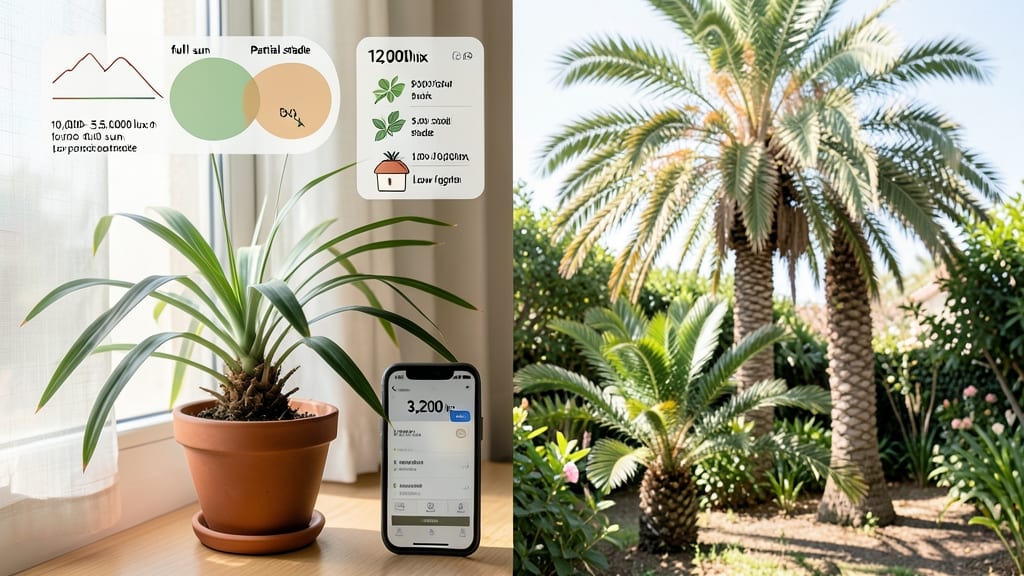
How Much Light Does a Palm Plant Need: Sunlight Needs by Variety for Healthy Growth

Plants

How Much Light Does a Palm Plant Need: Sunlight Needs by Variety for Healthy Growth

To keep your 🌴 palm thriving, you might be overthinking how much light does a palm plant need—because the answer isn’t as simple as "more is better."

Some palms love basking in bright sunlight, while others wilt under too much exposure, and getting it wrong can turn your tropical centerpiece into a sad, yellowing shadow of its former self.

I’ve seen firsthand how a single misplaced palm can go from lush and vibrant to struggling in just a few weeks.

The key isn’t guessing—it’s understanding the specific light needs of your palm’s variety, whether it’s a sun-loving Canary Island palm or a shade-tolerant Parlor palm thriving in a dim corner. Let’s break down exactly how to position your palm for success, no matter where you live.

If you’ve ever wondered why your palm’s fronds are turning brown or stretching awkwardly toward the window, you’re not alone. The truth is, most people either overdo or underdo the light, and the results are easy to spot.

I’ll show you how to spot the signs and adjust your palm’s environment—whether you’re dealing with a bright kitchen window or a cozy living room with limited natural light.

Ready to give your palm the perfect lighting conditions? By the end of this guide, you’ll know exactly how to balance sunlight for healthy growth, avoid common mistakes, and keep your 🌴 looking its best year-round—no guesswork required.

Light Need
Full Sun

Palm plant light requirements by variety: indoor vs outdoor sunlight needs

Palms bring tropical elegance to any space, but their light requirements vary dramatically by variety. Some thrive in bright indirect light indoors, while others demand full sun outdoors.

As someone who’s nursed everything from dwarf palms in apartments to tall canary palms in desert landscapes, I’ve learned the hard way that misjudging light leads to crispy fronds or sad, leggy growth.

Let’s break down exactly how much sunlight each popular palm needs—and how to give it just the right amount.

Not all palms are created equal when it comes to sunlight. Tropical palms like the parlor palm prefer gentle indoor light, while desert palms such as the pindo palm crave intense afternoon sun. Even within the same species, indoor vs. outdoor placement changes the game.

Below, I’ve organized 12+ common palm varieties by their light tolerance, including placement tips for USDA zones 8-11—where most palms thrive outdoors.

Variety Indoor Light Needs Outdoor Sun Needs USDA Zones Notes
Parlor Palm (Chamaedorea elegans) Bright indirect light Partial shade 9-11 Dwarf variety; avoids direct sun
Bamboo Palm (Chamaedorea seifrizii) Medium to bright indirect Partial shade to morning sun 10-11 Tolerates low light better than most
Areca Palm (Dypsis lutescens) Bright indirect light Full sun with afternoon shade 10-11 Needs humidity; avoid cold drafts
Canary Palm (Phoenix canariensis) Not suitable indoors Full sun 8-11 Drought-tolerant; thrives in heat
Pindo Palm (Butia capitata) Not suitable indoors Full sun to partial shade 8-11 Cold-hardy; loves dry climates
Kentia Palm (Howea forsteriana) Low to medium indirect light Partial shade 10-11 Slow-growing; prefers humidity
Majesty Palm (Ravenea rivularis) Bright indirect light

Signs your palm isn’t getting the right light (and how to Fix it)

When your palm plant starts showing strange color changes or stunted growth, it’s often a cry for help about its light conditions. Unlike many houseplants, palms thrive on bright, indirect light—too little leaves them weak, while too much can scorch their delicate fronds.

I’ve seen palms go from lush and green to crispy brown in just weeks when moved to a sunny west-facing window without acclimation.

First, observe the frond tips. If they’re turning crispy brown, your palm is getting too much direct sunlight. This is common in south or west windows where afternoon sun intensifies.

On the flip side, yellowing fronds or pale, weak new growth signals insufficient light, often seen in north-facing rooms or shaded corners. Both extremes stress your palm and invite pests like spider mites.

⚠️ callout warning ⚠️

⚠️ How Much Light Does a Palm Plant Need?

Most palms need bright, indirect light for 6-8 hours daily. Outdoor palms (like Canary Island Date Palm) thrive in full sun, while indoor palms (like Parlor Palm) prefer filtered light. Direct midday sun (10 AM–2 PM) can burn fronds, while deep shade causes leggy growth and pale fronds.

🔹 Fix it fast: Rotate your palm quarter-turn weekly for even growth. Use sheer curtains to diffuse harsh sun. For low-light spots, supplement with a grow light 12 inches away for 14 hours/day.

Slow growth is another red flag. If your palm’s fronds are spreading wider than usual but not lengthening, it’s stretching toward distant light sources. This happens in apartments with only north-facing windows or under fluorescent office lighting.

Even outdoor palms in shady gardens exhibit this "reaching" behavior. The solution? Move your palm closer to a light source or upgrade to a south- or east-facing window.

Don’t overlook the soil and roots. Palms in low light often develop mushy, waterlogged roots because they’re not photosynthesizing efficiently, so they drink more water than needed. Conversely, overwatered palms in bright light suffer from root rot because the excess moisture isn’t evaporating fast enough.

Always check the top 2 inches of soil—if it’s dry, water; if it’s damp, hold off.

To revive an over-exposed palm, trim the brown, crispy fronds at the base with sterilized pruners and move it to a shadier spot immediately. For underlit palms, gradually increase light exposure over 1-2 weeks to avoid shocking the plant.

Place it near a west-facing window (gentler afternoon light) or use a reflective surface (like a mirror) to bounce light onto its fronds.

Pro tip: Test your palm’s light needs by observing its natural growth patterns. If it’s dropping fronds or developing blackened tips, it’s a light stress signal. Adjust gradually—palms are resilient, but sudden changes can shock their system.

With the right light, your palm will reward you with vibrant new fronds and steady growth in just a few months. 🌴

★★★★★4.7(12 reviews)
Categories Plants