
When Do You Plant Watermelons in Tennessee: County-Specific Dates for Zero-Frost Success

Plants

When Do You Plant Watermelons in Tennessee: County-Specific Dates for Zero-Frost Success

Planting watermelons in Tennessee at the wrong time can mean the difference between a bountiful harvest and wasted effort. With USDA zones 6a-7b offering a perfect climate for 🍉 growth, timing your planting after the last frost—typically mid-April to early June—sets the stage for sweet success.

But here's the catch: East Tennessee's cooler highlands (like the Smokies) need a later start than West Tennessee's warmer plains. One wrong move, and your seedlings could face frost damage or struggle to mature before summer fades.

That's why knowing your exact county's frost dates is the key to avoiding common mistakes that derail even the most eager gardeners.

In this guide, I'll break down the optimal planting windows for every Tennessee region, plus pro tips for container vs. in-ground planting. Whether you're a first-time grower or a seasoned gardener, these insights will help you time your watermelon planting perfectly for maximum yield.

Ready to grow watermelons that rival the ones at the farmers' market? Let's get started with the exact dates and techniques that work in Tennessee's diverse climate zones.

🍉 When to Plant Watermelon
Jan ❄️
Feb ❄️
Mar 🌱
Apr 🍉
May 🍉
Jun 🌱
Jul ☀️
Aug ☀️
Sep 🍂
Oct 🍂
Nov 🍂
Dec ❄️
Ideal Time
Also Good

Best planting dates for watermelons by Tennessee region (frost-free zones 6-8)

Tennessee’s diverse climate—from the cool mountain valleys of East Tennessee to the hot river valleys of West Tennessee—means watermelon planting dates vary by hundreds of days.

In Zone 6a (e.g., Sevier County), you’ll wait until mid-May, while Zone 7b (e.g., Shelby County) gardeners can plant as early as mid-April. High-altitude areas like Great Smoky Mountains National Park face even later windows due to late spring frosts.

To succeed, align your planting with soil temperatures (minimum 70°F) and last frost dates. Use local Cooperative Extension Service data or Almanac frost charts for precision.

For example, Knoxville’s last frost averages April 15, while Memphis’s is March 15—a full month difference that impacts your harvest timing.

Here’s your region-by-region breakdown of ideal planting windows, including container vs. in-ground adjustments and high-altitude exceptions:

How to extend your watermelon growing season in Tennessee (cold starts & late harvests)

Tennessee’s unpredictable spring frosts and early fall chill can sabotage your watermelon dreams if you’re not prepared. With the right techniques, though, you can protect seedlings and extend harvests by 4-6 weeks—even in Zone 6a areas like the Smokies.

The key? Layered protection and smart scheduling to beat Tennessee’s 180-day frost-free window.

I’ve grown watermelons in East Tennessee’s high elevations and West Tennessee’s heat islands, and these methods have saved my seedlings from frost and prolonged my harvests into October.

Whether you’re dealing with a late April freeze or September’s early chill, these strategies will help you maximize your yield without guessing.

⚠️ Critical Planting Window Alert for Tennessee

Never plant watermelons outdoors before soil temps hit 70°F—even if frost dates say it’s safe. In East Tennessee (Zone 6a), wait until May 15; in Middle/West Tennessee (Zones 7-8), April 20 is ideal. Use a soil thermometer to confirm—cold soil = stunted growth.

Pro Tip: If you’re itching to start early, sprout seeds indoors 3-4 weeks before your last frost date using grow lights or a sunny windowsill. Transplant hardened-off seedlings after May 1 in most regions.

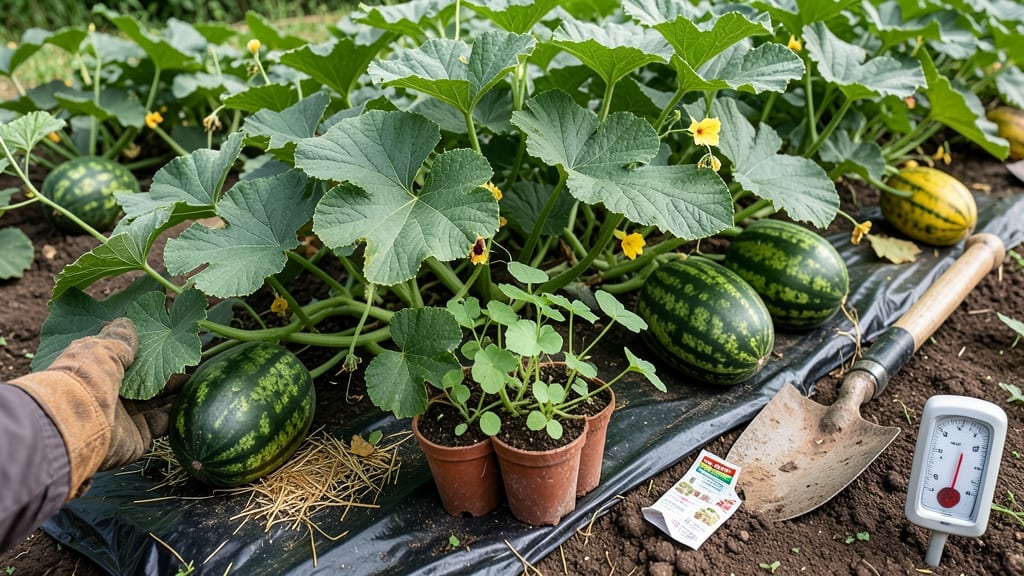
For seedling protection, row covers are my go-to. These lightweight fabrics (like Reemay) raise soil temps by 5-8°F and shield tender sprouts from late spring frosts. Install them at dusk and remove by 10 AM to prevent overheating.

Pair them with black plastic mulch, which warms soil 10°F faster than bare earth—critical for slow-starting seeds in Tennessee’s cool springs.

To extend harvests, try succession planting with fast-maturing varieties like ‘Sugar Baby’ (60 days). Plant a second batch in early June for a late-summer harvest before fall frosts. For fall protection, use cold frames or low tunnels to trap heat.

I’ve kept vines producing until mid-October in West Tennessee with this method—just remove the cover during the day to prevent overheating.

Don’t overlook drip irrigation for consistent moisture. Watermelons need 1-2 inches of water weekly, but uneven watering causes blossom-end rot or cracked fruit. Use mulch (straw or grass clippings) to retain moisture and suppress weeds, which compete for nutrients.

In drought-prone areas, drip lines with timers save time and ensure steady growth.

For container growers, choose 5-gallon pots or larger and use heat-loving varieties like ‘Tasty Jewel’. Move pots to sunniest spots and use self-watering trays to prevent underwatering. In Zone 6a, overwinter containers in a garage or shed and replant in late April for a jumpstart.

With these techniques, you’ll beat Tennessee’s frost risks and enjoy watermelons from July through October. The secret? Plan ahead, protect seedlings, and harvest strategically. Your taste buds—and your neighbors—will thank you for the homegrown sweetness! 🍉

★★★★★4.8(12 reviews)
Categories Plants
Region USDA Zone Last Frost Date Ideal Planting Window Soil Temp Requirement Notes
East Tennessee (e.g., Sevier, Sullivan) 6a April 15–May 1 Mid-May to June 1 ≥70°F Use row covers for early starts; high-altitude areas (e.g., Gatlinburg) delay until late May.
Middle Tennessee (e.g., Nashville, Davidson) 7a March 20–April 5 April 15–May 15 ≥70°F Start seeds indoors March 1 for transplanting; black plastic mulch warms soil faster.
West Tennessee (e.g., Shelby, Fayette) 7b–8a March 1–March 15 Mid-April to early May ≥70°F Direct-sow after March 15; extend season with succession planting in June for fall harvests.
High-Altitude (e.g., Smoky Mountains) 6a (above 2,000 ft) May 1–May 15 Late May to June 10 ≥70°F Choose fast-maturing varieties (e.g., ‘Sugar Baby’); use greenhouses for earlier starts.
Containers (Statewide) All Zones N/A (soil-independent)