
Companion Plants
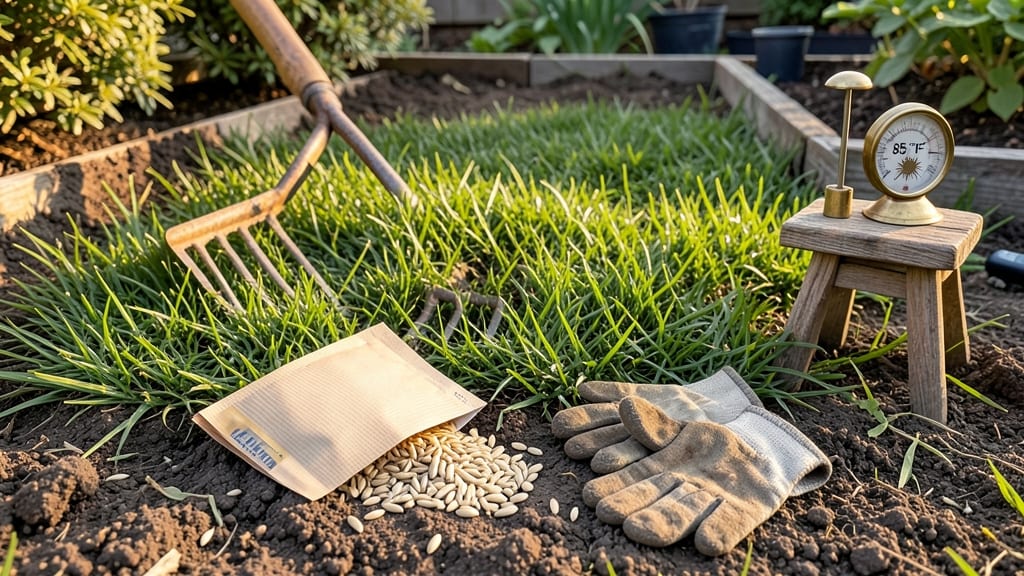
Planting Bermuda grass seed in Texas isn't just about grabbing a bag and scattering it—it's about catching the perfect window when your lawn can explode with growth instead of struggling to take root.
The difference between a thick, drought-resistant turf and months of patchy frustration often comes down to timing, soil warmth, and knowing your county's microclimate.
If you've ever watched your seedling sprouts wilt under early spring's unpredictable chill or fade in late summer's heat, you're not alone. Bermuda grass 🌱 thrives when soil temperatures hit consistently above 65°F, which means North Texas' April plantings might fail where South Texas' June sowings thrive.
Let's break down exactly when—and how—to plant for your specific region.
What you're about to discover isn't just about dates on a calendar—it's about matching your lawn's needs to Texas' diverse climate zones. We'll cover everything from soil prep to watering schedules, so you can skip the guesswork and get that dense, aggressive growth Bermuda grass is famous for.
Ready to transform your yard from bare soil to a summer-proof green carpet? The secrets start with understanding your county's last frost date and working with—not against—Texas' heat. Let's get your Bermuda grass off to the right start.
Texas county-specific Bermuda grass planting deadlines by climate zone
Texas stretches from USDA Zone 8a in the Panhandle to Zone 10b near the Gulf Coast, creating wildly different planting windows for Bermuda grass.
In North Texas (like Dallas or Fort Worth), cool springs delay seeding until late April or May, while South Texas (Houston, Corpus Christi) can start as early as March. The key? Soil temperatures must stay above 65°F (18°C) for 7+ days to trigger germination.
Central Texas (Austin, San Antonio) falls in the transition zone, where timing depends on your county’s last frost date—typically March 1–April 15. Plant too early, and cool soils slow root growth; too late, and summer heat stresses young seedlings.
I’ve seen lawns fail when homeowners rush planting after a false spring—always verify soil temps with a soil thermometer.
Bermuda grass thrives in full sun (6+ hours/day), but shade from nearby trees or buildings can push planting dates 2–4 weeks later.
For example, East Texas counties (Tyler, Longview) may need to wait until mid-May due to morning shade, while West Texas (Midland, Lubbock) can start in early April thanks to intense afternoon sun.
Here’s how to align your planting with Texas’s three distinct climate zones, including soil temp thresholds and last-frost adjustments for optimal root establishment:
| Climate Zone | Key Counties | Last Frost Date | Ideal Planting Window | Soil Temp Threshold | Adjustments |
|---|---|---|---|---|---|
| North Texas | Dallas, Fort Worth, Lubbock, Amarillo | Feb 15–Mar 15 | Late April–Mid-May | 65°F+ (18°C) | Wait 2 weeks post-frost |
| Central Texas | Austin, San Antonio, Waco, College Station | Jan 15–Feb 28 | March 15–April 30 | 65°F+ (18°C) | Test soil temp daily |
| South Texas | Houston, Corpus Christi, Brownsville, San Antonio (south) | Dec 1–Jan 15 | February–March | 68°F+ (20°C) | Avoid May–June heat |
In North Texas, I recommend waiting until after May 1 if your area experiences late frosts—even a 32°F (0°C) dip can kill young Bermuda grass. Use a frost calendar from your local AgriLife Extension office for precise dates.
For example, Lubbock’s average last frost is March 10, but planting before April 15 risks soil temps dropping below 60°F (15°C) at night.
Central Texas gardeners often face false springs, where warm days trick you into planting too early. I’ve seen San Antonio homeowners seed in February only to lose their investment when a cold snap hits.
Always check the National Weather Service’s 7-day soil temp forecast before seeding. Pro tip: Cover seeds with a breathable frost blanket if temps dip below 55°F (13°C) after planting.
South Texas’s hot, humid climate demands early planting to avoid June’s scorching heat. Counties like Hidalgo or Cameron can plant as early as January, but I advise waiting until February 15 to align with soil warming trends.
The Gulf Coast’s high humidity also increases fungal risks, so opt for disease-resistant varieties like ‘Tifway 419’ or ‘Midiron’.
Regardless of your zone, seed depth is critical: plant Bermuda grass ¼ inch deep in well-drained soil to prevent rot. In clay-heavy soils (common in East Texas), amend with compost or sand to improve drainage.
After seeding, maintain consistent moisture—Bermuda grass needs 1–1.5 inches of water weekly until roots establish (4–6 weeks).
Missed the window? Don’t panic. Sodding can be done 2–4 weeks later than seeding, as sod has an established root system. For North Texas, aim for mid-June sodding; in South Texas, late April works well. Just be prepared for more watering during Texas’s 100°F+ summers.
Timing your Bermuda grass planting isn’t just about the calendar—it’s about reading your microclimate. Use these deadlines as a starting point, then adjust based on soil temps, shade patterns, and local weather. With the right
How to prepare your Texas soil for Bermuda grass seed in 2024
Bermuda grass thrives when planted in well-prepared Texas soil, but skipping prep steps can lead to poor germination and weak root systems. The key to success lies in soil pH balance, organic matter, and weed control—all tailored to your county’s unique climate.
Start by testing your soil’s pH, which should sit between 6.0 and 7.0 for optimal Bermuda growth.
If your soil is too acidic or alkaline, amendments like pelletized lime (for acidity) or sulfur (for alkalinity) will adjust the pH before seeding. For example, North Texas soils often lean alkaline, while South Texas soils may need lime to balance acidity.
Aim to complete these adjustments 4–6 weeks before planting to let the soil settle.
- Test soil pH with a home test kit or send a sample to your local AgriLife Extension office. Ideal range: 6.0–7.0.
- Add 2–3 inches of compost or aged manure to improve drainage and nutrient retention. Work it into the top 6 inches of soil.
- Apply pre-emergent herbicide 2–3 weeks before seeding to block weeds. Use pendimethalin or prodiamine for best results.
- Level the soil with a rake to create a firm, smooth surface. Remove rocks or debris larger than ½ inch to prevent seed displacement.
- Schedule irrigation for deep watering 2x daily (morning and evening) after planting. Keep soil consistently moist for 3–4 weeks to encourage germination.
Don’t overlook soil temperature, which must stay above 65°F (18°C) for Bermuda seeds to sprout. In North Texas, wait until mid-April to early May, while South Texas gardeners can start as early as late March.
Use a soil thermometer to confirm readiness—seeds won’t germinate in cooler soils.
After seeding, lightly mulch with straw to retain moisture and suppress weeds without smothering new shoots. Avoid heavy mulch layers, which can trap heat and invite fungal diseases like brown patch. Monitor your lawn daily for even moisture distribution, adjusting your sprinkler system if needed.
Once your Bermuda grass reaches 3–4 inches tall, reduce watering to 1–2 times weekly to encourage deep root growth. This step is critical for drought resistance, a hallmark of healthy Bermuda turf.
By following these prep steps, you’ll give your new lawn the competitive edge it needs to outperform weeds and thrive in Texas’s intense heat. 🌱