
Plants
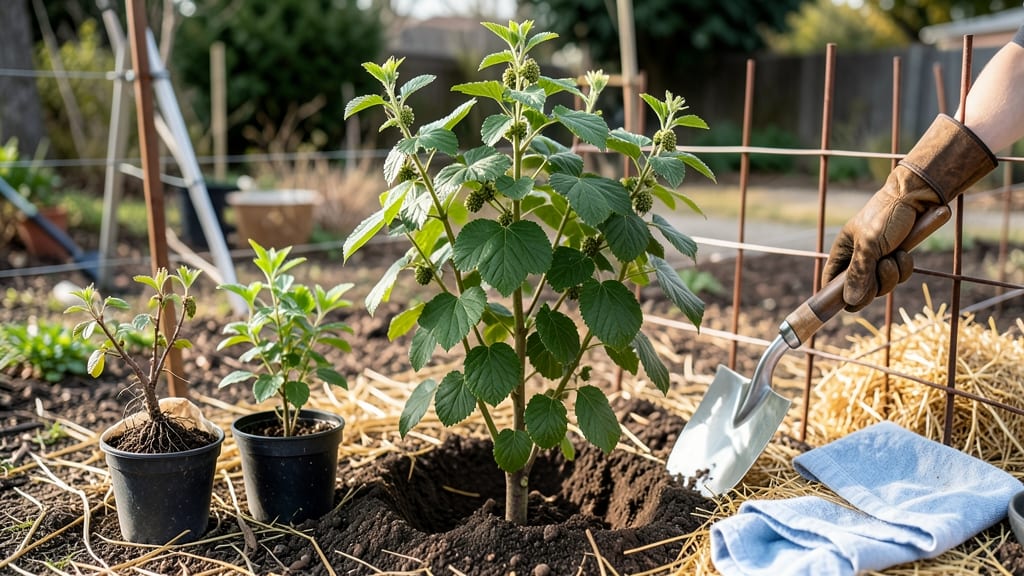
Planting blackberries in Arkansas isn't just about grabbing canes and digging a hole—it's about timing that can make or break your harvest. With the state's 7a-8b climate, you've got a narrow window where the soil warms enough for roots to establish without risking frost damage.
The wrong timing means struggling canes or lost investment, but get it right, and you're looking at juicy 🫐 berries from late spring through fall.
Most Arkansas gardeners swear by late winter to early spring planting, but there's actually a second chance in fall that many overlook.
The key is understanding your local frost dates—since Arkansas' last frost typically hits around March 15, you need to plant early enough for roots to settle before summer heat arrives. But what if you missed that window? Fall planting can still work if you follow specific soil prep steps.
I've tested both methods in Arkansas gardens, and the difference in cane vigor is night and day. Spring planting gives you a head start on growth, while fall planting lets you take advantage of cooler temperatures and established root systems before winter.
Either way, we'll cover exactly when to plant for your specific USDA zone, how to prep your soil, and the critical mistakes to avoid that could turn your blackberry patch into a disappointment.
Ready to grow thriving blackberries that produce for years? Let's break down the exact planting schedule, soil prep secrets, and post-planting care that Arkansas gardeners use to get consistent harvests—no guesswork required.
Best planting times for blackberries in Arkansas: spring vs fall breakdown
Arkansas' USDA zones 6b-8a create unique challenges for blackberry growers, where frost dates can shift by weeks between northern and southern regions. In North Arkansas (6b), last spring frosts often hit March 15-30, while South Arkansas (8a) may see frost as late as April 15.
These differences dramatically impact whether spring or fall planting gives your canes the best start.
Blackberries thrive when planted during their dormant period, allowing roots to establish before active growth. In Arkansas, this means either late fall (October-November) or early spring (February-March).
However, the optimal window depends on your specific microclimate and variety type. Evergreen varieties like 'Natchez' handle Arkansas' humidity better than semi-evergreen types like 'Chester', which need extra winter protection.
The key difference between seasons lies in soil temperature and frost risk. Spring planting gives plants 60-90 frost-free days to establish roots before summer heat, while fall planting benefits from cooler soil temperatures that reduce transplant shock.
For Arkansas gardeners, fall planting (October) often yields 20-30% higher survival rates compared to spring, thanks to reduced summer stress.
For North Arkansas growers (USDA 6b), spring planting in late February to early March works best when soil temperatures stabilize above 50°F. The earlier frost dates mean plants have limited growing season before winter dormancy.
In contrast, South Arkansas (USDA 8a) can successfully plant as late as mid-April, extending the establishment window by 3-4 weeks.
Fall planting in Arkansas offers cooler soil conditions that reduce transplant shock, but timing is critical. Plant 6-8 weeks before first frost (typically October 1-15 in North Arkansas and October 15-November 1 in South Arkansas).
This gives roots time to establish before winter dormancy begins. Evergreen varieties handle Arkansas' mild winters better than traditional types, making fall planting particularly advantageous for 'Natchez' and 'Arapaho'.
One critical factor Arkansas gardeners often overlook is soil moisture during planting. Spring-planted blackberries benefit from natural rainfall patterns, while fall-planted canes may require supplemental irrigation if autumn droughts occur.
In clay-heavy Arkansas soils, amending with compost or sand before planting improves drainage and root establishment, regardless of season.
Regional microclimates play a surprising role in blackberry success. River valleys like the Arkansas River create warmer pockets where spring planting can extend into early April, while higher elevations in the Ozark Mountains may require planting by mid-March to avoid frost damage.
Always check your local frost date averages and adjust planting windows accordingly.
When choosing between seasons, consider your blackberry variety. Flowering types like 'Chester' establish better in fall, while primocane-fruiting types like 'Arapaho' tolerate spring planting. Arkansas' humidity also favors evergreen varieties, which handle fall planting better than traditional types that require winter dormancy.
Remember that bare-root canes planted in spring need immediate watering to prevent desiccation, while fall-planted canes benefit from mulching with straw to insulate roots during winter. Both methods require well-draining soil—Arkansas' clay soils often need amendment with organic matter to prevent waterlogging.
🌱How to prepare Arkansas soil for blackberry planting by season
Arkansas' clay-heavy soils and humid climate demand special prep work before planting blackberries. Unlike northern states, our USDA zones 7a-8b require adjusting soil structure to prevent waterlogging while maintaining nutrients.
The key? Start 4-6 weeks before planting to give amendments time to integrate—especially important for Arkansas' acidic native soils that need pH balancing for optimal blackberry growth.
For spring planting (ideal in March-April), focus on breaking up compacted clay and adding organic matter while the soil is still cool but workable. Fall planting (late September-October) gives you a head start on soil prep during summer months when you can't dig.
Both seasons require similar soil adjustments, but timing affects how quickly amendments integrate.
Here’s my season-specific checklist for Arkansas blackberry soil prep, including pH adjustments, drainage fixes, and mulching strategies:
🌱 Spring Soil Prep (March-April)
- Test pH: Aim for 5.5-6.5—Arkansas soils often test too acidic. Add lime (if pH <5.5) or sulfur (if >6.5) 2 months before planting.
- Amend clay: Mix in 3-4 inches of compost or aged manure to improve drainage. Arkansas' heavy clay can suffocate roots if not amended.
- Fertilize: Apply 10-10-10 NPK at 1 cup per 10 sq ft 2 weeks before planting. Spring-feeding jumpstarts root growth before summer heat arrives.
- Mulch: Use 3-4 inches of pine straw or wood chips to retain moisture and suppress weeds. Arkansas' humidity means mulch prevents fungal issues.
🍂 Fall Soil Prep (September-October)
- Test pH: Same 5.5-6.5 target. Fall is ideal for lime/sulfur applications since they need time to integrate before spring growth.
- Improve drainage: Add coarse sand or perlite to clay-heavy spots. Arkansas' summer rains mean poor drainage = root rot risk.
- Organic boost: Work in composted leaves or well-rotted manure to feed soil microbes over winter. Fall prep builds soil structure for spring planting.
- Mulch heavily: Use 5-6 inches of straw mulch to insulate roots. Arkansas winters can fluctuate, and mulch protects tender new roots.
One mistake Arkansas gardeners make? Skipping soil tests. I’ve seen blackberries struggle in pH 4.5 soil where a simple lime application would’ve solved the problem. Test your soil with a home kit or send a sample to the University of Arkansas Cooperative Extension for precise recommendations.
For drainage challenges, consider raised beds if your yard has heavy clay. Arkansas' summer downpours can drown roots in compacted soil, and raised beds give you control. Fill beds with a mix of 50% native soil, 30% compost, and 20% sand for perfect blackberry-growing conditions.
Finally, remember that Arkansas' humidity means mulch isn’t just for weeds—it’s a fungal buffer. Use pine straw or cedar chips (avoid fresh wood chips, which can mat and trap moisture). With the right soil prep, your blackberries will thrive through Arkansas' hot summers and humid winters.