
Flowers
Timing your flower planting in Seattle isn’t just about following a calendar—it’s about beating the unpredictable frost and working with the city’s damp, mild climate.
Plant too early, and a late frost could wipe out your 🌸 blooms before they even sprout; wait too long, and you might miss the ideal window for vibrant summer gardens.
The key is knowing when to start seeds, set bulbs, and transplant perennials so your flowers thrive from spring through fall.
Seattle’s Zone 8a climate gives you two prime planting seasons: spring and fall. While many gardeners focus on March–May for annuals and perennials, fall (September–October) is actually the best time to plant bulbs like tulips and daffodils—they’ll establish roots before winter and burst into color next spring.
But here’s the catch: Seattle’s last frost typically hits around March 15, so you’ll need to plan carefully to avoid those chilly surprises.
Whether you’re a beginner or a seasoned gardener, getting the timing right makes all the difference. I’ll walk you through the exact months to plant your favorite flowers, how to prep your soil for Seattle’s acidic conditions, and even how to extend your blooming season with simple tricks.
Let’s turn your garden into a year-round showstopper—without the guesswork.
Ready to dive in? You’ll learn which flowers thrive in Seattle’s damp springs, how to protect tender plants from late frosts, and where to find local nurseries like Swanson’s for the best varieties. Your dream garden starts with the right timing—and I’ve got you covered.
Seattle’s Zone 8 frost dates: critical planting windows for annual & perennial flowers
Seattle’s Zone 8a climate offers a surprisingly long growing season—about 165 frost-free days—but those last and first frost dates are the real game-changers for your flower garden. Unlike warmer zones, Seattle’s cool, damp springs and mild autumns demand precision timing to avoid frost damage or wasted effort.
Understanding these windows means the difference between lush summer blooms and wilting seedlings.
For Seattle gardeners, the average last frost date falls between April 15 and May 15, while the first frost typically arrives between October 15 and November 1. These dates aren’t set in stone—microclimates (like urban heat islands or sheltered gardens) can shift them by 2-3 weeks.
That’s why I always check the National Weather Service’s Seattle forecast or use a frost-free date calculator for my specific neighborhood.
Annual flowers like petunias and marigolds need to wait until after the last frost to thrive, while cold-hardy perennials such as pansies and sweet peas can handle light frosts.
Knowing which plants belong in each category helps me plan two key planting windows: spring (March–May) for heat-loving annuals and fall (September–October) for perennials and bulbs.
My go-to rule for annuals is simple: wait until May 1 to plant heat-lovers like geraniums and zinnias. But for cold-hardy varieties such as pansies or sweet peas, I start seeds indoors in February and transplant them in March—they’ll handle our late spring frosts like a champ.
Perennials, on the other hand, get a two-season pass: plant them in early spring (March–April) for summer blooms or in fall (September–October) to establish roots before winter.
Bulbs are the secret weapon for Seattle gardeners. Plant spring-blooming bulbs like tulips and daffodils in September–October—they’ll sit dormant all winter and burst into color by April. For fall-blooming bulbs (like crocuses), plant them in June–July so they can establish roots before our cool autumn kicks in.
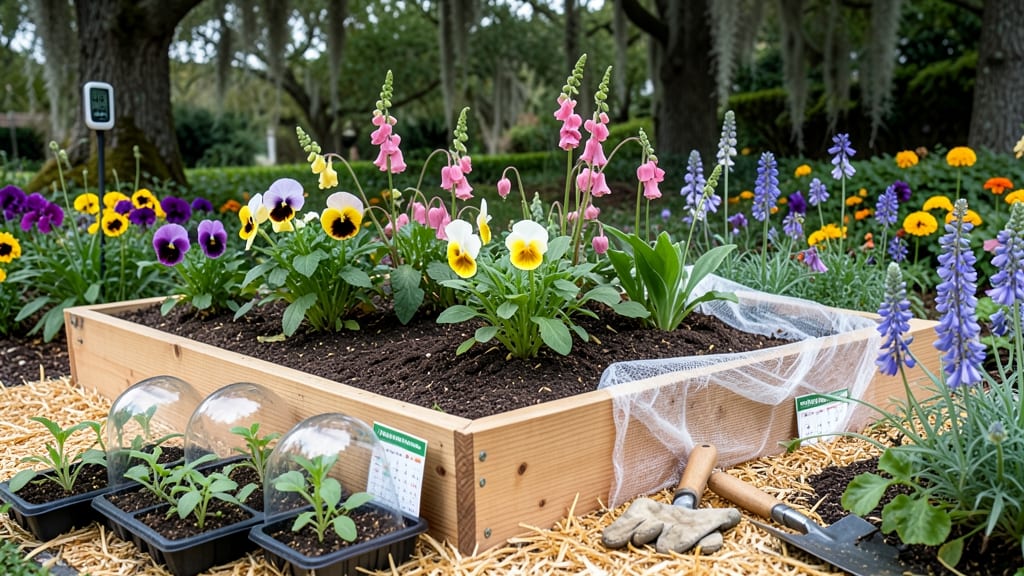
Pro tip: Use row covers or cloche tunnels to extend your planting window by 2–3 weeks in spring or fall. I’ve successfully planted calendulas in late April under a simple floating row cover, giving me blooms a month earlier than my neighbors.
Just remember to remove covers once nighttime temps stay above 40°F to avoid overheating.
Don’t let Seattle’s unpredictable weather fool you—microclimates matter. A south-facing wall can add 5–10°F of warmth, while a low-lying area may frost earlier. I always plant heat-sensitive annuals (like begonias) near my brick patio, which absorbs heat during the day and radiates it back at night.
For perennials, fall planting is my favorite strategy. By late September, the soil is still warm enough for roots to grow, but the air cools quickly—perfect for establishing strong root systems before winter
Best months to plant flowers in Seattle by season: a month-by-month guide
Seattle’s mild but variable climate means timing is everything for successful flower planting. Unlike hotter climates, we can’t just follow a generic calendar—our cool summers and wet winters demand a strategic approach.
The key? Planting in sync with Seattle’s last frost date (around March 15) and first frost (October 15), while accounting for our acidic soil and frequent rain.
Whether you’re a beginner or seasoned gardener, Seattle’s four distinct seasons offer unique planting windows. Spring is ideal for cool-season flowers, summer for heat-lovers**, and fall for perennials and bulbs. Let’s break it down by month so you can maximize blooms year-round.
- 🌱 March–April: Plant cool-season annuals like pansies and snapdragons (hardy to 20°F). Start tulip and daffodil bulbs in containers if soil is still frozen.
- 🌿 May: After last frost, sow heat-sensitive seeds like petunias and geraniums. Transplant perennials (e.g., lavender) once soil warms to 50°F.
- ☀️ June–August: Plant heat-tolerant annuals like zinnias and marigolds. Deadhead dahlias and sunflowers for continuous blooms.
- 🌧️ September–October: Plant spring-blooming bulbs (e.g., tulips, hyacinths) and hardy perennials like coneflowers. Avoid planting after October 15 to prevent frost damage.
Spring in Seattle is all about cool-season champions. Start with pansies and violas in March—they thrive in our 50–60°F soil and bloom until summer.
For bulbs, plant daffodils and crocuses in October for early spring color, but wait until April to plant tulips (they rot in soggy winter soil). Pro tip: Amend your acidic soil with compost and lime before planting.
Summer is your chance to go bold with heat-loving annuals. Petunias and geraniums love Seattle’s July–August sun but need well-draining soil to avoid root rot. For perennials, lavender and Russian sage handle our dry spells once established.
Water deeply 2–3 times per week until roots settle, then reduce to once weekly.
Fall is the secret weapon for Seattle gardeners. Plant spring-blooming bulbs like tulips and hyacinths in September–October—they need 6–8 weeks of chill to bloom. Add perennials like peonies for low-maintenance color. Stop planting by mid-October to avoid frost damage to tender roots.
Don’t forget microclimates! South-facing walls and urban heat islands can extend your season. Use row covers in early spring or late fall to protect tender annuals like impatiens.
With this month-by-month guide, your Seattle garden will burst with color—from pansies in March to dahlias in August—without the guesswork.