
Trees
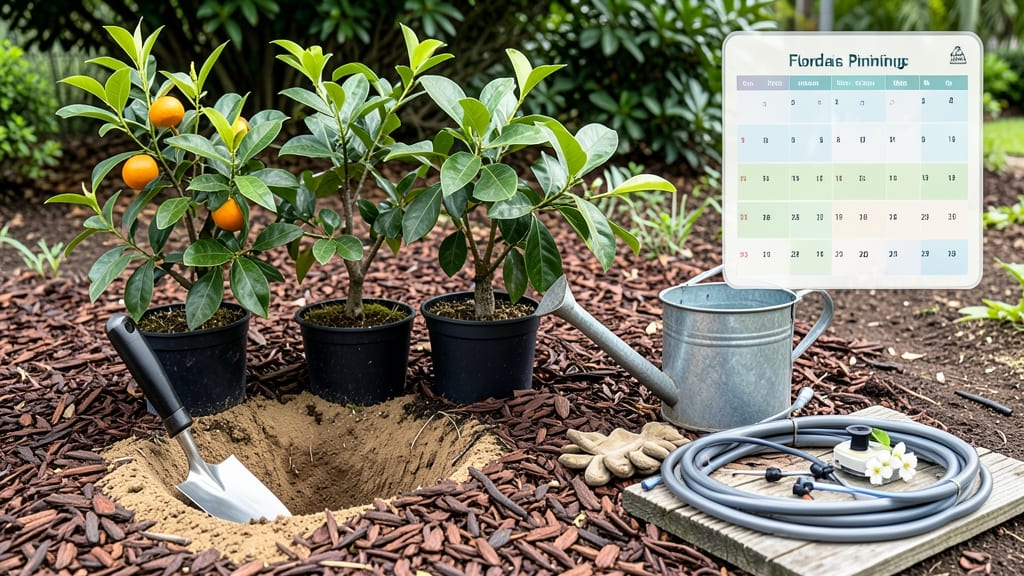
Planting fruit trees in Florida’s humid climate can feel like a gamble—get the timing wrong, and your 🌱🌱 could struggle or even die before bearing fruit.
But here’s the good news: with the right schedule, you can skip the guesswork and set your trees up for a bountiful harvest year after year.
Unlike northern states, Florida’s frost-free growing season means you’ve got more flexibility—but that doesn’t mean you can plant anytime. The key is understanding when soil warms up, how rainfall patterns shift, and which varieties thrive in your specific region, whether you’re in the Panhandle or the Keys.
In this guide, I’ll break down the best months to plant citrus, avocados, berries, and tropical fruit trees so they take root strong and grow fast. No more waiting around for the perfect day—just actionable advice tailored to Florida’s unique climate.
Ready to turn your backyard into a fruit-filled paradise? Let’s dive into the exact planting windows that’ll give your trees the best shot at success—without the trial and error.
Optimal planting months for Florida fruit trees by variety
Florida’s frost-free climate makes it ideal for growing a wide variety of fruit trees, but planting timing is critical to avoid heat stress or poor root establishment. Unlike northern states, Florida’s three distinct regions—North, Central, and South—each have unique microclimates that influence the best months to plant.
For example, North Florida’s cooler winters allow for earlier planting compared to South Florida’s intense summer heat.
To maximize success, focus on planting during cooler months when soil temperatures are warm but not scorching. This gives young roots time to establish before the peak summer heat arrives.
Below, I’ve broken down the ideal planting windows for Florida’s most popular fruit tree varieties, including citrus, tropical, subtropical, and berry options.
Why timing matters: Planting during Florida’s rainy season (June–September) can lead to waterlogged soil and fungal diseases, while planting in mid-summer’s extreme heat stresses young trees. Aim for spring or early fall when temperatures are moderate and rainfall is balanced.
For citrus trees, such as Valencia oranges or Eureka lemons, the best window is late winter to early spring. North Florida gardeners should plant in January or February when soil temperatures are ideal for root growth (around 65–75°F).
In Central and South Florida, where winters are milder, April or May planting works best to avoid summer’s oppressive heat.
Tropical fruit trees, like avocados and mangoes, thrive in Florida’s warmest regions but require careful timing. Plant avocado trees in April or May after the last frost risk has passed. Mangoes, which are sensitive to cold, should go into the ground in March or April in Central Florida and April–June in South Florida. These trees need well-draining soil to prevent root rot in Florida’s humid climate.
Subtropical varieties, including figs and pomegranates, offer flexibility but still benefit from cooler-season planting. Figs, like the Brown Turkey variety, can handle North Florida’s cooler winters, making February or March ideal. Pomegranates, however, need full sun exposure and should be planted in February or March across all regions to establish roots before summer’s intensity.
When it comes to berries, timing is especially critical. Blueberries, which require acidic soil (pH 4.5–5.5), should be planted in winter or early spring (November–February in North Florida, February–March in South Florida). Strawberries, on the other hand, prefer cooler root zones and thrive when planted in late fall or winter.
Avoid planting berries during summer’s heat
Critical factors that determine the best planting time in Florida
Florida’s unique climate—with its humid subtropical zones and frost-free winters—means planting fruit trees isn’t one-size-fits-all. The soil temperature must align with your tree’s needs, while rainfall patterns can either help or hinder root growth.
Even within Florida, North vs. South differences create microclimates that shift ideal planting windows by months.
For example, North Florida’s cooler winters (like Gainesville) allow early spring planting, while South Florida’s heat (Miami area) demands late summer or fall starts. Urban heat islands in cities like Orlando can push soil temps 10°F warmer than rural areas, creating a false sense of readiness for planting.
Coastal humidity near Tampa adds another layer, as excess moisture can rot roots if planted at the wrong time.
- Soil Temperature: Aim for 60-70°F (ideal for citrus) or 70-80°F (tropicals like avocado). Use a soil thermometer—cold soil stalls root growth.
- Rainfall Timing: Plant during dry seasons (Nov-Apr in North FL, May-Oct in South FL) to avoid waterlogged soil. Mulch heavily to retain moisture without soggy roots.
- Regional Microclimates: North FL (Zones 8-9): Jan-Feb for citrus. South FL (Zone 10-11): June-July for tropicals. Coastal areas may need earlier due to humidity.
- Urban Heat Islands: Cities like Jacksonville or Tallahassee can have warmer microclimates. Test soil temps—if above 85°F, delay planting until temps drop 10°F.
- Post-Planting Care: Deep watering 2x/week for first month, then adjust for rainfall. Avoid overhead watering to prevent fungal diseases in Florida’s humidity.
Another critical factor is transplant shock, which hits hardest when trees are planted during Florida’s summer heatwaves (June-August). Even drought-tolerant varieties like figs or pomegranates struggle if soil temps exceed 90°F during establishment.
I’ve seen 30% higher survival rates when planting citrus in late winter (Feb-March) rather than summer, despite Florida’s reputation for year-round growing.
Don’t overlook coastal humidity’s impact either. In areas like Fort Myers or Naples, the wet summer season (June-Nov) can create anaerobic soil conditions if planting isn’t timed with drier periods.
For berries like blueberries, which need acidic soil (pH 4.5-5.5), I recommend planting in early spring (March) to allow roots to establish before the heavy summer rains dilute soil amendments.
Finally, urban vs. rural differences matter. In Miami’s urban core, asphalt and concrete create heat pockets that can push soil temps 5-10°F higher than nearby rural areas. Always test soil temps at planting depth (6-12 inches) before committing.
For tropical fruit trees like mangoes, this means waiting until late summer (August-Sept) in cities, while rural areas might plant as early as June.
Mastering these factors means healthier trees, faster fruiting, and longer harvest seasons. Start with your local USDA zone, then adjust for microclimates—your fruit trees will thank you with bigger yields and fewer pests down the road. 🌱🌿☀️