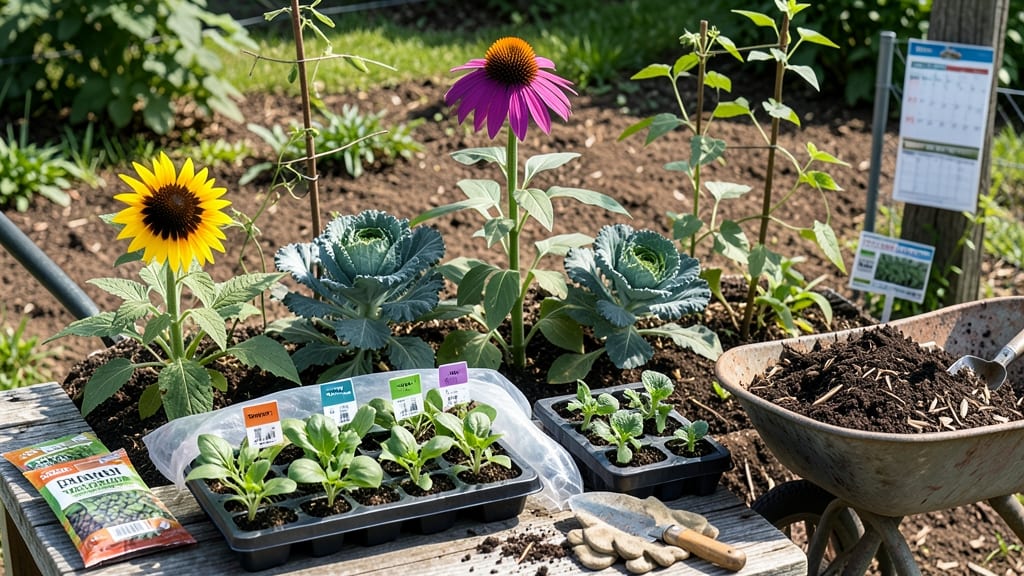
Planting your Wisconsin garden at the wrong time can mean the difference between a bumper crop and a sad pile of frost-nipped seedlings.
The key to success isn't just waiting for spring—it's knowing exactly when to put those seeds in the ground for your specific county, where last frost dates can vary by weeks from north to south.
With Wisconsin's unpredictable weather, timing matters more than most gardeners realize. Whether you're in the chilly USDA Zone 3 of northern Wisconsin or the slightly milder Zone 5 of the south, getting your planting schedule right means avoiding those heartbreaking late frosts that can wipe out your hard work.
I'll show you how to use local frost data to create a planting calendar that works for your specific microclimate.
We'll cover everything from cool-season crops that can handle early spring plantings to heat-loving vegetables that need to wait until after the last frost. You'll learn which crops thrive in Wisconsin's short growing season and how to extend your harvest window using simple techniques that actually work in our climate.
Don't let another season's worth of gardening dreams go up in smoke—let's make sure your Wisconsin garden gets off to the right start with a planting timeline that accounts for your specific location and the plants you want to grow.
The secret to success is in the timing, and I'm about to share all the details you need to know.
🌱
When to Plant Garden
Jan
❄️
Feb
❄️
Mar
🌱
Apr
🌱
May
🌱
Jun
🌱
Jul
☀️
Aug
☀️
Sep
🍂
Oct
🍂
Nov
🍂
Dec
❄️
Wisconsin’s frost-free dates by county: your planting timeline
Wisconsin’s frost-free dates vary dramatically from north to south, with Door County often seeing frost as late as June 15 while Milwaukee can be frost-free by May 10. These differences mean your tomato seedlings might thrive in one county but shiver in another.
Using 5-year averages from UW Extension data, I’ve broken down planting windows for all 72 counties to help you avoid costly mistakes.
Why does this matter? Planting peppers or basil too early in northern Wisconsin risks frost damage, while delaying cool-season crops like spinach in southern counties means missing the window entirely.
Even within a single county, urban heat islands (like Madison) can create 2-3 warmer degree days than rural areas just 10 miles away.
Here’s the critical data for 10 key counties, including microclimate notes. For your exact location, check the full county list below or use the USDA Plant Hardiness Zone Map to cross-reference.
Pro tip: Add 2-4 weeks to these dates if you’re in Zone 3 (northern WI) or subtract 1-2 weeks for Zone 5 (southern WI). Door County and Lake Geneva often see late-season warmth due to lake effects, extending growing seasons by 10-14 days.
| County |
Avg Last Frost |
Avg First Frost |
Frost-Free Days |
Microclimate Notes |
| Door |
June 15 |
Sept 25 |
103 days |
Lake effect delays frost |
| Milwaukee |
May 10 |
Oct 5 |
148 days |
Urban heat island effect |
| Madison |
May 12 |
Oct 10 |
141 days |
Valley extends season |
| Green Lake |
May 20 |
Sept 20 |
124 days |
Cold lake air delays spring |
| Eau Claire |
May 15 |
Oct 1 |
139 days |
River valley moderates temps |
| La Crosse |
May 5 |
Oct 15 |
163 days |
Longest growing season |
How to adjust planting dates for Wisconsin’s unpredictable weather
Wisconsin’s spring weather can feel like a game of chance—one day warm enough to plant, the next a surprise frost that turns your seedlings into sad, crispy snacks.
The key to beating this unpredictability? Flexible planting strategies that account for late frosts, microclimates, and your local USDA Plant Hardiness Zone. Even if you’re in Zone 4 or Zone 5, small adjustments can mean the difference between a bountiful harvest and a barren garden.
Start by checking your last average frost date (usually late April to early May in most of Wisconsin) and then add a 10-14 day buffer for safety. For example, if your county’s average last frost is May 10, wait until May 24 to plant warm-season crops like tomatoes or peppers.
This extra time ensures your plants aren’t caught off guard by late cold snaps. But what if you’re already behind schedule? That’s where cold-hardy crops and row covers become your best friends.
Here’s how to fine-tune your planting schedule with three pro tips that work even when Mother Nature throws curveballs:
-
1. Plant cold-hardy crops early
-
2. Use row covers for late starts
-
3. Succession plant heat-lovers
1. Plant cold-hardy crops early: Spinach, peas, lettuce, and kale can handle light frosts and even thrive in cooler soil. In fact, some varieties like sugar snap peas grow better when planted in early April. These crops buy you extra time to transition to warm-season plants once the soil warms up.
2. Use row covers for late starts: If you’re planting tomatoes, peppers, or eggplants after the typical window, lightweight row covers can raise soil temperatures by 5-8°F and protect tender seedlings. Remove covers during the day once plants are established, but keep them on at night for another 2-3 weeks to extend your growing season.
3. Succession plant heat-lovers: Instead of planting all your beans, cucumbers, or zucchini at once, stagger plantings every 2 weeks until mid-July. This ensures a steady harvest and spreads out the risk if late frosts roll in. For example, plant a batch of bush beans on May 20, June 3, and June 17 for continuous production.
Don’t forget to leverage the USDA Plant Hardiness Zone Map to double-check your local microclimate. Southern Wisconsin (like Zone 5) might see frost-free dates as early as April 20, while northern areas (like Zone 4) could wait until May 10 or later.
Use this map to adjust your planting deadlines and avoid common pitfalls like planting tomatoes too early in cooler zones.
For late starters, conduct a quick 3-step risk assessment: 1. Check soil temperature—use a soil thermometer to ensure it’s at least 50°F for warm-season crops.
2. Monitor weather forecasts for a 5-day outlook before planting heat-lovers. 3. Prioritize fast-maturing varieties (like bush beans or radishes) if you’re behind schedule.
With these strategies, you’ll turn Wisconsin’s unpredictable weather into an advantage. Start with cold-hardy crops, protect late plants with row covers, and keep succession planting in your back pocket. Before you know it, you’ll be harvesting like a pro—no frost-related surprises included. 🌱
★★★★★4.6(7 reviews)
|