
Plants
Planting garlic in Ohio's spring can feel like a guessing game—too early, and your cloves rot; too late, and you miss the sweet spot for best bulb growth. But with hardneck and softneck varieties each needing their own timing, when exactly should you break ground in Ohio’s unpredictable climate?
Unlike many vegetables, garlic thrives on cold weather, making Ohio’s Zone 6a perfect for both fall and spring planting.
While most gardeners swear by fall planting, spring offers a second chance—if you know the critical window between late winter and early spring when soil temperatures and frost patterns align just right.
I’ve grown garlic in Ohio for years, and the difference between a 5-minute planting decision and a full harvest comes down to these key factors: soil temperature checks, frost date maps, and variety-specific needs. Let me walk you through the exact steps to time your planting for maximum yield.
Whether you’re a first-time gardener or a seasoned pro, these insights will help you avoid common mistakes—like planting too soon and risking rot, or waiting too long and sacrificing bulb size. Ready to grow your best garlic yet?
Optimal Ohio spring planting dates for hardneck vs softneck garlic
Ohio’s spring planting window for garlic is narrow but critical—getting it wrong can mean smaller bulbs or even complete failure. Unlike fall planting, spring garlic requires precise timing to balance soil warmth and frost risks.
Hardneck varieties need 6-8 weeks of cold exposure, while softnecks tolerate 4-6 weeks before last frost. Let’s break down the exact dates for Ohio’s northern vs southern regions.
First, check your last frost date. Northern Ohio (Zones 5a-5b) typically sees frost around April 15, while southern Ohio (Zone 6a) averages April 20.
Hardneck garlic should go in 2-3 weeks before these dates, while softnecks wait until 1-2 weeks before. This ensures bulbs mature before summer heat arrives.
Here’s the key difference: Hardneck garlic needs cold vernalization (6-8 weeks below 40°F) to form bulbs properly. Planting too late risks bolting (flowering prematurely). Softneck garlic, however, stores better and can handle warmer springs, making it ideal for late plantings in southern Ohio.
For northern Ohio gardeners, aim to plant hardneck garlic by March 15 to ensure it gets enough cold before soil warms. Use a soil thermometer—ideal planting temps are 40-50°F. If your soil is too cold (32°F), wait or mulch heavily to protect cloves.
Southern Ohio’s warmer microclimates extend the window. Here, you can plant softneck garlic as late as April 10 without risking frost damage. However, avoid planting after April 15, as bulbs may not mature before summer’s heat. Test soil moisture—garlic hates soggy conditions.
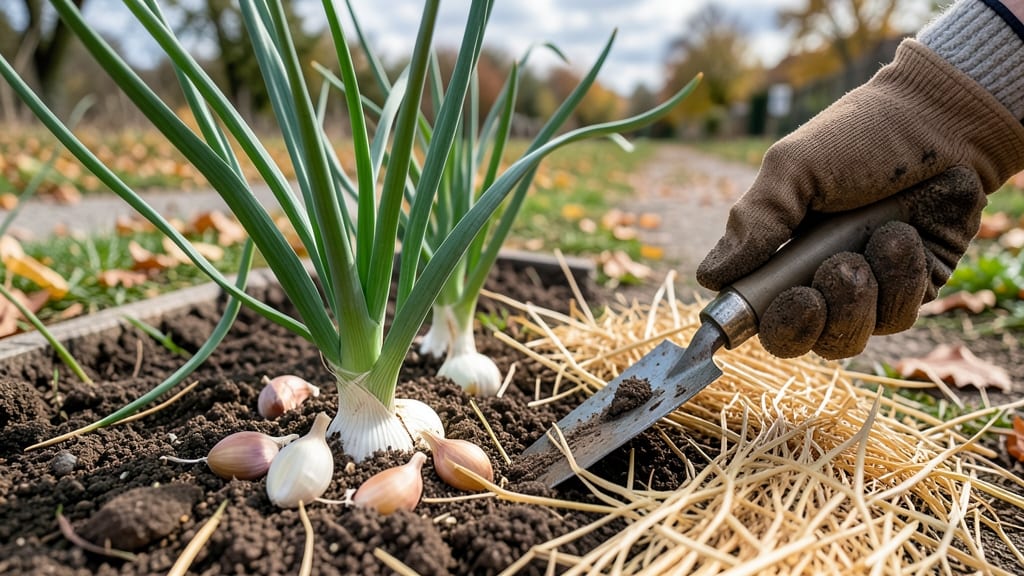
Pro tip: Use straw mulch (4-6 inches) after planting to regulate soil temperature and retain moisture. This is especially critical in Ohio’s unpredictable springs, where late frosts can still occur. Mulch also suppresses weeds, giving your garlic a competitive edge.
If you miss the spring window, don’t panic! Ohio’s fall planting (October-November) is even more reliable for hardnecks. But for softnecks, spring is your only shot—so mark those planting dates now. A small shift of a week can mean the difference between plump bulbs and stunted growth.
Remember: Hardneck garlic thrives in Ohio’s cold winters, while softnecks are better for milder southern regions. Choose your variety based on your zone and storage goals—hardnecks store 3-6 months, while softnecks last up to 12 months. Plan accordingly! 🧄
5 Critical factors that determine your exact planting window
Ohio’s spring planting window for garlic isn’t a one-size-fits-all date—it shifts based on soil temperature, frost dates, and even your garlic variety. Hardneck varieties like ‘Music’ need cold exposure, while softnecks like ‘Silverskin’ thrive with warmer soil.
Without precision, you risk premature sprouting or bolting before harvest. Let’s break down the 5 factors that determine your exact timing.
First, Ohio’s microclimates play a huge role. Areas near Lake Erie (like Cleveland) experience Lake Effect delays, pushing planting dates back 1-2 weeks compared to inland regions like Columbus.
Meanwhile, southern Ohio’s milder winters may allow earlier planting. Always check your last frost date—typically April 15 for most of Ohio—but adjust for local variations.
Next, soil temperature is your garlic thermometer. Plant when soil reaches 40-50°F—any warmer, and cloves may sprout too early. Use a soil thermometer to confirm: hardnecks need cooler soil (40-45°F), while softnecks tolerate slightly warmer (45-50°F).
Cold soil also prevents bolting, a common issue in Ohio’s unpredictable springs.
Your Ohio Garlic Planting Checklist
- 1. Soil Temp: Wait until soil hits 40-50°F—use a thermometer to avoid guesswork.
- 2. Frost Dates: Hardnecks need 6-8 weeks before first frost; softnecks 4-6 weeks before last frost.
- 3. Variety Maturity: Hardnecks (e.g., ‘German Red’) mature in 90-100 days; softnecks (e.g., ‘Artichoke’) take 100-120 days.
- 4. Microclimate: Lake Effect areas plant 1-2 weeks later than inland Ohio.
- 5. Clove Size: Larger cloves (1-inch diameter) establish faster than small ones.
Pro Tip: Plant hardnecks 4-6 weeks before your average first frost for best results.
Don’t overlook garlic variety maturity. Hardneck varieties like ‘Chesnok Red’ mature in 90-100 days, while softnecks like ‘California Early’ take 100-120 days. Planting too late risks immature bulbs, while early planting may lead to overwintering issues.
For Ohio’s short growing season, aim for a July harvest—adjust your planting date backward from that goal.
Ohio’s unpredictable springs demand flexibility. If late frosts delay planting, opt for softneck varieties, which tolerate warmer soil. Conversely, if an early warm spell arrives, cover cloves with straw mulch to regulate soil temperature. Always have a backup plan—like a cold frame—to protect young plants from unexpected frost.
Finally, clove size matters. Larger cloves (1-inch diameter) establish faster and produce bigger bulbs than small ones. Separate cloves from bulbs just before planting to avoid drying out.
Plant them pointy-end up, 2 inches deep, and 4-6 inches apart—this spacing ensures proper airflow and reduces disease risk in Ohio’s humid summers.
Master these 5 factors, and you’ll nail your Ohio garlic planting window every spring—no more wasted cloves or bolting disasters. Start with soil temperature, then adjust for frost dates, variety needs, and your local microclimate. Happy planting! 🌱