
Plants
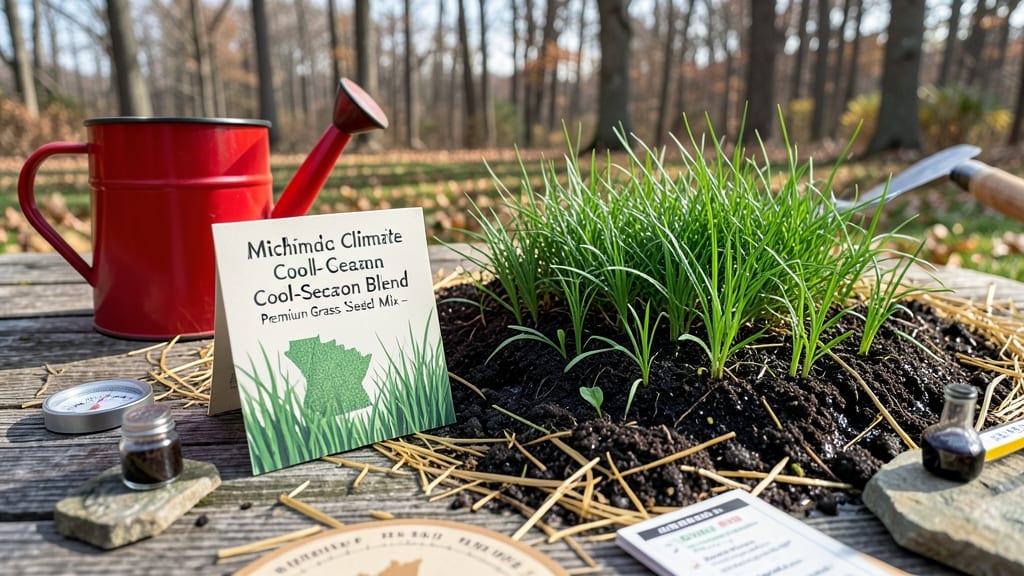
If you’ve ever stared at a patchy lawn in late September and wondered, "Can I still plant grass seed in Michigan?"—the answer isn’t as simple as a yes or no. Planting too late risks frost damage, weak germination, or wasted seed, but with the right timing and techniques, you might still salvage your lawn before winter sets in.
Michigan’s 5b-6b hardiness zones mean your county’s last planting window could be as early as mid-September in the Upper Peninsula or as late as early October in Southern Michigan. The key? Soil temperature—grass seed struggles to germinate when it dips below 50°F, and frost can kill seedlings overnight.
But don’t toss that seed just yet—there are ways to push the limits safely.
I’ll break down exactly when it’s too late for your specific zone, how to test your soil’s readiness, and what to do if you’ve missed the boat entirely.
Whether you’re dealing with cool-season Kentucky Bluegrass or warm-season Bermuda, these insights will help you decide: keep planting, switch to sod, or wait for spring.
Let’s cut to the chase—your lawn’s future depends on knowing these deadlines. By the end, you’ll have a clear plan to avoid costly mistakes and still get that lush 🌱 carpet you’re dreaming of.
Michigan’s grass seed planting deadlines by USDA hardiness Zone (2024)
Michigan’s climate varies dramatically from the Upper Peninsula’s Zone 4 to Detroit’s Zone 6, making planting deadlines a critical factor for successful grass establishment.
Cool-season grasses like Kentucky bluegrass and tall fescue thrive when planted in early fall or spring, while warm-season grasses like Bermuda grass (rare in Michigan) have stricter timing. Missing these windows risks poor germination or winter kill.
For most of Michigan, the last safe planting date for cool-season grasses falls between mid-September and early October, depending on your zone. Northern regions (Zones 4-5) have earlier deadlines due to earlier frosts, while Southern Michigan (Zones 5b-6a) can push planting slightly later.
Warm-season grasses, though uncommon, should be planted by late May to avoid heat stress.
Soil temperature is your best guide: cool-season grasses need soil temps between 50–65°F, while warm-season grasses prefer 70–85°F. Below 50°F, germination slows dramatically, and seeds may rot. Use a soil thermometer to check—if temps drop below these thresholds, it’s time to delay planting.
Here’s a county-by-zone breakdown of Michigan’s last safe planting dates for cool-season grasses, accounting for regional microclimates like lake-effect cooling near the Great Lakes:
| USDA Zone | Counties/Regions | Last Safe Planting Date (Cool-Season) | Key Risks |
|---|---|---|---|
| 4a (Northern UP) | Keweenaw, Houghton, Ontonagon | August 20–September 5 | Early frosts, slow soil warming |
| 4b (Central UP) | Marquette, Alger, Delta | September 1–15 | Short growing season, lake-effect snow |
| 5a (Northern Lower MI) | Cheboygan, Emmet, Presque Isle | September 10–25 | Unpredictable fall temps, early frosts |
| 5b (Central MI) | Grand Rapids, Lansing, Kalamazoo | September 25–October 10 | Moderate frost risk, variable rainfall |
| 6a (Southern MI) | Detroit, Ann Arbor, Toledo (OH border) | October 1–15 | Late frosts possible, urban heat islands |
In Zone 4 (Upper Peninsula), planting after September 15 risks seeds sprouting too late to establish roots before winter. Even in Zone 6 (Detroit area), pushing past October 15 means seeds may not germinate before the first hard frost, leaving your lawn vulnerable to winter desiccation.
Microclimates add another layer of complexity. Areas near the Great Lakes (e.g., Traverse City) may have 2–3 weeks later deadlines due to lake-effect warming, while inland counties like Oscoda or Alpena experience earlier frosts. Always check your local frost-free date and adjust by 4–6 weeks for fall planting.
If you’re in a borderline zone (e.g., Zone 5b near Jackson or Battle Creek), err on the side of caution. Plant by October 1 and use a light mulch (straw, not wood chips) to insulate seeds if early frosts threaten.
This gives seedlings a 2–3 week head start before dormancy.
For warm-season grasses (like Zoysia or Buffalo grass, which are rare but used in some Michigan lawns), the deadline is late May. After this, heat and drought stress make germination nearly impossible. If you’re considering these, plant in early May when soil temps reach 70°F consistently.
Pro tip: Use Michigan State University’s frost maps (available via their Lawn & Garden Extension) for real-time updates. These maps adjust yearly based on 30-year climate averages, giving you the most accurate deadlines for your specific county.
🌱
How to assess your local soil and weather before planting late
Before rushing to plant grass seed in Michigan, check your soil temperature—it’s the #1 factor determining success. Grass seeds need 50–65°F soil to germinate properly.
In Northern Michigan (Zones 4–5), soil may still be too cold by late September, while Southern Michigan (Zones 6) can sometimes push into early October.
Use a soil thermometer (insert 2–3 inches deep) to test daily. If temperatures dip below 50°F consistently, germination slows dramatically, leaving your lawn vulnerable to winter kill. Morning readings are most accurate since soil warms during the day.
Next, monitor the 10-day weather forecast for rainfall and frost warnings. Grass seeds need consistent moisture to sprout, but standing water or late frosts can suffocate seedlings.
Check the National Weather Service or Michigan State University Extension for localized alerts—especially in the Upper Peninsula, where early frosts are common.
- Zone 4 (UP): Stop by September 15—frosts can hit as early as October 1.
- Zone 5 (Traverse City): Push to September 30, but avoid October unless using cold frames.
- Zone 6 (Detroit/Southern MI): October 15 is the cutoff—beyond this, seeds may not root before winter.
Extend the growing season with mulch or cold frames if conditions are borderline. A 2–3 inch layer of straw mulch can raise soil temps by 5–10°F and protect seeds from light frosts (28–32°F).
For high-risk areas, erect a low cold frame (clear plastic over a wooden frame) to trap heat during the day and release it slowly at night.
Finally, test your soil drainage—poor drainage in late fall can lead to rot or fungal diseases. Dig a 6-inch hole, fill it with water, and time how long it takes to drain.
If it’s still wet after 6 hours, amend with compost or sand before planting. Well-draining soil is critical for grass roots to establish before winter.
When in doubt, overseed in spring instead. Michigan’s April–May window offers ideal conditions: warmer soil, consistent rain, and longer daylight for faster germination. But if you’re determined to plant late, act now—every day counts!