
Planting
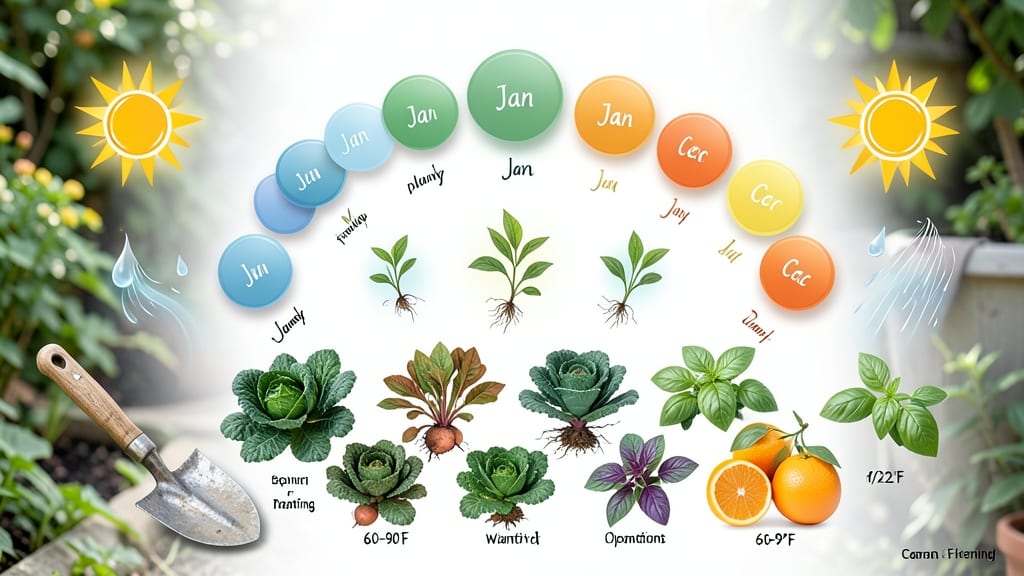
Planting your 🌱 Garden in Florida at the wrong time can mean the difference between a thriving harvest and a sad pile of wilted leaves. Unlike northern states, Florida’s subtropical climate lets you grow almost year-round—but timing still matters to avoid heat stress or stunted growth.
I’ve learned the hard way that Florida’s heat zones (A1 through B4) create wildly different planting windows. What works in Miami might fail in Orlando, and coastal humidity plays tricks on even experienced gardeners.
Let’s break down the exact months to plant vegetables, flowers, and herbs—plus how to adjust for your specific corner of the state.
Cool-season crops like lettuce and broccoli need those 60-degree starts in late winter, while tomatoes and peppers beg for warm soil by March in South Florida—or wait until April in North Florida’s cooler pockets.
I’ll show you how to read your local microclimate and avoid the 5 biggest timing mistakes that kill Florida gardens.
Ready to grow bigger, healthier plants without the guesswork? By the end, you’ll know precisely when to pop those seeds in the ground—and which crops to skip entirely during Florida’s brutal summer slump. Let’s get started.
Florida planting calendar by heat zone: best months for vegetables, flowers, and herbs
Florida’s 11 heat zones (A1–B4) create microclimates where cool-season crops like broccoli thrive in northern zones, while tropical plants like bananas flourish in southern regions. Unlike northern states, Florida’s frost-free windows mean you can grow year-round with strategic timing—if you know the rules.
I’ve broken down the best months for planting by zone to help you avoid heat stress or bolting greens.
For cool-season crops (think lettuce, spinach, and carrots), September–November and February–March are your goldilocks zones—especially in North Florida (A1–A2). Meanwhile, warm-season powerhouses like tomatoes and peppers love April–June and August–September plantings, but timing shifts 1–2 months as you move south.
Tropical plants? Plant bananas and citrus anytime, but avoid July–August when humidity spikes and fungal diseases lurk.
Here’s the heat-zone breakdown you need to maximize your harvest without fighting Florida’s summer heat or winter chills. Use this as your planting roadmap: